This appeared last year on BookWitty, which has since closed down. We re-run it here.
India’s modern children’s-literature industry has deep and varied traditions. Across the country of more than a billion people, almost two dozen languages are in current official use. Nine have more than 50 million speakers: Hindi, English, Bangla, Telugu, Marathi, Tamil, Urdu, Kannada, and Gujarati.
There have long been stories written for children. Rabindranath Tagore, the 1913 Nobel Literature laureate from Calcutta, wrote books and poems for children, some of which have been translated from the Bangla.
Although English-language children’s books get the most attention abroad, there are thriving industries in Hindi, Bangla, and other languages. According to New Delhi-based publishing consultant Jaya Bhattacharji Rose, children’s literature in India’s regional languages flourished first “due to the robustness of the oral tradition of storytelling and later with self-publishing.”
Books in India’s regional languages, Rose says, usually are sold at low prices, “sometimes as low as 50 cents to a $1 a book.” This means, she said, translators are usually not well compensated. Many books go untranslated, and those that do are generally not available outside the subcontinent.
English doesn’t have a lot of first-language speakers in India. But there is still a very large population of second- and third-language speakers, enough to create a thriving, globally recognized community of English-focused publishers. In 2014, India’s Chennai-based Tara Books won the first-ever London Book Fair industry award in the children’s and young-adult publishing category.
The next year, fellow Chennai-based publisher Duckbill Books made the fair’s 2015 shortlist.
There are a few children’s books from Indian authors, such as Salman Rushdie’s delightful middle-grade novel Haroun and the Sea of Stories, that are widely known. Yet many of the books published in India are hard to get outside the country. Even books that win the Crossword Book Award, the country’s biggest award recognizing literature for children, often are not distributed beyond the country’s borders.
Here, we take trip around India with 10 books you can find now, starting with picture books and moving up to graphic novels and novels for young adults.
Monkey Photo, by Gita Wolf, illustrated by Swarna Chitrakar
 This is a wonderful story about shifting the tourist’s gaze, with brilliant illustrations in the style of Patua folk art. In Monkey Photo, the titular monkey lives in a jungle and is tired of tourists taking photos of him. He snatches a camera and goes off to take photos of the other animals, who enjoy their new photographer.
“Here, here Monkey
Me too, please!
Look at my spots
I can say `cheese’!
For readers 0+
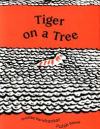 Tiger on a Tree, by Anushka Ravishankar, illustrated by Pulak Biswas
This simple tiger journey for the youngest is a classic from Tara Books. The story is illustrated in stark tangerine, black, and white, and its lilting rhymes follow the tiger from shore to field to tree. “Will he bite? He might!” the villager cry, and later, “He’s caught. He’s got. Now what?”
The villagers vote on what to do with the tiger. Ultimately, he ends up just where he began, on the shore.
For readers 3-6.
 A Village is a Busy Place!, by V. Geetha, illustrated by Rohima Chitrakar
A Village is a Busy Place is designed to suggest a Patua-style scroll painting that shows the lives of everyday people in a Santhal community, one of India’s largest indigenous communities. The “scroll” opens out into a bristling, bursting panorama of a village life. It unfolds vertically, one section at a time, and can be hung to view the broader landscapes.
There are six main spreads: Village Feast, A Day in the Village, Common Space, Evening, Work, and Summer Time. A Village is a Busy Place! can be experienced as a book or as a work of art, and would be a great addition to any elementary art class.
For readers 4-8.
8 Ways to Draw Fish, by Luisa Martelo
How many ways can you draw a single fish? In this art book, Luisa Martelo explores eight different folk and tribal art styles — including Meena, Gond, Madhubani, Patua, and Bhil – for tracing, patterning, and coloring fish. Martelo shows children how they can explore these different art styles while also offering information about the different species of fish.
For readers 6+.
 Book Uncle and Me, by Uma Krishnaswami, illustrated by Julianna Swaney
Co-winner of a 2013 Crossword Award, this charming book follows nine-year-old Yasmin, who loves to borrow books off a retired teacher who’s set up a library near her apartment building. When the mayor tries to shut down the “Book Uncle’s” stand, Yasmin has to do something.
Yasmin calls on the help of friends, and the wider neighborhood, to get the library back in business. Gentle illustrations that bring the book’s setting to life.
For readers 8-11.
 Caterpillar Who Went on a Diet and Other Stories, by Ranjit Lal, illustrated by Rahul Dutta.
Ranjit Lal, a popular YA author and a two-time Crossword winner, is best known for his animal tales. These insect stories are a blend of whimsy and research, perhaps for a reader who’s just finished enjoying the talking insects in Roald Dahl’s James and the Giant Peach.
Here, as the publisher writes, “Nimbu, the caterpillar, resolves to go on a diet inspired by the stick insect. Cheeni Chor, the ant, discovers a refrigerator stuffed with goodies and is driven to rebellion. Ladoo Gulabjamun, one of the resident cockroaches of the famous Golden Thali Restaurant, decides to take on the management to impress his ladylove. You will also meet the body-building cricket, the dung beetles who like to party and a host of other insects who reveal their inner lives as never before and are true to both the insect and human world.”
For readers 8+.
 Rhymes of Whimsy – The Complete Abol Tabol, by Sukumar Ray, translated from the Bangla by Niladri Roy.
For childish lovers of Lewis Carol-like poetic rhyme and their satire-loving parents, Sukumar Ray is a delight, both in Sampurna Chatterji’s translation, Wordygurdyboom!, and Roy’s Complete Abol Tabol.
The book comes in two parts: the first with poems and illustrations for children, and the second explaining the poems’ links to struggles against British colonial rule of India.
For ages 8+.
 The Wildings, by Nilanjana Roy
The novel is set amid the wild-cat colonies of the Delhi neighborhood of Nizamuddin. Here, we join a fully realized world of feral cats—from battle-scarred tomcats to warrior queens—who are joined by a housecat with strange powers. This novel, which can be enjoyed by parents as well as child readers, is a most delightful cat’s-eye view of the world.
The story continues in Roy’s next book, The Hundred Names of Darkness, and it was recognized by a number of awards, including the 2017 Waterstone Children’s Book Prize for Older Readers, 2014 DSC Prize for South Asian Literature, and 2013 Commonwealth Book Prize.
For ages 10+
 Sita’s Ramayana, adapted by Samhita Arni, illustrated by Moyna Chitrakar
This book pays tribute to the epic Ramayana, composed in Sanskrit after 300 BC. It is a graphic novel retelling of the classic misdeeds of Ravana and the heroism of Rama, but it’s also a modern meditation on the impact of war, the roles of women, and what it means to be safe.
This book has won a number of awards. Among them: It was a American Library Association 2012 Notable Children’s Book and a USBBY Outstanding International Books Honor Book.
For readers 12+
 The Grasshopper’s Run, by Siddharta Sarma
Winner of a Crossword Book Prize in the young readers category, this historical YA novel is set in 1944, when the Japanese Army invaded India from the east.
Just as the invasion begins, the Ao Naga tribe is massacred. A young boy named Uti is killed. His best friend, Gojen, hears of Uti’s death and returns home from Calcutta to set off on his coming-of-age journey, which begins with a desire for revenge.
For readers 13+
 World Kid Lit
[…] 7 Sept 10 Innovative Books that Bring India’s Vibrant Art and Poetry to Children […]
LikeLike