Celebrating the last day of #WorldKidLit Month 2018 with a list of ten titles from India and a reminder from the great Mahasweta Devi, who “wrote for children because she believed that things can change for the better only if we include children in our imagination of this world”
By Mohini Gupta
It is difficult to find a list of ten books that represent children’s literature in India. The tradition of storytelling and folk tales and songs written for children dates back thousands of years with ageless fables like the Panchatantra. More recently, the era of RK Narayan and Ruskin Bond sparked the imagination of young readers like no other – the world of Malgudi Days remains incomparable until today. While there are several such texts that have come to be synonymous with children’s literature in India, this list includes contemporary prose and poetry that break many grounds in this genre today – be it through the language they employ or the issues they address. You will find a combination of unfamiliar, experimental, interactive, and informative books, and hope this leads you to discover many more exciting books that exist in this space!
1 We, The Children of India by Leila Seth (Puffin Books, India; 2010)
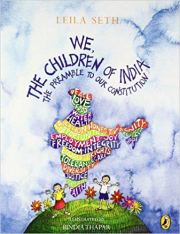
This is a good one to begin with. In this book, Justice Leila Seth – the first woman to become a judge of a state High Court in 1991, and a prolific thinker and writer (also
mother to one the most well-known Indian writers Vikram Seth) – simplifies the Preamble of the Indian Constitution for young readers. She speaks to children as citizens of the country, and makes them aware of their fundamental rights and describes basic concepts such as democracy, socialism, equality, and diversity – things that even adults struggle to understand in our country today! She wrote this book for her grandchildren, and it has now become a great resource to introduce young minds to the foundation that the country was built on after independence.
2 Adventures with Hanuman by Arshia Sattar (Rupa and Co.; 2013)
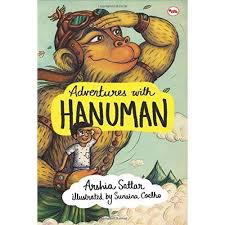
Let’s go a bit further back in time. With a PhD in classical literature, there’s nobody better than writer and translator Arshia Sattar to tell the delightful stories from the epics today. Her Adventures with Hanuman is based on one of the most loved characters from Ramayana. Hanuman, the monkey-god, is Lord Rama’s greatest and most devoted friend. It is difficult to not be fascinated by a talking and flying monkey, whose bravery and loyalty makes him a hero both familiar and magical. Sattar wants “children to identify with [these characters] rather than see them as distant ideals who live in an entirely different universe and with an entirely different set of values and possibilities”. I couldn’t agree more.
3 Lost in Time: Ghatotkacha and the Game of Illusions by Namita Gokhale (Puffin Books, India; 2017)
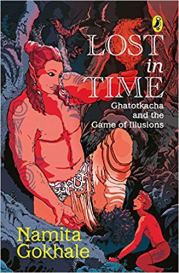
Speaking of timeless stories, a recent rendition of one of the less written-about characters from the Mahabharata is acclaimed writer Namita Gokhale’s retelling of the tale of the mythological giant Ghatotkacha. Her first young adult novel, this one is about 13-year old Chintamani Dev Gupta from Gurugram who is transported to the time of the Mahabharata. He encounters Ghatotkacha and his mother Hidimba, and an unlikely and beautiful friendship emerges as Ghatotkacha teaches him about life and turns him into a confident young teenager by the time he returns to his own world. The book is relatable and contemporary, and gives young readers a little peak into life in the Mahabharata through its major events, and a description of the secrets of the forest, magic and Rakshasa mysticism.
4 Moin and the Monster by Anushka Ravishankar (Duckbill Books; 2012)
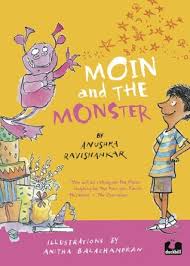
One of the most charming fiction tales in recent times, writer Anusha Ravishankar’s Moin and the Monster, has gained much acclaim since it was published in 2012. The story is about a young boy Moin who struggles to draw, and one day discovers an invisible monster under his bed whom he needs to draw to bring to life. He starts to learn to live with this monster – hidden from his parents and friends – and discovers that the monster loves to eat bananas, sing nonsense verse and play with hairstyles. This is followed by many adventures such as when Moin takes the monster to his friend’s birthday party or when the monster insists on going to school… Anushka Ravishankar is a magician with her words and stories for children, and this one is a must-read!
5 Granny’s Sari by Asha Nehemiah (Children’s Book Trust; 1998)
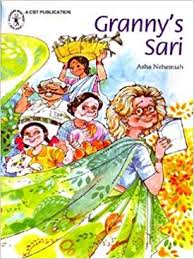
Granny’s Sari revolves around the traditional Indian garment and brings it to life through the young girl Anu’s eyes, who sees forests and animals and different worlds when she looks at the prints on her grandmother’s saris. In fact, her sari is not ordinary at all. It flies away from their verandah, and when they go to search for it, it either ends up helping a policeman catch a thief or Mrs Rao pick mangoes from her tree! It not only makes Anu’s grandmother happy when she wears it, but spreads happiness around wherever it goes, including when the fisherwoman creates dresses for her children from this beautiful sari… This endearing story is grounded in every Indian family’s experiences, and will be extremely relatable for all young readers.
6 Dum Dum Dho: Rhymes and Rhythms (Tulika; 2017)
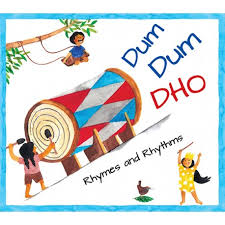
This book, to me, is symbolic of a new phase in Indian English poetry. We have grown up reading canonical writers from the West writing classic poetry in English, but over the years, English has been woven into the Indian culture such that it doesn’t remain the ‘coloniser’s language’ anymore. It is as much an Indian language as any other. This anthology of Indian English poetry is a celebration of our Indianness, in a language that we have appropriated as our own. The ‘rhymes and rhythms’ are particularly Indian – with sounds and noises and onomatopoeias in English, but rooted deeply in Indian languages and contexts. This is a perfect poetry collection for children who want to grow up comfortable in their multilingualism, and have catchy poem titles such as ‘Cheep Cheep’ or ‘Potty’, for ages 3 and above!
7 Wordygurdyboom! The Nonsense World of Sukumar Ray, translated by Sampurna Chattarji (Puffin Books, India; 2016)
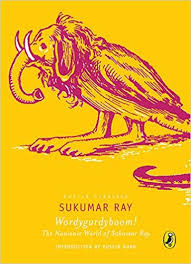
This is a recommendation to read the king of nonsense verse, Sukumar Ray – India’s response to Edward Lear. Generations of Bengali-speaking children have grown up reading and memorising Ray’s Abol Tabol, an unparalleled work of poetic genius, where he takes us through absurd stories of animals and people, and plays with language, puns, satire and musicality. Translator Sampurna Chattarji has achieved the impossible feat of recreating these rhymes in English, and has made it available for all non-Bengali speakers to enjoy.
8 The Tenth Rasa: An Anthology of Indian Nonsense edited by Michael Heyman (Penguin Global; 2008)
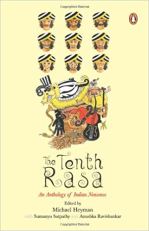
Rasa in Indian art and history represents the aesthetic flavour of any literary, musical or visual work, which evokes certain emotions in the readers or audience. Bengali poet and writer Sukumar Ray called the ‘spirit of whimsy’ or genre of nonsense verse the ‘tenth rasa’, adding to the traditional rasa theory existing in the Indian scriptures for the past two millennia. This collection of stories and poems celebrates this genre with songs for adults and children, folk tales, medieval court verse, or lullabies, a host of brilliant writers from across the country including Satyajit Ray, Rabindranath Tagore, Gulzar, Kunjunni, Manoj Das, Mangesh Padgavkar, Sri Sri and many others. They invent the finest worlds for young readers, full of wit, wordplay and delightful gibberish.
9 Wingless: A Fairly Weird Fairy Tale by Paro Anand with equally weird illustrations by Atanu Roy (India Ink; 2013)
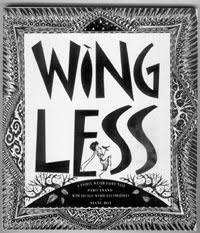
Paro Anand is an award-winning children’s writer, and this book stands out because of its charming story and ‘weird’ illustrations. The story is about a princess born to the King and Queen of Heaven, but she has a major flaw – she has no wings. This causes mayhem, and leads to her being rejected from Heaven because she is ‘different’. Her parents smuggle her into Earth, where she grows up amongst humans, but is later told of her origins and past… The book describes her struggles with her dual identity, rejection and dealing with her lost past along with her friend the Mynah. It is a wonderful book for young readers and adults to enjoy!
10 Our Non-Veg Cow and Other Stories by Mahasweta Devi, translated by Paramita Banerjee (Seagull Books; 2000)
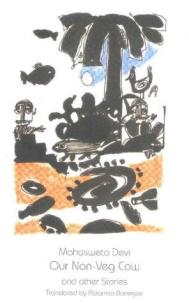
Bengali writer and social activist Mahasweta Devi, one of the most important Indian voices for the marginalised, has written wonderful short stories for children in the 1970s, first published in the children’s magazine Sandesh, run by Satyajit Ray and Sukumar Ray. While Mahasweta Devi was incisive and radical in her writing for adult readers, these stories reveal a different side of her. The stories simply celebrate the innocence and charm of her distinctive characters – be it Nyadosh, the fish- and meat-loving cow; or the cheetah who sacrifices himself to make Jim Corbett a hero. Devi wrote for children because she believed that things can change for the better only if we include children in our imagination of this world.
Mohini Gupta, a young translator of children’s books, was the Charles Wallace India Trust 2017 fellow with Literature Across Frontiers in Aberystwyth, Wales.
 World Kid Lit
[…] 30 Sept Celebrating WorldKidLit Month with 10 Books from India […]
LikeLike
[…] published in World Kid Lit Month website in September […]
LikeLike