By Charlotte Graver
Joyous and carefree: two adjectives we may use to describe children’s literature. Exhilarating and humorous: two others we may add to the mix. Where we’re likely to draw the line, however, is macabre and morbid. One might even go as far to say that these terms are out of place in children’s literature: a ‘taboo’ as it were.
Historically speaking, death has always been in and out of vogue in children’s stories. Although once addressed frequently in eighteenth-century fairy tales, death became a taboo in nineteenth-century Europe as visions of childhood became separate to those of adulthood. Although this taboo has faded, with films such as Disney’s Coco bringing death once more to the centre of children’s culture, it remains a topic which occupies a marginal place in English-language children’s literature.
The problem with this literary marginality is that it doesn’t reflect reality. Rather than protect the child, an absence of death in literature simply ignores an element that already exists. It wastes an opportunity to educate. After all, to read about death is to prepare for its inevitable arrival.
It was this topic of using literature to support children in processing loss which was at the heart of my MA Translation Project and it is this topic which shapes the stories I’d like to share today.
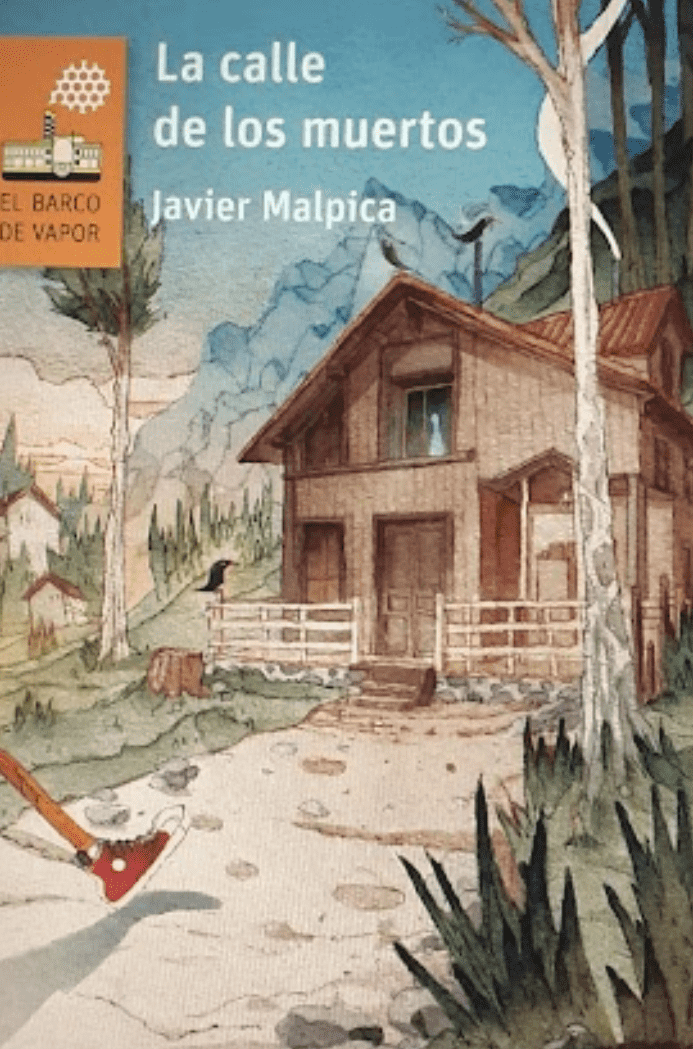
Written by Javier Malpica Maury
Illustrated by Adrián Pérez Acosta
Language Spanish [Mexico]
Published by Ediciones SM
La calle de los muertos is the story which I translated for my MA Translation Project and I couldn’t not take a moment to sing its praises. Published in 2017, this comic gothic story centres upon a boy named Benjamín who goes to stay with his uncle and cousin. Upon arrival, however, Benjamín discovers that all is not as it seems.
Composed of ghosts, adventure and a multitude of twists and turns, La calle de los muertos teaches the importance of letting go and processing loss. Striking an intricate balance between comedy and tenderness, Malpica Maury illustrates to children that nothing is as scary as it seems and that, although denial may at first seem the appropriate response to loss, love and acceptance always hold the answer. The story is aimed at eight-to-twelve-year-olds, and it is truly a one of its kind.
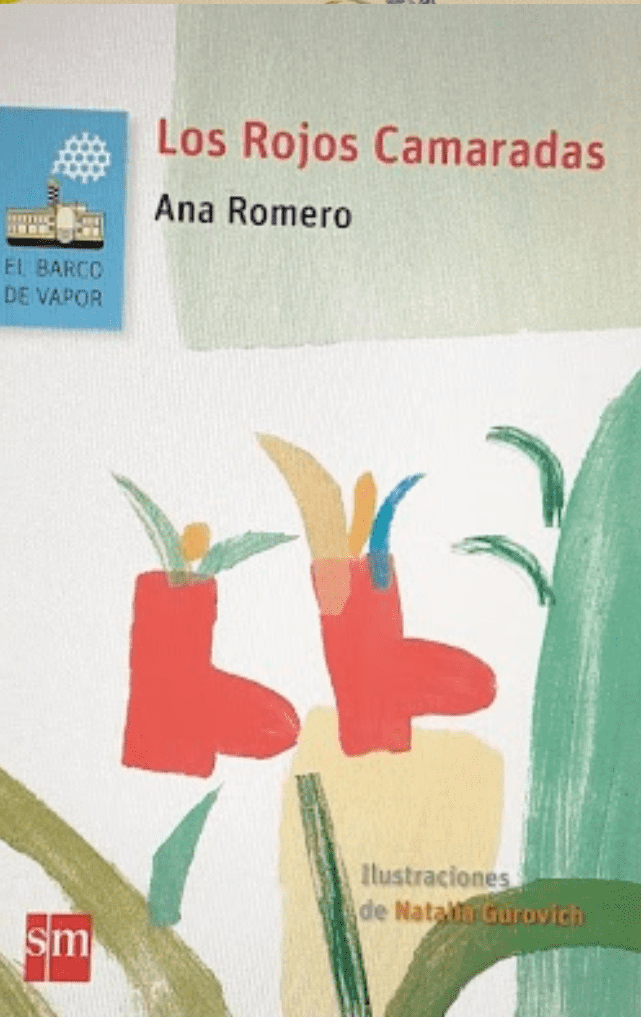
Written by Ana Romero
Illustrated by Natalia Gurovich
Language Spanish [Mexico]
Published by Ediciones SM
Los Rojos Camaradas is another Mexican story which provides children with the tools to overcome the passing of a loved one. Aimed at children between the ages of seven and nine, Romero’s story is less fantastical than Malpica Maury’s, though it is equally heart-warming.
The story follows a little boy named Lobo whose grandpa Tomatías has passed away. Although everyone is sad at Tomatías’ passing, Lobo isn’t, because Lobo knows a secret: his grandpa is still with them, they simply need to find him. Embarking on a quest to find their grandpa, Lobo and his sister teach the reader that death is not an end, rather a new beginning.
Accompanied by stunning illustrations, it is hard not to fall in love with this narrative, and although the story has not yet been translated into English, it is certainly one that should be!
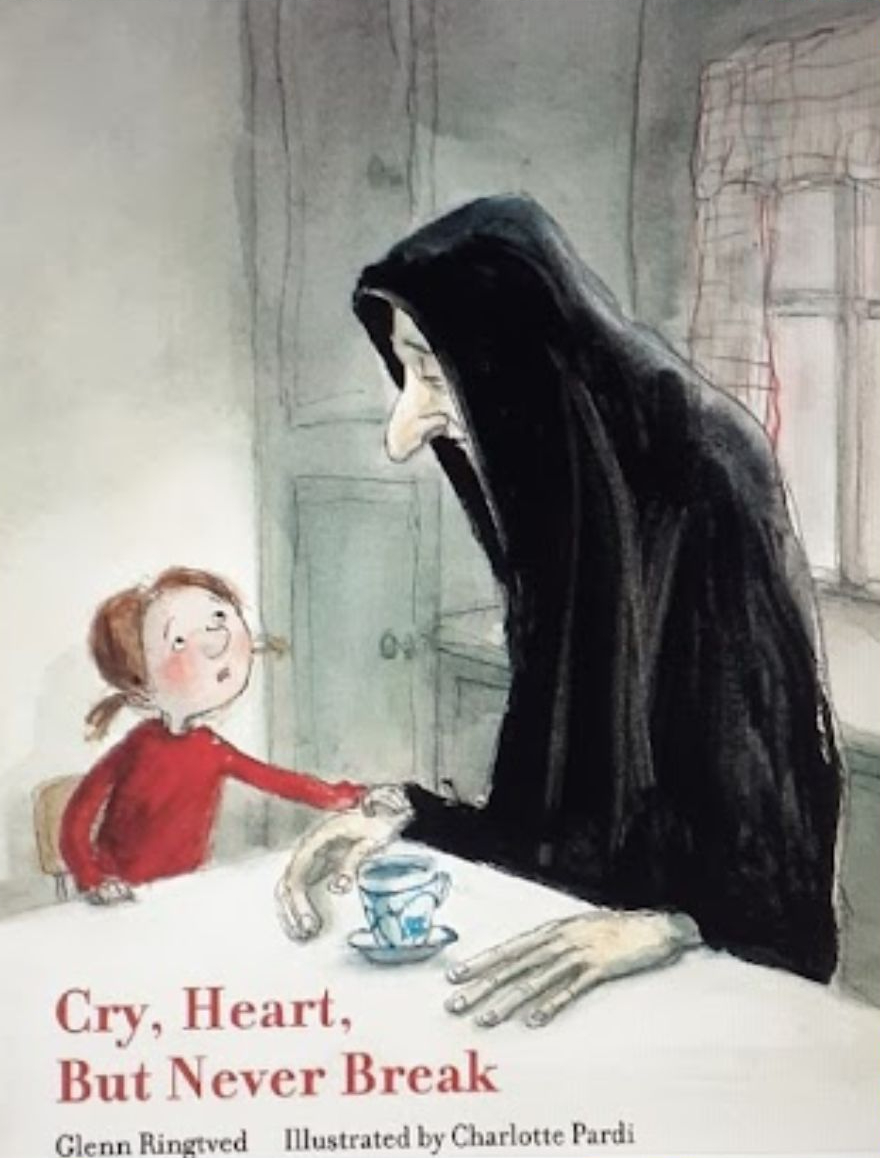
Written by Glenn Ringtved
Illustrated by Charlotte Pardi
Translated by Robert Moulthrop
Translated from Danish [Denmark]
Published by Enchanted Lion Books
Cry, Heart, But Never Break is a Danish novel aimed at children between the ages of four and eight. It centres upon four siblings whose grandmother is ill. Although they wish for Death to stay away, Death arrives peacefully. Rather than scare or distress, Death offers comfort to the children as he tells them a story which teaches the value of loss to life and the importance of saying goodbye – two concepts integral to our emotional maturation.
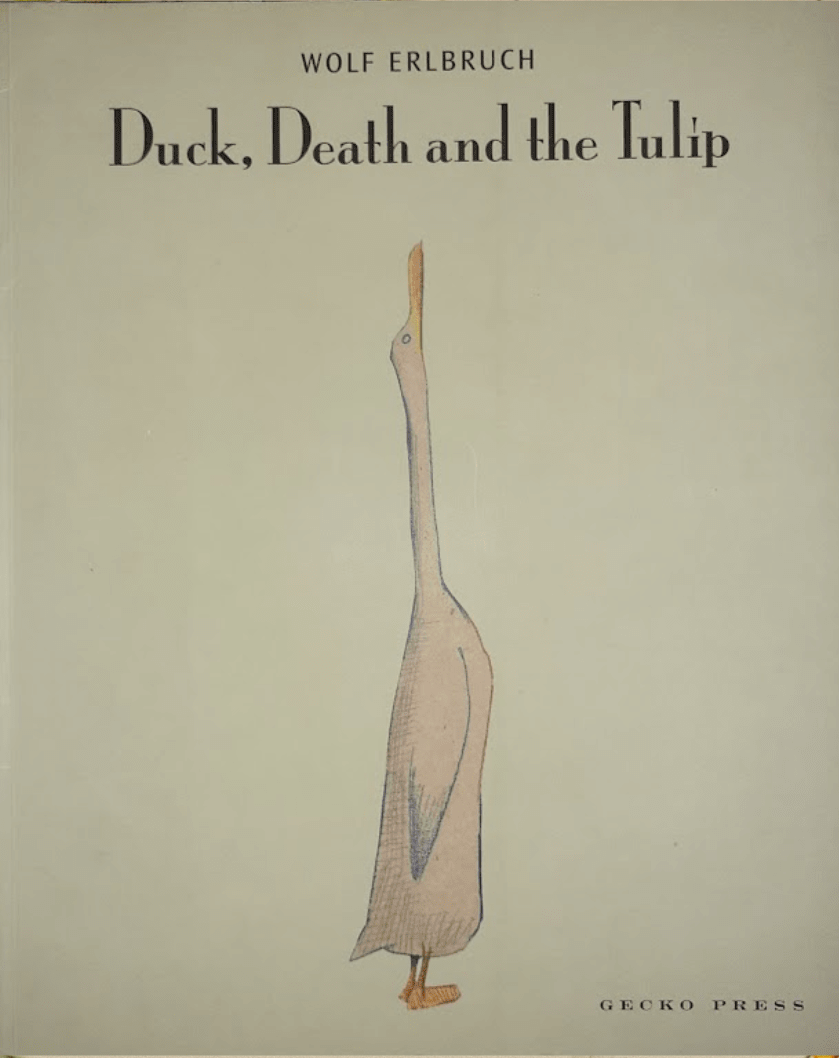
Written by Wolf Erlbruch
Illustrated by Wolf Erlbruch
Translated by Catherine Chidgey
Translated from German [Germany]
Published by Gecko Press
Duck, Death and the Tulip is a German story which was translated into English by Catherine Chidgey. Aimed at readers at approximately eight years of age, the story centres upon Duck who notices that she is being followed by the enigmatic Death. Although at first frightened, Duck soon begins to accept the presence of Death and the two become acquaintances.
It is an oddly heart-warming story that haunts and enchants. By humanising Death, imbuing it with emotion and substituting its synonymous sickle with a single tulip, Erlbruch erases the fear surrounding death and encourages a passive acceptance of our inevitable end. Accompanied by delicate illustrations, Erlbruch’s story approaches a difficult subject matter in a simple, yet thought-provoking way and for that it should be celebrated.

Written by Bárður Oskarsson
Illustrated by Bárður Oskarsson
Translated by Marita Thomsen
Translated from Faroese [Faroe Islands]
Published by Owlkids Books Inc.
The Flat Rabbit provides children between the ages of four and six with a sort of sensemaking mechanism for the messiness of loss. It centres upon a dog and a rat who find a rabbit, flattened on the road. Contemplating her situation, they decide that it can’t be much fun to lie there and so they move her. Although they are still uncertain as to whether the rabbit is pleased with her final resting place, the story reminds us that we don’t always have the answers and that’s okay.
Loss is a complex maze of emotion in which we all assume different paths. The best way for one person to grieve may differ greatly for another and consequently no one story has all the answers. To read a narrative in which these unknowns are normalised therefore, is powerful and for that reason Oskarsson’s tale is one that should be read.
I hope you’ve enjoyed reading about these stories. If you’d like to keep talking about all things macabre in children’s literature, please feel free to get in touch!!
Meet Charlotte Graver

Charlotte is a Translation Project Coordinator at Web-Translations but she also translates from Spanish to English. She particularly enjoys reading Mexican literature and would love to travel there one day. Outside of literature, she loves doughnuts more than words can say, and her favourite word in Spanish is ‘mariposita’ which means little butterfly. You can find Charlotte on LinkedIn.
 World Kid Lit