Today World Kid Lit Co-Editor Johanna McCalmont talks to translators Kate Wakeling and Ikhda Ayuning Maharsi Degoul who worked together to bring Reda Gaudiamo’s Na Willa to life in English (Emma Press, 2023). If you missed our review of Na Willa, make sure you catch up here.
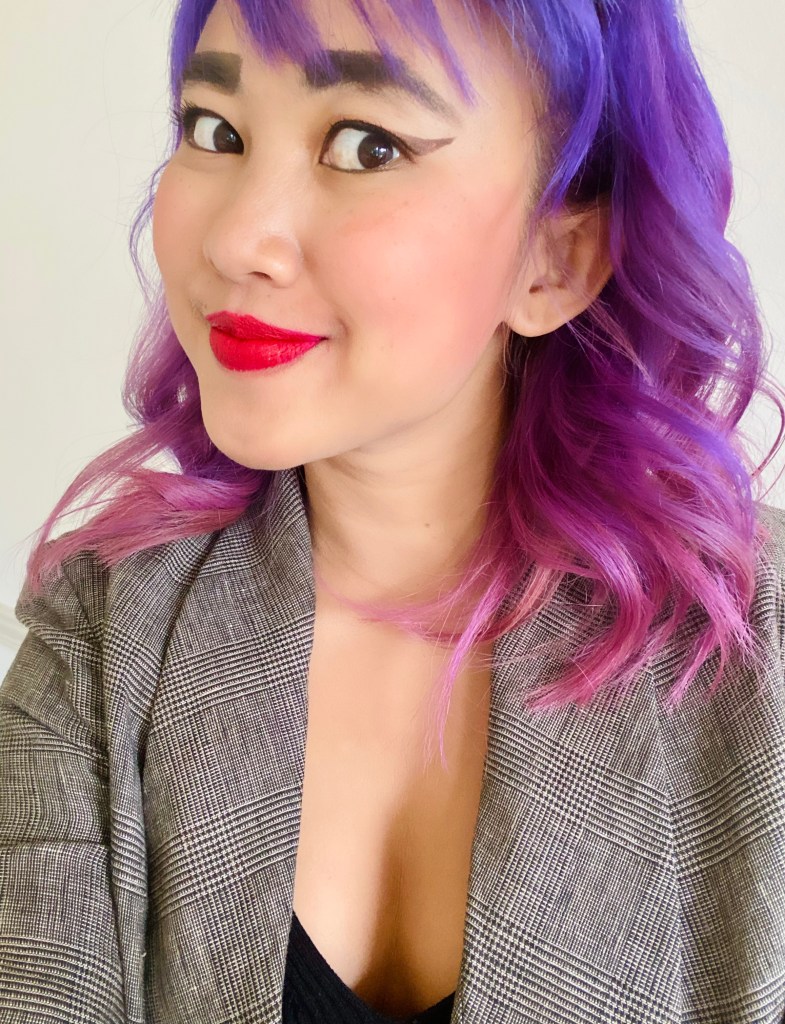
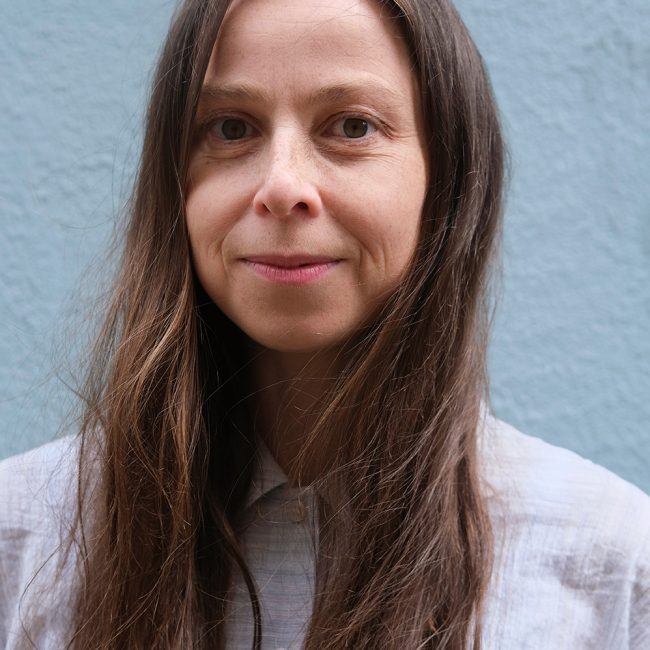
Johanna WKL: Thanks for joining us on the blog today. I thoroughly enjoyed accompanying Na Willa on her daily adventures in Na Willa and the House in the Alley and can’t wait to find out more about how you worked together to translate the stories from Indonesian into English but perhaps we can start by getting to you know first. How did you come to learn Indonesian? What brought you to translation? And how did you get involved in translating this particular project?
Kate Wakeling: Thanks so much for having me! It’s a delight to talk about this lovely book with you. My connection with Indonesia actually started not with language but with music. I had a chance encounter with some Balinese music and dance as an undergraduate and was hooked. From here, I ended up doing a PhD about Balinese gamelan music at SOAS in London and as part of this research, I learnt to speak Indonesian (and a bit of Balinese) and lived in Bali for a year-and-a-bit to do anthropological fieldwork. This fieldwork experience was a total joy – and in a funny way it also freed me up to begin writing creatively in other ways.
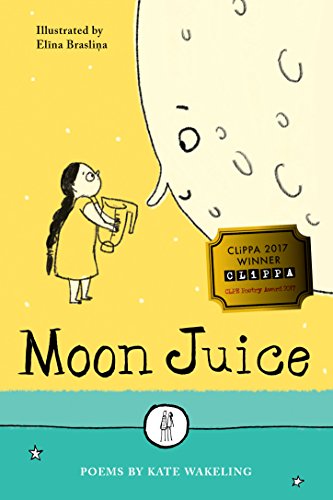
Working on the two Na Willa books has been a joyful way of joining up my experiences of Indonesia and its language(s) with my other writing for children. At the time the first Na Willa book was picked up by the Emma Press, my first children’s poetry collection, Moon Juice, had also just come out with the EP. Its director, Emma, also knew about my experiences in Indonesia, so I guess she thought I’d be a good fit to work on the text alongside Ikhda. The first Na Willa book was actually the first thing I formally worked on as a translator (bar lots of bits and pieces I translated as part of my PhD research) but I loved it and am delighted to have worked on quite a few other translation projects since.
Ikhda Ayuning Maharsi Degoul: Thank you for this opportunity! In 2014, Emma and I were drinking tea in London while discussing the opportunity for The Emma Press to widen its business in Asia, in this case, Indonesia. I saw the enthusiasm in her eyes and I felt quite optimistic that someday, she will be out in front. Years after her hard work and efforts on the press, the door finally opened. In 2019, The Emma Press won funding from The Ministry of Culture and Education in Indonesia. She then contacted me, and I didn’t think twice to say YES!
Working on the series of Na Willa has been joyful for me. As a French born Javanese (Indonesian), it’s a bonus that I can share my love for the culture and language I was raised with. Not to mention, I am also a big fan of Reda Gaudiamo. Na Willa was indeed a special project because it reminds me of my childhood in Surabaya, Indonesia.
WKL: How does Na Willa fit into the context of Indonesian children’s books (i.e. is it typical? Or unusual?). Can you tell us about the historical context (i.e. the Dutch character, the languages spoken or not spoken by the characters?).
IAMD: When I was a kid, I read lot of traditional Indonesian’s children’s books (folklore), such as Roro Jongrang (the Legend of Prambanan temple), Timun Mas, Malin Kundang, etc. As Indonesia is a big country with diverse cultures, it’s interesting to see how the languages and dialects can describe the way of thinking across the islands (700 languages around the archipelago).
Many Indonesian’s children’s books have predictable plots, the majority are ‘’so moral’’. I can say that Na Willa is a revolutionary book for children. Na Willa is an honest, spontaneous, and critical book. There is certainly a modern way of thinking but also a big consideration of Javanese, Chinese and Dutch cultures, mixing together in harmony. Na Willa questions identities, gender equality, religions, etc.
WKL: What are your favourite scenes or chapters?
KW: Ahhh there are so many wonderful passages in Reda’s book. I think most of all I love the bittersweet tone of the book, and how Reda’s writing moves from this wonderful crisp humour to something very emotive (but never sentimental) from chapter to chapter. The whole story arc about the big move for Na Willa’s family felt really powerful to me, and I’m sure will resonate with lots of children who’ve also re-located to an unfamiliar house in an unfamiliar city. In terms of individual scenes, I especially loved the passages about Na Willa exploring a typewriter for the first time while hanging out one day at her father’s office. It reminded me so much of my own fascination with a typewriter at this exact age – something I’d completely forgotten about, until I encountered Reda’s wonderfully rich and vivid sensory description of this ‘tick-tick-ticking’ machine.
IAMDL: I really love the scene where Na Willa and Pak are going to her new school by bike. I feel the excitement, the joy, and the happiness they share. A language of love but also of relief because Na Willa has finally found a very good school which matches her needs and personality. It wasn’t easy to be biracial or multiracial in the 80’s or 90’s in Indonesia. All the jokes, interactions and even songs were full of racist and religious bullying. I’m so happy to know that finally she found her perfect place of education!

WKL: A very practical question – how did you work on the translation? How long did it take you?
KW: My memories of how it all worked are slightly fuzzy (for physiological reasons that are explained below!) but as I recall, Ikhda usually did a first draft of each chapter and I’d then work on the text from here, drawing on both Ikhda’s draft and Reda’s original – perhaps with a bit of extra focus on characterisation and the texture of description etc. It was very much a collaborative process though; we very often went back and forth many times on certain terms and ideas, and Reda’s later input was also invaluable in getting the text ready. In terms of how long it took, I think it was perhaps around 3 months? I remember that my second son had just been born and I worked away on the manuscript most mornings, standing up with the baby sleeping in a sling, while I tapped away at my laptop balanced on the kitchen counter. Looking back I think it was exactly the right sort of creative task for this (slightly wild) time – a task that felt creatively nourishing, but also bounded and cumulative in a way that felt satisfying and (just about) manageable!
IAMD: I’m so glad that I had Kate as a partner on this project. The progress was smooth, and we had a lot of chats about all our questions; many were about the dialects, cultural jokes, etc. First, I read the book, I made the draft translation, proposed footnotes etc. I didn’t do many house errands (my husband took care of them) but I was focused, especially for the adventures of Na Willa. It took me about 6 months to translate the first book and 3 months for the second book.
WKL: The English text retains lots of beautiful Indonesian names, foods and forms of address. How did you decide what to keep and where to use footnotes? How important was it to keep this Indonesian ‘feel’ to the English translation?
KW: I think we worked a lot by instinct! It felt like there were certain terms that were otherwise a bit confusing not to footnote (e.g. particular foodstuffs that mightn’t be familiar to British readers). At the same time, where it was possible to let the main text carry the sense of a term or idea, we often went with this so the footnotes didn’t start to feel too dense for younger brains to contend with – and of course we wanted to let the rich sound-world of the Indonesian language speak wherever possible.
IAMD: Footnotes are so important. They help the readers around the world to understand and ‘’feel’’ the culture, and they bring the readers to the place the stories are written. Reda, Emma, Kate and I were all in agreement about keeping the original Javanese words on characters, foods, etc.
WKL: Do you have any examples of sentences, words or chapters that were particularly challenging to translate? Or which required particularly creative solutions?
KW: Reda writes so insightfully and unflinchingly about race and identity in both the Na Willa books and this often felt complex to translate, particularly as a white British woman (in terms of my own input). The chapter ‘The Lady with the Long Nose’ was a particularly interesting challenge for all of us, I think. It explores Na Willa meeting some friendly new neighbours who are Indian. Na Willa is entranced by Karuna and his mother’s ‘long pointy’ noses, and the following chapter reflects on Na Willa’s growing dissatisfaction with her own nose in comparison. Eventually Mak, Na Willa’s ever-wise mother, helps Na Willa settle back into accepting and celebrating her own features (as well continuing to celebrate her new friends’ noses). Finding the right words was tricky though – as I recall we went back and forth quite a bit in terms of how best to translate the different terms to describe various nose structures clearly and respectfully, while also capturing Na Willa’s innocence and directness of expression. I hope it worked out well but it was certainly one of the trickier parts of the book to work on. (It’s also now one of my favourite passages!)
IAMD: There is a chapter called Ching Chang. The Chinese–Indonesian community in Java and on the other islands in Indonesia is mostly made up of Mandarin speakers. This chapter was quite challenging because there are so many ways the Javanese dialects refers to the Chinese language and we wanted to be sensitive as we translated this into English. Personally, it was so tricky!
WKL: Did you have any inspiration for an English-speaking Na Willa when you were working on the translation? Do you have any little Na Willas in your own families or circles of friends? She reminds me a lot of Little Nicholas and Akissi!
KW: Ahh I wish I knew a Na Willa close by! I think my response to Na Willa is more instinctive than anything else – somehow I just had a very strong feeling for her as a character by the time I’d read the first chapter of The Adventures of Na Willa, and luckily that sense never left me while working on both books. I can imagine there are lots of potential parallels with other bright, curious, brave and forthright protagonists, but I love that she also feels like an absolute one-off somehow! And of course, I feel very very lucky to have had a chance to meet the original Na Willa herself – as the books are so strongly based on Reda’s experiences as a child. Reda is a tremendously wise and calm human, but she still communicates this same magic energy and twinkle of the child Na Willa. Getting to know Reda through these books – both on the page and in person – has been an enormous joy and honour.
IAMD: Many children’s books gave me such joy – including Totto-Chan: The Little Girl at the Window and Mathilda. But we mustn’t compare children’s books! Readers need more books like Na Willa. For me, Na Willa is the children’s ambassador for Indonesia!
WKL: Were you guided by an editor or the publisher when finalising the English translation? Or were you ‘free’ to translate it as you wished?
KW: Working with Ikhda, Reda and The Emma Press felt to me like such a smooth and gentle process. Everything I’ve worked on as part of the EP has a huge amount of trust and freedom involved, so essentially Ikhda and I got our translation together (often chatting via email about particular words and phrases) without much interference! Emma and her team then did a thorough edit of the translated manuscript – then from here, Reda made some really helpful comments which were all incorporated. While translating itself is often quite a knotty process, line by line, the experience of working on the book, to me, felt joyful and smooth in its collaborative spirit!
IAMD: Emma and The Emma Press gave us (Kate and I) freedom to find the words and expressions. Kate’s British craft, Emma’s emotional support, Reda’s suggestions on the stories’ meanings and purposes, and my nostalgic love of Java have mingled well!
The process was smooth, and it was amazing that we all agreed on what the books needed. Reda was humble and helpful. We have discussed every detail and I won’t forget these delicious moments.
WKL: What is the best piece of advice you’ve ever been given as a translator?
KW: I found this comment by the poet and translator Lindsay Turner (from an article she wrote for the Yale Review) somehow terrifically reassuring. It relates to translating poetry, which is what I’ve since worked more in, but I think holds for lots of other translation work:
‘Translating poetry is exhausting because almost every word demands a decision, and almost every decision is a bad decision in some way. Something always gets lost.’
Acknowledging a certain impossibility in all acts of translation has felt hugely liberating for me. You have to give it your all while also accepting there is very likely no perfect ‘solution’.
IAMD: Try to deliver the different cultures as best you can; read the book with your heart; do research, ask and interview the author; be sensible and flexible in your work.
WKL: What advice would you give to any translators starting to work on books? On children’s books in particular?
KW: Relax into the fiddliness of translation! I think at first I was aghast at quite how long it sometimes took me to finish a line, but I’m now more at ease with the idea that getting it right (or rather, as close to right as is possible) does sometimes just take ages, particularly at the very start of a text.
IAMD: Read the book. Feel it. Enjoy it. The rest will be technical. Underline the difficult parts, ask your publisher and do research!
WKL: Are there other Indonesian children’s books you’d recommend to our readers? (Or perhaps books from elsewhere in the world that you’ve loved?
KW: I wholeheartedly recommend ‘When it Rains’ – a beautiful Indonesian picture book published by The Emma Press, written and illustrated by Rassi Narika and translated by Ikhda and Emma Dai’an Wright. It’s playful, poetic, uplifting and full of exactly the right sort of whimsy.
IAMD: Me, too!
WKL: Thanks for taking the time to give us such a wonderful insight into your process! It sounds like you had a lot of fun and a great team to work with on all the ‘trickier’ parts. We can’t wait to read more Indonesian kidlit in translation!
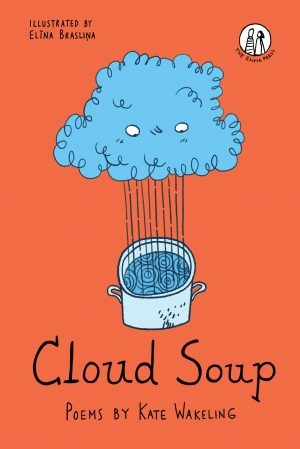
Kate Wakeling is a writer and musicologist. Her debut collection of children’s poetry, Moon Juice (The Emma Press) illustrated by Elīna Brasliņa won the 2017 CLiPPA and was nominated for the 2018 CILIP Carnegie Medal. Kate’s second collection for children, Cloud Soup (The Emma Press) was shortlisted for the 2022 CliPPA and selected as a Book of the Month by the Guardian and the Scotsman. Kate’s work for adults has been commended in the Forward Prizes for Poetry and published widely, including in the Guardian, Magma, Oxford Poetry, The Rialto, Butcher’s Dog and Stand Magazine. A pamphlet of Kate’s poetry for adults, The Rainbow Faults, is published by The Rialto. Photo credit: Sophie Davidson
Ikhda Ayuning Maharsi Degoul is a French poet, born in Surabaya, Indonesia. She lives in Ottawa, Canada. She works as an art teacher. Her two poetry pamphlets have been published by The Emma Press; Ikhda, by Ikhda in 2014 and The Goldfish in 2019. She also participated in ‘The Emma Press Anthology of Motherhood’ (2014) and The Emma Press Anthology of Mildly Erotic Verse (2013). Ikhda is currently working on a graphic novel about Japan and a series of children’s books.
 World Kid Lit
