WKL Blog co-editor Kelly Zhang interviews Nick Thomas, Executive Editor at Levine Querido
KZ: Hi Nick, it’s so wonderful to have you here. Could you give us a brief background/introduction to Levine Querido–who you are and where you’re based? Which age groups and book genre(s) do you focus on?
NT: We’re an independent children’s book publisher based in the U.S. We’ll be 5 years old come April! We’re based in Hoboken, NJ, right across the river from Manhattan. We have two focuses: publishing previously underrepresented voices, and books in translation. Taken together we’re just trying to publish a list representing the world around us. And we publish a bit of everything: picture books, novels, nonfiction graphic novels, poetry, etc. We are very much a children’s and young adult publisher, but we’re starting to dip our toe into adult books when the opportunity and fancy arises!
KZ: It’s amazing to see the constellation of awards and accolades that LQ books and creatives have garnered in a short few years, including the Batchelder Honor for your translated titles. Could you tell us about your overall publishing vision, and how you got to where you are today?
NT: It stems from our president and editor-in-chief, Arthur Levine. Arthur had his own imprint at Scholastic for 20+ years where he was driven by the same mission and commitment to making quality books that would be loved by readers. Eventually he felt he could make a stronger impact as an independent company, and that led to the founding of LQ. Without speaking for him too much, I’d say his vision is to hire people he trusts and believes in, and to allow them to acquire books they truly love and think are meaningful in some way (which is very empowering as an editor!). And Arthur himself still edits a wonderful, big list and follows the same acquisitions philosophy in turn.
KZ: Which translated titles can we look forward to seeing from LQ in 2024? What are some of your current best-sellers or favorites?

NT: To pick a couple 2024 faves, I’m very excited about two books from China: a picture book called Grandma’s Roof Garden by Tang Wei (about a grandma who tends a vegetable garden and feeds her whole family and neighborhood), and a novel by Yao Emei called Tilted Sky (about a young boy figuring out the world with almost zero help from the adults around him–it’s written in a spectacular voice!). Both books are translated by the wonderful Kelly Zhang 🙂

by Lee Gee Eun, tr. Aerin Park
And I’m just delighted with a longer picture book/early graphic novel we’re publishing in the Fall from Korea, The Legend of Tiger and Tail-Flower by Lee Gee Eun and translated by Aerin Park. It’s ridiculously fun and exuberant. Also, we have a new book by Edward van de Vendel and Anoush Elman called Mishka about a young Afghan refugee girl making a home and tending to a bunny in the Netherlands. It just won the Gouden Griffel there, their top prize for children’s literature. It’s gorgeously told.

tr. Nancy Forest-Flier
Check out Levine Querido’s Spring 2024 Catalog here!
Looking back on 2023, we’re very proud of Ancient Night, a picture book from Mexico by David Bowles and David Álvarez (weaving together two Mesoamerican folktales); Wild Poppies, a novel from Jordan by Haya Saleh and translated by Marcia Lynx Qualey (about two brothers caught up in the Syrian War); and Pardalita, a kind of slice-of-life graphic novel/prose hybrid from Portugal by Joana Estrela and translated by Lyn Miller-Lachmann; among others!

Wild Poppies by Haya Saleh, tr. Marcia Lynx Qualey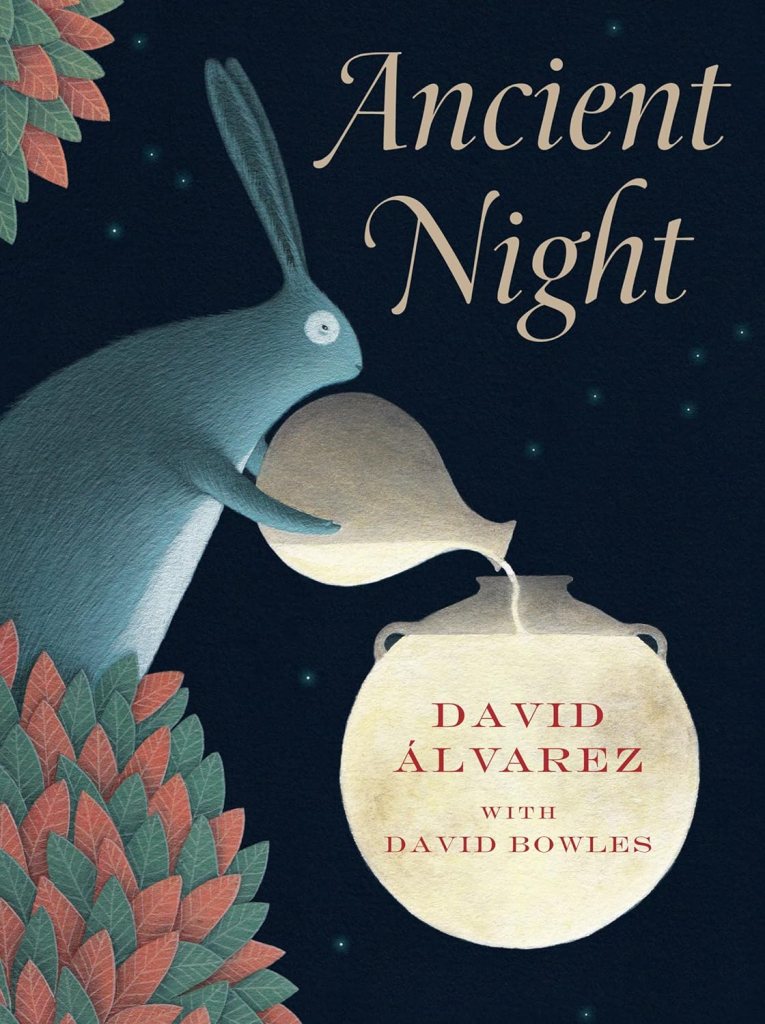
KZ: How & where do you find children’s books for your list from around the world? What makes you want to publish a certain translated title?
NT: Going to rights fairs like Bologna, Frankfurt, Guadalajara, Shanghai, Angouleme, etc. (Certainly not every one, every year; we prioritize Bologna because of costs and try to go to others when we can.) Making it a point to develop and cultivate relationships with foreign rights directors, agents, and editors, so that we’re receiving great catalogs and submissions. And making it a point to cultivate relationships with great translators! So that we can jump on an exciting submission or have them bring submissions that they find exciting.
If it’s an illustrated book, we’re obviously motivated by our opinion of the art/design. Otherwise, we’re relying on our opinion of the premise, the recommendation of a trusted ally or friend (translator; author; rights director; agent; editor; etc), and of course sample translations by people we trust.

tr. Lyn Miller-Lachmann
The international children’s book community is a small one and word gets around about good books, if you’re looking.
KZ: When you are covering languages that you may or may not read, how do you go about finding people who can advise you on a certain book? How do you find translators? How is the editing process different for translated vs. original titles?
NT: I definitely try to read books in translation—adult or children’s—from other publishers to see whose work I click with. There are several great professional groups and blogs for translation work that are good resources. And I’m always asking people for recommendations! The nice thing about this community is it’s a small, tight-knit one and generally people try and help each other out, with the broader goal of promoting international literature.
In terms of editing, you just recognize that you obviously can’t edit big picture like you would a domestic acquisition. There’s something really freeing and wonderful about that. But I still do quite a bit of line-editing with translations and like to have a lot of discussion with the translator (and sometimes the author) about the perfect way to capture the spirit of the original in English.
KZ: Picture books in other languages can often contain more (or less) text than we are used to in the English-language markets. Other cultures often feature different aesthetics or types of topics that are explored through their kidlit. Have you encountered challenges related to this in your translated titles? How do you handle these challenges as an editor?
NT: Absolutely. With almost every book there’s a beat (or larger section) where you’re like “huh?” or wonder how it will resonate. Publishing can be a hard business and with any acquisition you never want to be starting off with obstacles, perceived or real. But at the end of the day you make a decision: does my passion for this book and what I love about it outweigh any doubts I have about a particular moment (which may or may not be valid)? After all, much of the whole point of publishing international literature is to introduce new aesthetics, topics, vibes, philosophies, etc to American / English-reading people. You want people to feel a degree of surprise or challenge or uneasiness!
KZ: Do you promote translated books differently from the way you launch and promote books written originally in English? What are some challenges and opportunities?
NT: Some challenges: you usually don’t have the author around to send to library/teacher/bookseller/consumer conferences, which can be very impactful. There are a lot less needle-moving awards which translated books are eligible for, and awards are 100% impactful and one of our main levers for selling books. And generally I do think the general public isn’t always motivated by the fact that a book is translated, and may even be turned off by that. Perhaps I’m wrong about that, but I feel it. And so you don’t want to play that aspect down, because it feels wrong and it will risk alienating the core audience for the book, but you also are always wanting to find the broadest audience.
The opportunities are that the community of lovers of international literature is passionate and wonderful; there are grants from certain countries that make such publications easier to invest in; and most of all, there are SO MANY GREAT BOOKS OUT THERE to bring to our market and it’s a wonderful opportunity! My boss Arthur has used the metaphor of the world of children’s books being a giant candy shop to avail ourselves of, and I think that’s true!

KZ: What kinds of challenges do you face as an indie publisher of mainly diverse and translated books? What might be done to boost the number of books translated from languages currently less represented in English translation?
NT: I kind of alluded to this above, but sometimes it feels like we have to go the extra mile to convince some people why a translated book is worth their while. And certainly the book bans and the resulting environment are tough on us – it makes people fearful or unwilling to take a chance on something.
In terms of boosting translations, grants for translation and printing are so, so helpful. And I would LOVE to a) see ALSC—the division of ALA that facilitates most of the big library awards—create an international illustration award, kind of like the Batchelder but for picture books, and b) have more promotion and conversation around the Batchelder and a new picture book award. Awards are wonderful in that they’re an expert, impartial curation service in this crowded world and I bet we could get even more momentum behind them for international children’s books.
KZ: In recent months, a very successful online auction fundraiser was held by Friends of LQ to help finance your future publishing efforts. What was the impetus for this fundraising initiative? How will this new source of funding help you to publish/promote more translated books?
NT: Generally, the industry saw a downturn in sales this year, and printing/shipping costs largely stayed at their (raised) pandemic heights. LQ was no exception, but as a relatively new company, we don’t quite have the backlist of other bigger publishers to help carry us through such times. Nor do we have the scale to bring those printing/shipping costs down a ton. I would also say that the book bans and resulting environment this year had an effect on us given our list’s focus, which was tough. But we weathered the storm. The auction was tremendous and we are eternally grateful, and we had a good Fall sales-wise. We’re not going anywhere! And we feel that every list and every book that we publish brings a little light into the world in some way.
KZ: Do you take submissions for translation projects? How can translators pitch projects to you?
NT: Translators can send their query package to info@levinequerido.com with the headline “Translation Query,” and their submissions be forwarded to me.
***


Nick Thomas is Executive Editor at Levine Querido in the U.S.A. He has previously held roles at Bloomsbury, Chicken House, David Fickling Books, and Arthur A. Levine Books.
Nick works on books of all kinds, including picture books, novels, graphic novels, and nonfiction. Among the books he has edited are Newbery and Pura Belpré-winning The Last Cuentista by Donna Barba Higuera; Newbery Honor-winning A Snake Falls to Earth and Locus Award Winner Elatsoe by Darcie Little Badger; Printz Honor-winning Apple (Skin to the Core) by Eric Gansworth; and Walter Award-winning Man Made Monsters by Andrea L. Rogers. He has edited translations from Mexico, Colombia, Korea, Portugal, Spain, the Netherlands, Finland, China, and France. He was a PW Star Watch finalist in 2019 and teaches a class on children’s publishing at CCNY’s Publishing Certificate Program.
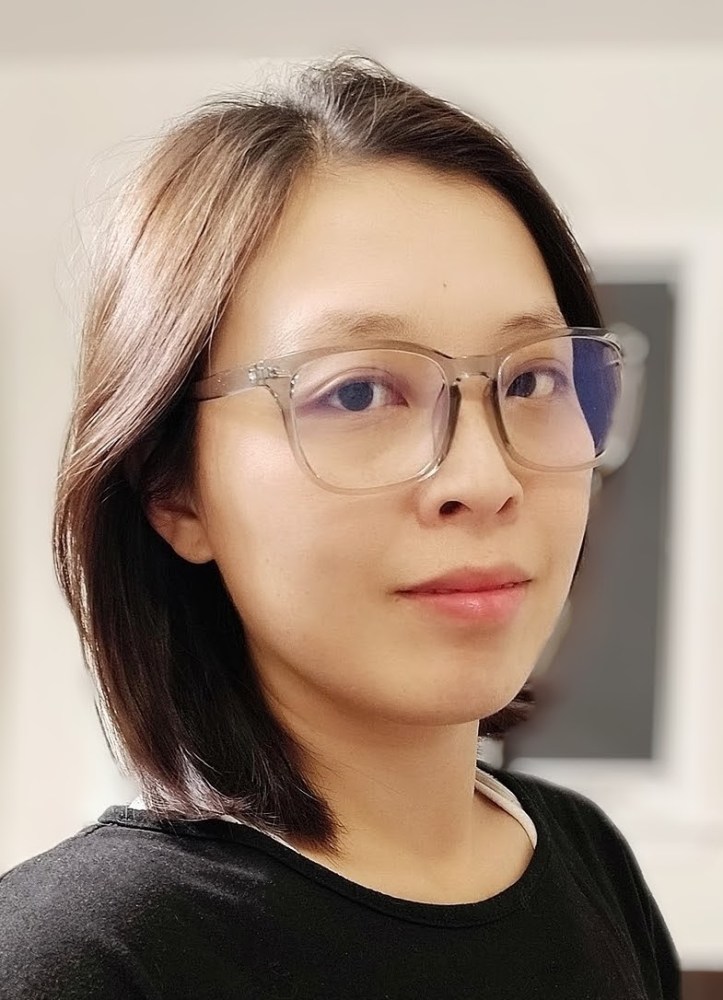
Kelly Zhang is a Chinese Canadian children’s book author and literary translator (Chinese/English). She is the inaugural Translator Coordinator for SCBWI Canada East and co-editor of the World Kid Lit Blog. Kelly writes heartfelt stories inspired by her heritage culture and informed by her lived experiences; she translates contemporary children’s literature from the Chinese, with a special focus on women writers and marginalized creatives.
Her translation of the picture book GRANDMA’s ROOF GARDEN by Tang Wei, and upper MG novel TILTED SKY by Yao Emei are forthcoming from Levine Querido in Spring 2024.
 World Kid Lit