by Avery Fischer Udagawa
Kelly Zhang’s translation from Chinese of the upper-middle grade novel Tilted Sky, written by Shanghai-based author Yao Emei, was just published by Levine Querido in June. An audiobook edition is also available, narrated by James Chen. Avery Fischer Udagawa read an advance copy of Tilted Sky and interviewed Kelly by email.

Avery Fischer Udagawa: Kelly, congratulations on the publication of Tilted Sky! This novel portrays Bai Jian, an eleven-year-old boy growing up in urban China in far-from-ideal circumstances. Bai Jian’s single father Hei Jian has ambitions to work in the film industry, but he struggles to sustain relationships, hold down jobs, or even put food on the table. Early on, Bai Jian as narrator declares, “Whenever Hei Jian spoke to me up close, I couldn’t help turning my head away. His stomach was almost always empty, and, if a person hasn’t eaten in a while, his breath starts to smell gross. I knew this from personal experience.” In this way, Bai Jian describes his stark reality with open-eyed clarity while also taking it in stride. Did you find it challenging to come up with a voice in English for a child who describes experiences of malnutrition, neglect and even violence so matter-of-factly?
Kelly Zhang: Hi Avery, I’m so excited to be having this conversation with you, to talk more about this powerful, compelling coming-of-age story that I’ve had the honor and pleasure of translating. When I first read the novel two years ago, Bai Jian’s voice instantly gripped my heart and refused to let go. Written from the first-person point of view, the raw honesty with which Bai Jian spoke about his difficult circumstances and life experiences moved me deeply. I knew, before l was done reading, that I had to share his story with the world.
It took me some time and experimenting to ‘find’ Bai Jian’s voice in English. When I began translating the book, I focused a lot of energy on the first two chapters: I would read my translation out loud, scrutinizing it word by word and sentence by sentence, revising it repeatedly over the course of many weeks. I played with the register, word choice, tone of speech, and sentence structures of the translated text until I arrived at a version that most closely replicated Bai Jian’s voice from the original Chinese text. Once I’d found the voice, my confidence grew, and I was able to translate the remaining text relatively smoothly and efficiently.
AFU: Bai Jian witnesses many scenes no child should have to see. How did you enter into his intense emotions, yet keep from getting overwhelmed?
KZ: While I was translating Tilted Sky, I fully immersed myself in Bai Jian’s world, letting his voice and emotions inhabit my mind so I could reproduce them authentically on the page. It was indeed depressing and traumatizing at times. I found it necessary and helpful to take breaks between sessions of translation—to step away and do something else, re-center myself, and be grounded in the present reality.
As in other lines of creative work, it’s important for translators to establish healthy boundaries between work/art and personal life so we don’t end up getting burned out. We should allow ourselves to leave our work at the door, and pick it back up when ready. I’m still learning to do this effectively.
AFU: At one point, Bai Jian spends an entire Lunar New Year holiday alone, due to the failures of all the adults in his life. Yet he makes the best of it. Did you find yourself bowled over by how this eleven-year-old keeps going despite it all?
KZ: There are many shocking examples of how the adults in Bai Jian’s life make poor choices that cause him much pain and suffering. Bai Jian has a heart of gold, which makes it even more infuriating to witness those grown-ups fail him. Another scene that really stuck with me was towards the end of the novel, when Bai Jian’s dad finally returns to town, cash-strapped and fallen sick. Bai Jian gives his dad a portion of his loaned school fees to get medical treatment, but instead, Dad leaves town with the money and abandons him again.
Despite being neglected, abused, and betrayed time and again, Bai Jian still finds room in his heart for empathy, optimism, understanding, and forgiveness. I think that’s what moves me the most about Bai Jian and his journey.
AFU: Near the end, Bai Jian writes a letter to his classmates, revealing his many problems and asking them to help keep him accountable as he copes. And they really help! I suspect that this heartening section could have come off as saccharine, if you had not taken such care to preserve Bai Jian’s young voice, even as he says un-young things: “It was time to wave goodbye to my childhood.”
KZ: Through the process of translating this novel, and having previously translated other forms/genres of fiction for both adults and children, I’ve gained a deeper appreciation for how a translator’s intentional creative choices about diction, register, and phrasing can affect the tone and voice of a translated work. I think it also helps that I read and write children’s books myself, which gives me a frame of reference for finding that youthful voice.
The first draft of my translation contained a number of sophisticated words and clunkier sentences that I ended up deleting or modifying during subsequent revisions, because they were jarring to read aloud or seemed incompatible with Bai Jian’s age and character voice.
AFU: Switching gears, I enjoyed this novel’s chapter titles, which are often sentences about the weather in Bai Jian’s voice: “Chapter 8: New Year’s Eve was Going to be Nice and Sunny,” “Chapter 12: Spring Brought along Annoying Plane Tree Catkins.” Did you relish those?
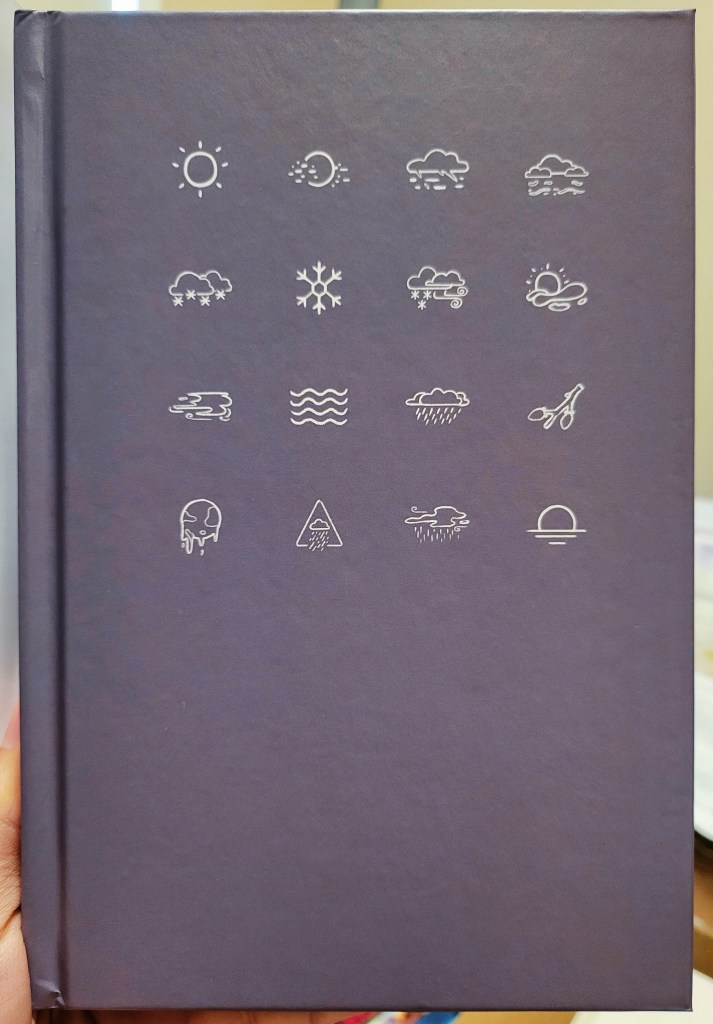
KZ: Yes! Descriptions of the season, environment, and weather serve as important narrative devices in the story. The weather of the day is a reflection of and metaphor for the changing mood of the protagonist. When translating the weather-themed chapter titles, I made sure to capture the prevailing mood and emotions accurately, and when possible, gave myself the creative liberty to come up with more lively/fun versions of the titles. I especially enjoyed the catkins one.
AFU: Tell me about translating the “seven hundred soldiers” rhyme that Bai Jian’s dad tries to get him to recite.
KZ: This is a tongue twister commonly recited by aspiring actors and theater students in China, to help improve their diction and articulation. Translating it presented quite the linguistic challenge for me, but was also a fun process. I tried to recreate the staccatic rhythm and an appropriate level of ‘jarring-ness’ of the tongue twister by using alliterations and internal rhymes. I also tried to preserve the simultaneously violent and darkly humorous war imageries contained within the original text.
AFU: Though set in China, this novel mentions Americanisms like McDonalds and the phrase “white Christmas.” Do you think these may make the novel more accessible to North American readers?
KZ: To me, the setting is a fairly realistic portrayal of contemporary urban China, where people have ready access to a variety of Western fast food chains, fashion brands, and big-box retailers. In recent decades, Western holidays like Christmas and Valentine’s Day have also become increasingly popular and celebrated amongst the younger generations and urban dwellers. While I don’t think that references to these Western elements are deliberate, they may help to make aspects of the story and setting feel more ‘familiar’ and relatable to Western readers.
AFU: Tilted Sky will surely take its place among MG and YA novels with protagonists forced to become adults before their time, such as Across the Desert by Dusti Bowling, Patina by Jason Reynolds, and Out of the Easy by Ruta Sepetys, to name only a few.
KZ: Thank you for offering such high praise for Tilted Sky, a novel that moved me on a personal level. I’m ever grateful to Yao Emei for having written this special book and for gifting us an unforgettable protagonist in Bai Jian. I, too, feel that this book belongs on the same shelf as the other beautifully crafted and unflinchingly honest coming-of-age tales you mentioned. As an admirer of Jason Reynolds’ work, I sense strong parallels to his Track series of middle-grade novels; I have no doubt that Bai Jian would find kindred spirits in Ghost and Patina, if their paths were to cross.
I believe Tilted Sky will resonate with young readers as well as adult readers, because it leverages the specific and personal to tell universal truths—a hallmark of great children’s literature and indeed, of all great literature. While many kids (fortunately) haven’t grown up under severe neglect, abuse and poverty, it is a painful reality for many others. Furthermore, all children have at some point of their young lives experienced feelings of frustration, shame, confusion, disappointment, grief, loneliness… These are the authentic and universal aspects of human experience that Bai Jian’s voice speaks to, and that we can all relate to. To ignore or deny the presence of painful emotions and struggles in our children is to be deceitful and disingenuous, and to do a great disservice to all of humanity.
Avery Fischer Udagawa’s translations include the 2022 Batchelder Award-winning novel Temple Alley Summer and the 2024 Batchelder Honor book The House of the Lost on the Cape, both authored in Japanese by Sachiko Kashiwaba. Temple Alley Summer has just come out in paperback. Avery lives near Bangkok and serves as Global Translator Coordinator in the Society of Children’s Book Writers and Illustrators (SCBWI).
Kelly Zhang is a children’s book author and Chinese/English bidirectional translator based in Ottawa, Canada. She is the translator of Tilted Sky (Levine Querido, 2024), a Chinese upper middle-grade novel written by Yao Emei, and of Grandma’s Roof Garden (Levine Querido, 2024), a picture book written and illustrated by Tang Wei. She is the author of the English-language picture book Take Me to Lăolao (Quill Tree Books/HarperCollins, 2024).
 World Kid Lit