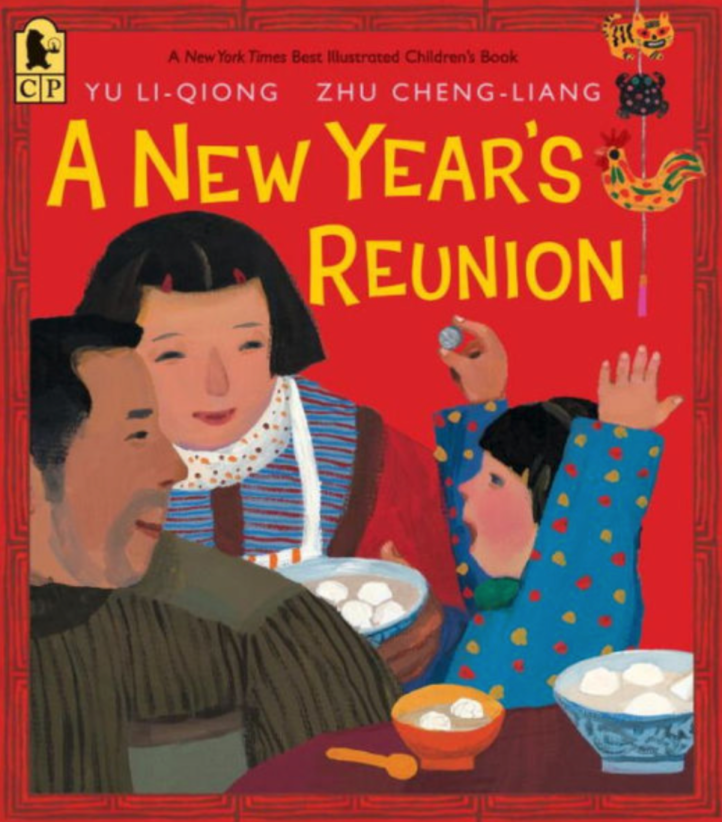
Happy New Year, or Spring Festival! This is part two of the two-part interview series on the creators of the Chinese picture book A New Year’s Reunion. Today, Wang Li* interviews the book’s author Yu Li Qiong*. You can catch up with part one here.
By Wang Li
Wang Li: You are the chief editor of 东方娃娃/Oriental Children magazine, often referred to as the cradle of Chinese picture books. You are also the author of A New Year’s Reunion and other children’s books, as well as a translator of children’s literature. How do these roles come together in your life?
Yu Li Qiong: Over the years, I have gained much knowledge about picture books through reading, researching, and promoting picture books in China. Such knowledge has made it possible for me to edit children’s books. From planning topics to collaborating with authors, I have explored how to tell a story more naturally through both words and pictures. My work as an editor has also deepened my understanding of picture books.

I believe picture books are the best kind of books for readers of all ages—not just children. That’s why I fell in love with picture books. Coming from a Chinese literature background, I have always been interested in creative writing. Naturally, I began my picture book creation journey. It started with A New Year’s Reunion. Hsin Yi (Picture Book Foundation) invited me to write a story about Chinese New Year. It took me a long time to write, and I was surprised that I was able to complete the manuscript.
Editing, writing, and translating are all rooted in my understanding of children’s books. Beyond house chores and other obligations, much of my life revolves around reading, creating, and translating. To be a good creator and editor, you need to read widely and broaden your vision. I read just about everything—adult novels, philosophy, aesthetics, and more. My writing is not limited to picture books, either; I also write novels for teens and children. I hope to keep expanding my writing range, as it continues to nourish me.
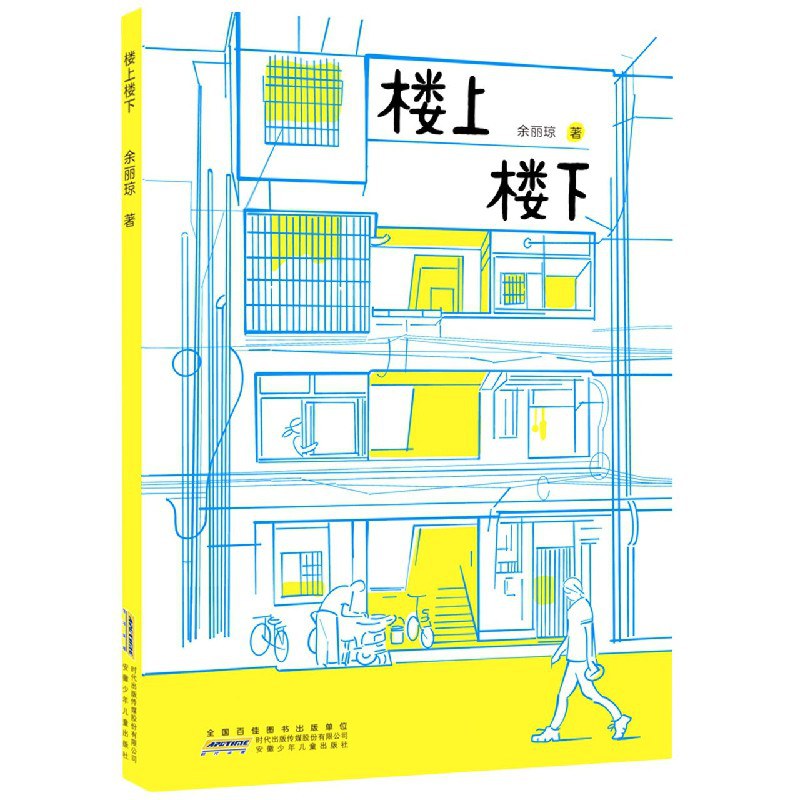
Wang Li: Congratulations on your novel Lou Shang Lou Xia (楼上楼下 literal translation: Upstairs Downstairs). Like A New Year’s Reunion, it is based on your own childhood experiences. Could you share how you turned fragments of childhood memories and the strong emotions associated with them into a story?
Yu Li Qiong: The story of A New Year’s Reunion is built upon the deep bond between my father and me. My childhood memories carried emotions that shaped the story. However, this doesn’t mean that simply listing those childhood experiences on paper will result in a story. These memories provide me with inspiration, but they are not the plot itself. Many details and plot points are the product of literary creativity. By weaving together the plot, my childhood feelings, and my literary and creative skills, the story eventually took form. A New Year’s Reunion went through 34 revisions. At times, I had to take a break from it.
Wang Li: I cried when I read the ending of A New Year’s Reunion.
Yu Li Qiong: Many readers have shared the same experience. The ending came to me after taking a long break. In fact, I was crying when I wrote that part. I believe that if I felt such strong emotions while writing, readers would feel them too, because human emotions are universally connected.
Wang Li: You believe that “writing should align with children.” Could you talk more about this?
Yu Li Qiong: I didn’t have much experience writing children’s books when I wrote A New Year’s Reunion. But my editor inspired me. He said, “You need to go back to your childhood.” At that moment, I realized that, to write for children, I needed to become a child myself. I needed to rediscover my inner child.
When I wrote A New Year’s Reunion, for the first time, I was able to return to my childhood. I became my childhood self. I felt as though God had cast some magic on me, allowing me to travel through so many years… back to my child self. Once I connected with that part of me, deep emotions burst forth. When I return to the state of the child in my heart, I find that things spring from my mind naturally, and then I write words that I can’t even believe I wrote. I am very grateful to my inner child.
Writing for children is not something you can do casually. It’s not about making the story simple or the language basic. Writing for children is far from simple—in fact, it’s extremely difficult.
Wang Li: How do you decide what to keep and what to let go?
Yu Li Qiong: The wording must be concise. If a word can be there or not, then it needs to go.
Wang Li: My students love A New Year’s Reunion. Here’s one comment they shared after I read the book to them: “When Laoshi (teacher) reads the story, I feel like I am in the story.” Do you have other books you think my students would enjoy?
Yu Li Qiong: I am so glad to hear that. We published a series about the natural world in China, featuring topics such as wetlands and golden snub-nosed monkeys, which I think the children might enjoy. I wrote two books in this series.
Wang Li: A New Year’s Reunion has sold over one million copies and continues to meet new readers each year. Could you talk about your relationship with your books after publication?
Yu Li Qiong: Once a book is published, it no longer belongs to me. Each of my books is like a child—they must face their own fate. I read reviews, whether positive or negative, and I accept them all.
***
* Chinese personal names present the surname or family name before the given name. Wang Li’s surname is Wang. You might also see her name written in English as Li Wang. Yu Li Qiong’s surname is Yu and you might see her name written in English as Li Qiong Yu.

Yu Li Qiong is an award-winning children’s book author and the chief editor of Oriental Children. She has also translated multiple children’s books from English to Chinese. Born and raised in China, she holds a BA in Literature from Nanjing University and an MA in Dramatic Art. Her book A New Year’s Reunion is becoming a classic in China. It won first prize in the Feng Zikai Children’s Book Award in 2010 and was named one of the Ten Best Illustrated Books of 2011 by The New York Times.
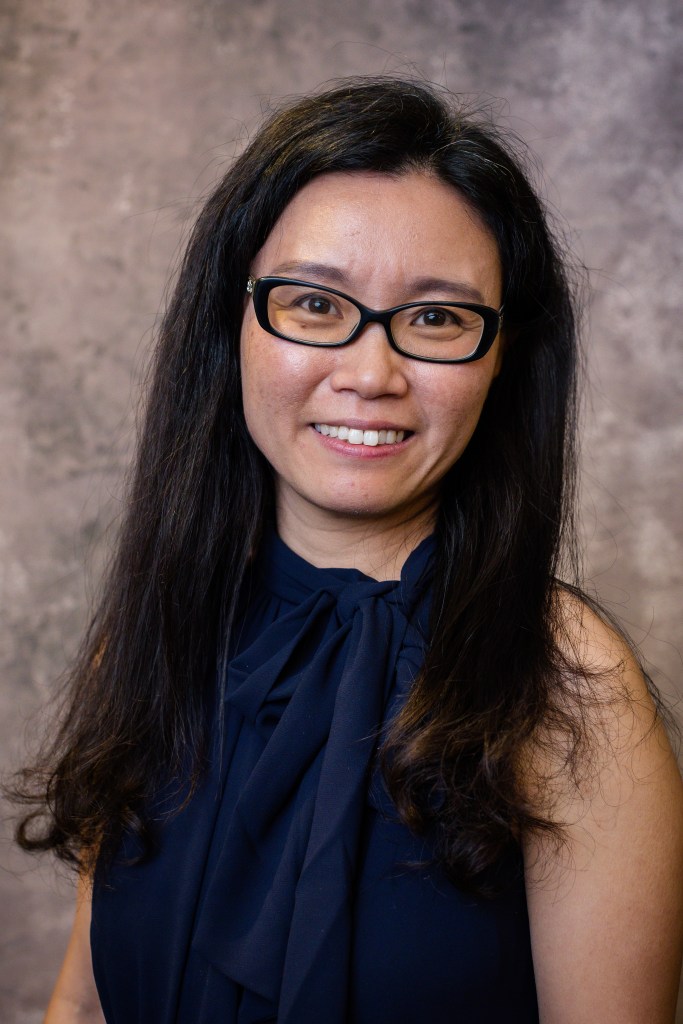
Wang Li is a children’s book writer, teacher, and translator. She finds children to be the most fascinating creatures, as she herself once was one. She loves writing and watching children play. She also enjoys sharing stories across languages. In 2024, she won the SCBWI Pitch-Perfect Translation Grant, along with several other writing awards.
 World Kid Lit