By Johanna McCalmont
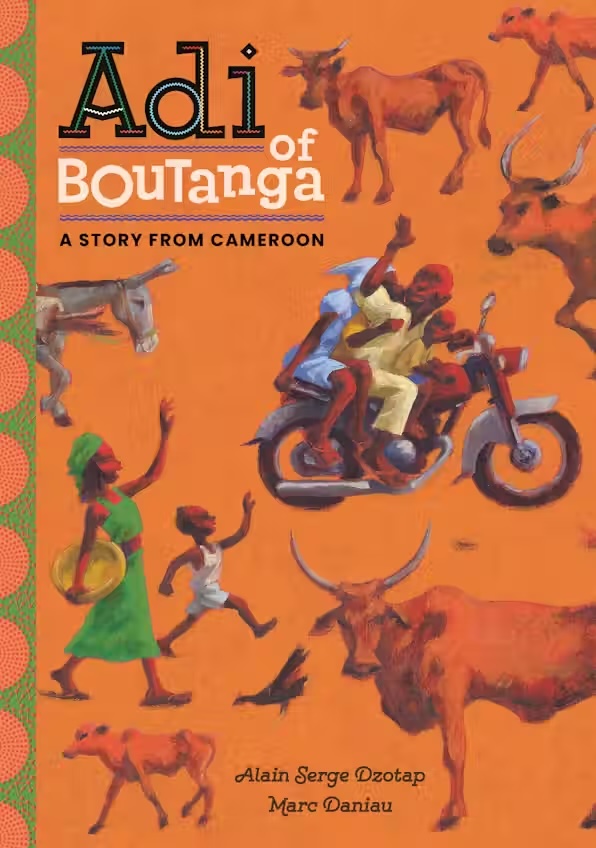
Today Cameroonian writer Alain Serge Dzotap talks to Johanna McCalmont about his latest book Adi of Boutanga (Eerdmans, April 2025), a story about a 13-year-old girl growing up in a hillside village who is suddenly faced with drastic change. Catch up with our review from Reading Africa week review here.
Johanna McCalmont: You’ve written many books for children in French for a range of ages, from board books to picture books, and now Adi for slightly older readers. Can you tell us about this particular story?
Alain Serge Dzotap: Yes, this story is for slightly older children; it’s aimed at readers aged nine and over. Adi, my heroine, is a young Fulani girl. [Editor note: Fulani are an ethnic group in West Africa. Many are nomadic, cattle herders.] Among the Fulanis, girls are sent into marriage without their consent while still children. Adi is still at elementary school when her uncle wants to send her in marriage in exchange for cattle. Fortunately, her parents are firmly opposed.
JM: There is also some fascinating additional material for readers at the back of the book including a glossary, information about life in Cameroon, and background about the characters featured in the story. Can you tell us a bit more about how this was included?
ASD: The glossary was a brilliant idea from my editor, Kathleen Merz, to help American readers better situate the story in its cultural context. It’s a sort of gateway to access Fulani culture.
JM: How did you come to write this story?
ASD: This story was born of my meeting with Madame Ly Dumas, who is the founder of the Jean-Félicien Gacha Foundation, an organization that helps youth in Cameroon. She introduced me to the real-life Adi. I immediately wanted to tell the story of this young woman who struggled to escape an unfortunate fate. I wanted her voice to be heard. It was writer and editor Michel Piquemal who sent it to my editor Lucette Savier, who loved it.
JM: What kind of reader do you think will connect with this story? Who do you imagine reading this story?
ASD: My stories are for children all over the world. When I was a child, I didn’t have access to books because there was no library in my hometown, Bafoussam. Around the age of 18, when I was able to enter a library, and I read books from all over the world. I’d like there to be no more barriers for readers.
JM: What first drew you to writing for children?
ASD: I write to give stories to read to the child inside me who missed out on books.
JM: Is there a particular age group that you enjoy writing for most? Do you find you approach writing for different ages in a different way? Have you had much feedback from child readers?
ASD: I’ve never really asked myself that question. I learn to write as I write each story. However, it’s with children aged 3 to 9 that I feel most at ease.
One day, in a class in Switzerland, a child pointed out to me that I had confused a dromedary with a camel in one of my books. Children teach us a lot.
JM: You also translated Adi into English. Is this the first time you’ve brought your own stories into English?
ASD: The proposal to translate Adi came from my editor, Kathleen Merz, who was very much involved in the work. It was the first time for me and her comments and suggestions were very helpful. For example, I had to adapt it for an American audience, as well. I had written ‘petrol’ instead of ‘gasoline’, and she helped me localize it.

JM: Are you currently working on any other projects we can look forward to reading?
ASD: This year, I’ll be publishing six new books in France and Belgium. I’m also working on five other children’s stories, which I hope to finish later this year. You know, when you start writing a story, you can never be sure of finishing it. In France, The Gift, published in English by Eerdmans Books for Young Readers, has become a series and the sequel will be released on March 7.
JM: What other books and stories from Cameroon or elsewhere in Africa would you recommend to our readers?
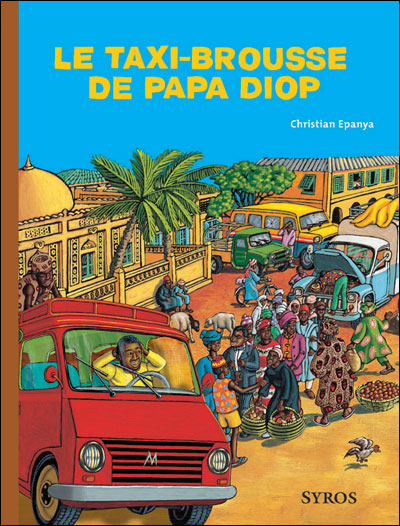
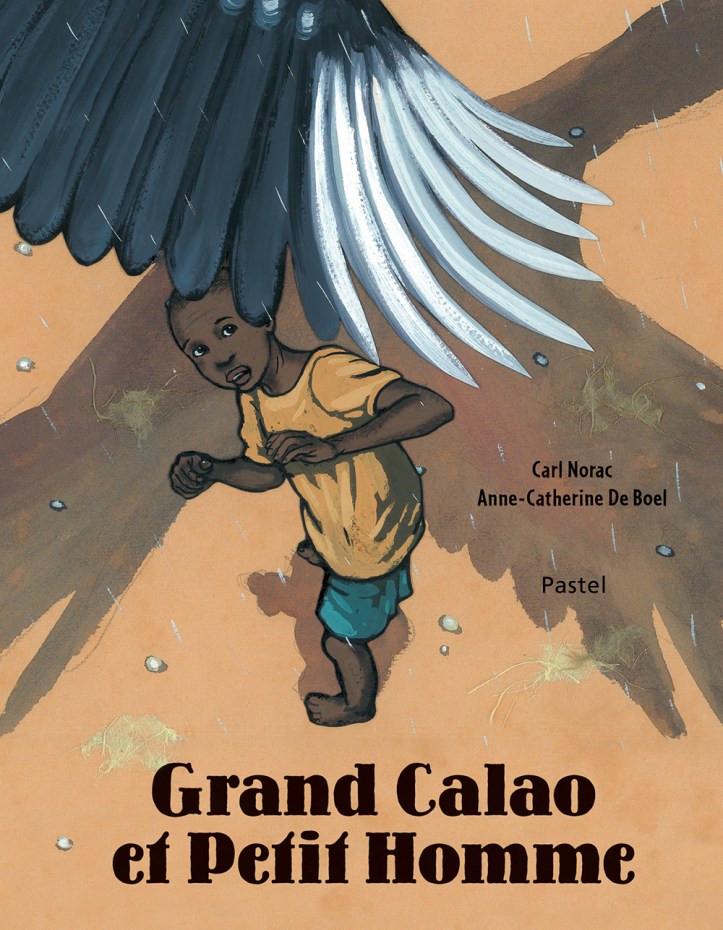
ASD: Sadly, American publishers rarely buy the rights to picture books written in French. Papa Diop’s Le taxi-brousse and many other books by Christian Epanya are a wonderful postcard of Africa. Anne-Catherine De Boel, who illustrated Grand Calao et Petit Homme, written by Carl Norac, draws stories set in Africa formidably with flamboyant colours.
JM: Thanks so much for taking the time to tell us more about Adi and all your other exciting projects!

Alain Serge Dzotap is a children’s author, poet, and literacy advocate. His books have received the Saint-Exupéry Valeurs Jeunesse Prize and have been included in the International Youth Library’s White Ravens catalogue. He lives in Cameroon, where he has been awarded the country’s medal of knight of the order of merit.

Johanna McCalmont was born in Northern Ireland and now lives in Brussels, Belgium where she works from French, German, Dutch and Italian. She loves connecting writers with audiences when interpreting at literary festivals and has a particular interest in African literature. Her latest translation for children, Giant Steps by Anaïs Lambert will be released by Blue Dot Kids Press on 8 April. Read more about Johanna here.
 World Kid Lit