By Jackie Friedman Mighdoll
Today marks the beginning of World Kid Lit month! It’s our ninth annual celebration. This year on the blog we’ll be showcasing book reviews all month. We hope you’ll find lots of inspiration for reading and sharing. To kick off the month, I have the great pleasure of speaking with children’s librarian, author, and web celeb, Betsy Bird of Fuse8, one of my favorite places online.
Jackie Friedman Mighdoll: I’m so excited to have you with us to kick off World Kid Lit Month 2025. You’ve been a great advocate of books from around the world! When or how did that start? Did you have favorites from childhood?
Betsy Bird: Oh! What a good question. And not something that I’ve ever really thought about before. It wasn’t something I particularly thought about when I was first starting out, but I began my career at New York Public Library. And you really can’t easily ignore international children’s literature when you’re in Manhattan. It was a slow process, though. I sort of received my education in international children’s literature from seeing so many amazing books from other countries coming out from publishers. The Mildred A. Batchelder awards helped focus my interest as well. In the end I just kept consistently falling in love with books that weren’t getting a ton of attention. It all ultimately culminated in my first visit to the Bologna Children’s Book Fair.
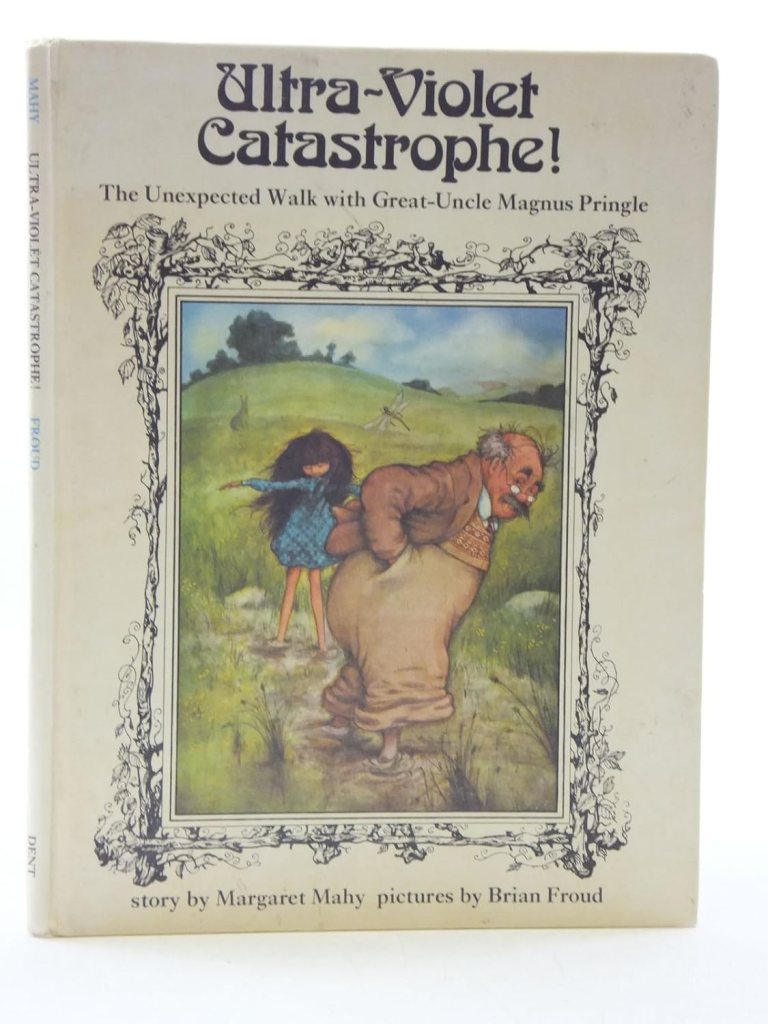
As for favorites from my childhood, that’s a really and truly interesting question. I actually watched a lot of international children’s entertainment thanks to an old Nickelodeon show called Pinwheel, which featured a slew of shows and shorts for kids from other countries (Clangers, anyone?). But in terms of books, the only truly international title I can remember was the picture book Ultra-Violet Catastrophe by Margaret Mahy. New Zealand in origin, if I’m remembering it correctly. A delightfully weirdo book.
JFM: Your 31 lists for 31 days has been such fun for all your readers since…2016! I’m always waiting to see which of my favs make your list and which new ones go on my reading list. In 2016, a majority of the books on the Unconventional List were imports. You still have an Unconventional List and now you also have a Translated List. Can you tell us more about that? Was there a book or books that led you there?
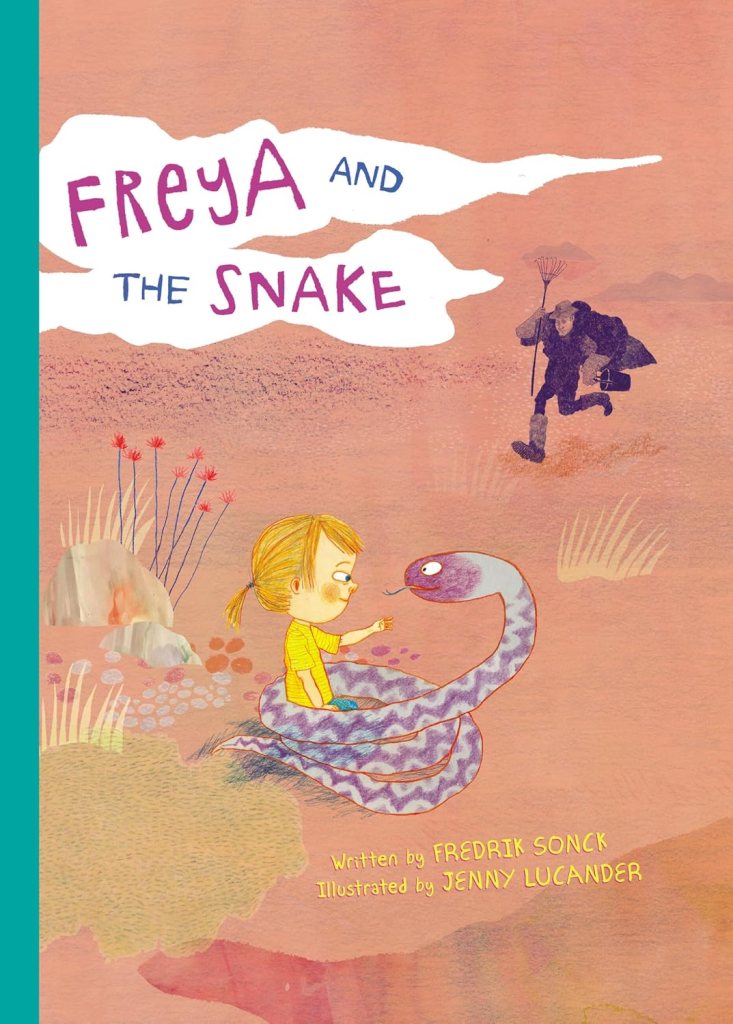
BB: Ah! Yes, I long ago discovered that when someone has a book from another country, particularly Eastern Europe (sorry, Eastern Europe), Americans react weirdly to it. I would be working with these sophisticated New York Public Library librarians, but the minute they encountered a book from another country with a slightly different aesthetic their noses would wrinkle and they’d say those dire words, “I don’t know why I don’t like it… I just don’t like it.” That’s death for any book. So when I began making my 31 Days, 31 Lists, I realized that some imports never have this difficulty. Think of Everybody Poops, Press Here, or The Gruffalo. But then you’d get something like John the Skeleton from Estonia, and I always felt like books of that sort need to be celebrated in their own right. This year I’m head-over-heels in love with a book called Freya and the Snake from Finland. Check out its reviews on Goodreads sometime, though. Folks do NOT get its honest sensibility about parents and the death of animals. That’s why we call these books “Unconventional” rather than “weird”. They deserve readers too.
JFM: On the bilingual books front, we’ve seen the selection grow from largely Spanish-English to include other languages including Mandarin, French, Cree, Cherokee. They’re fantastic for the many bilingual households out there. I’d love to also hear how you see parents and kids interacting with these books. Are bilingual books part of story-times?
BB: Well, it’s interesting! So, first and foremost, I’d like to praise the number of books coming out simultaneously in other languages alongside their English-language counterparts. I feel like this a relatively new thing (or at least the rate at which we’re seeing them is new) and I’m very much here for it. And there are a number of ways that parents and caregivers are using these. There are the adults for whom these languages are their own first languages. Then there are the people trying to teach their kids other languages. Sometimes these kids are in immersion programs and sometimes it’s all on the caregivers. Whatever it is, it’s just great to see these books out there.
JFM: We are huge library and librarian fans. As an expert in both world kidlit and librarians, do you have any advice on how we can help more librarians take part in World Kid Lit Month? And any advice on how librarians can discover or use more WKL?
BB: In terms of librarians interested in international children’s literature, the trick in getting them on board is to get them to realize how vitally important it is to look at children’s books as a worldwide phenomenon. And now is the best possible time to get involved! We’re seeing books from countries that previously didn’t even have a children’s book publication system in place, and that’s exciting! And in this whole “American First” world in which we are forced to live, that is how you sell World Kid Lit to librarians. We remind them that we are not alone on this globe and it is imperative that our kids read and appreciate books for kids from other nations.
I also highly recommend that any librarian interested in World Kid Lit Month also consider joining USBBY (the U.S. chapter of IBBY or International Board on Books for Young People). It’s an organization that’s been around for years and years and it does an incredible job. Also, always check out the White Ravens List of great books around the world! It comes out annually and there is NO better way to know what the hot books in other countries are. And did you know that the International Youth Library that runs the award is based out of Munich, Germany in an actual CASTLE? You can’t make this stuff up, folks.
JFM: What have you read lately that made you laugh? That made you press it into the hands of your fellow librarians? That made you read lines aloud to your kids or family?
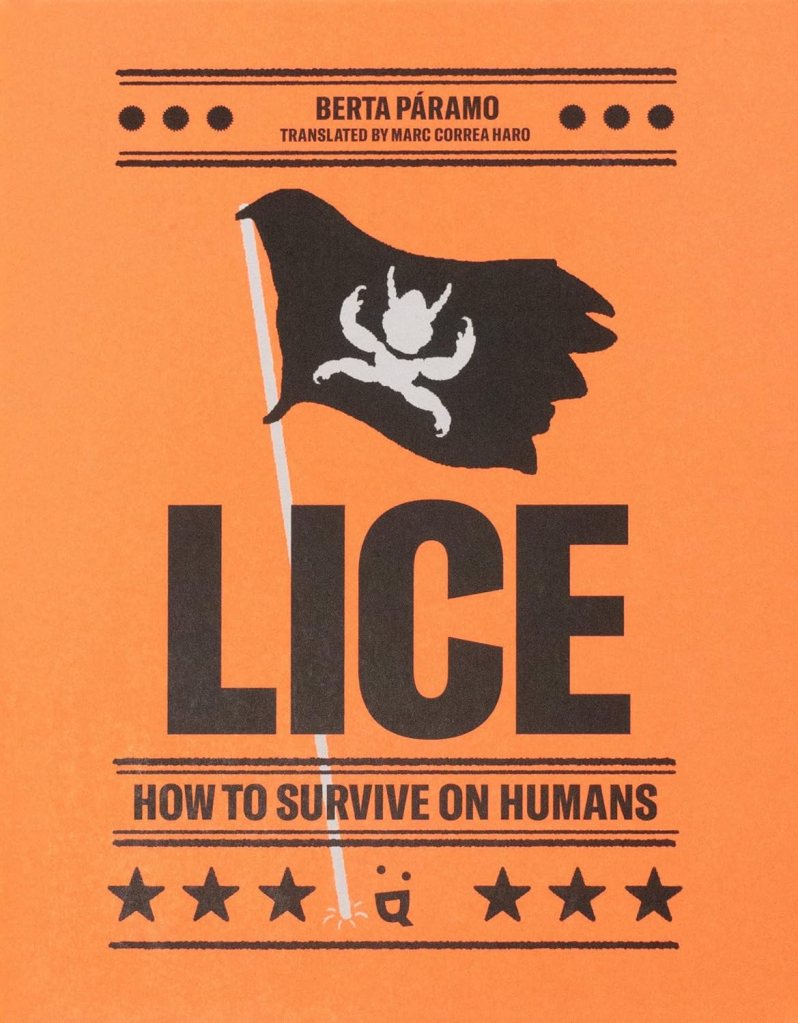
BB: Excellent question! If you haven’t already read My Presentation Today is About the Anaconda by Bibi Dumon Tak, illustrated by Annemarie Van Haeringen, and translated by Nancy Forest-Flier, then you are missing out. It’s a hilarious book from the Netherlands in which animals give oral presentations… on other animals. For example, a fox gives a presentation on geese but keeps getting diverted by how delicious they are. It’s weirdly informative and incredibly funny. From Japan, look for From Memen to Mori coming out in September by Shinsuke Yoshitake, translated by Ajani Oloye. I ADORE the picture books of Shinsuke Yoshitake but this is the first time he’s put together a book of 4-5 short stories. No one does side-eye like Yoshitake. This book’s incredible. I really was reading aloud lines to my husband as I read it in the car. Finally, Portugal is where we got the older nonfiction book Lice: How to Survive on Humans by Berta Paramo, translated by Marc Correa Haro. VERY funny and informative. Just be prepared to scratch. All of these books, I should add, are coming out in 2025.
JFM: What’s your favorite imported or translated book nobody’s heard of? That undiscovered gem?
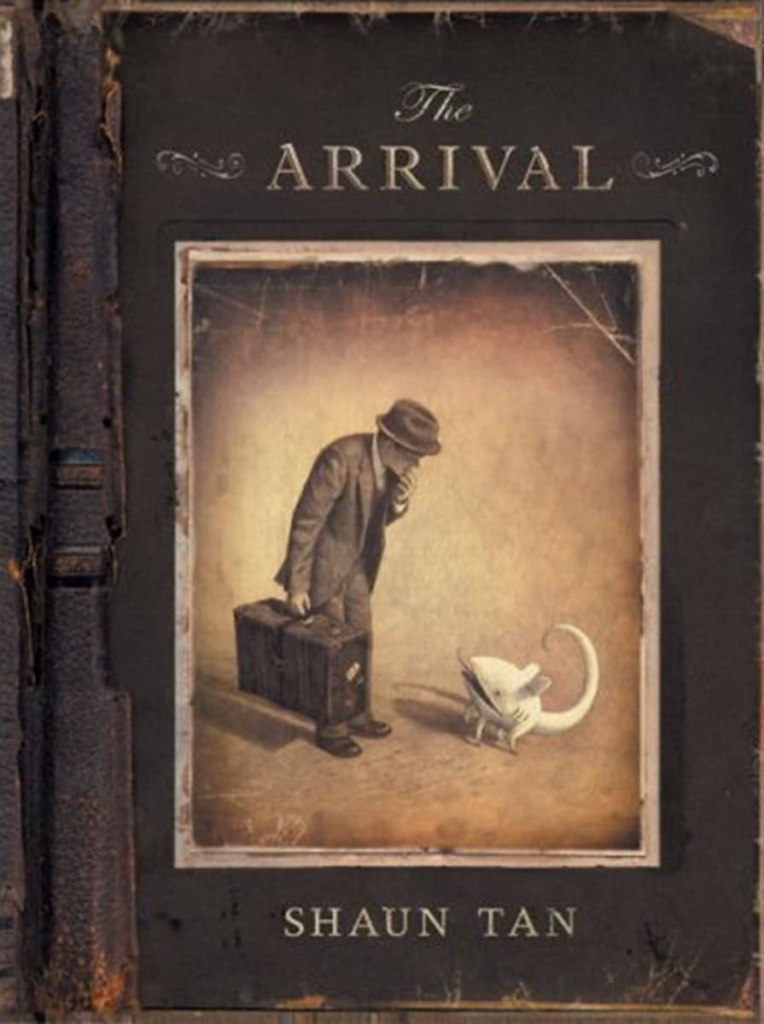
BB: It wouldn’t be fair to say that this book is unheard of. However, I do not believe it ever got the attention it truly deserved. The Australian import The Arrival by Shaun Tan should be required reading in schools right now. It’s not just about immigration. It brilliantly puts you in the shoes of an immigrant, making it so that the language, maps, transportation, food, EVERYTHING are as impossible for you to figure out as it is for him. They’re republishing it in a smaller format this year, but find yourself the original and give it a read. It’ll change your life. Not kidding.
JFM: How do you organize your bookshelves?
BB: Awww. Aren’t you sweet, thinking I have any form of organization at all. All children’s literature academic titles go in the bookshelves of my downstairs bathroom. Adult books? In my bedroom. And everything else goes in one of my two kids’ rooms. I seriously need more room in my house for bookshelves.
JFM: For this year’s World Kid Lit month, what is on your personal bingo card?
BB: Well, I have a book I really want to get to soon. The classic Japanese children’s novel The Village Beyond the Mist by Sachiko Kashiwaba (translated by Avery Fischer Udagawa with illustrations by Miho Satake) is being published in America. I think it originally came out in 1975 and it served as the inspiration for Spirited Away, so if you’re a Miyazaki fan, this is the book for you. I gotta read it! And soon!

JFM: Are there any topics you wish more children’s books covered?
BB: Mexican wrestlers. I’m sorry, but that’s always my answer. One day a kid asked me for a nice nonfiction book for kids on all the famous Mexican wrestlers that have existed. I am STILL WAITING for this book to exist.
Thanks so much!
Thank you, Betsy, for sharing your latest faves and for inspiring us all this month and throughout the year.
About Betsy Bird:
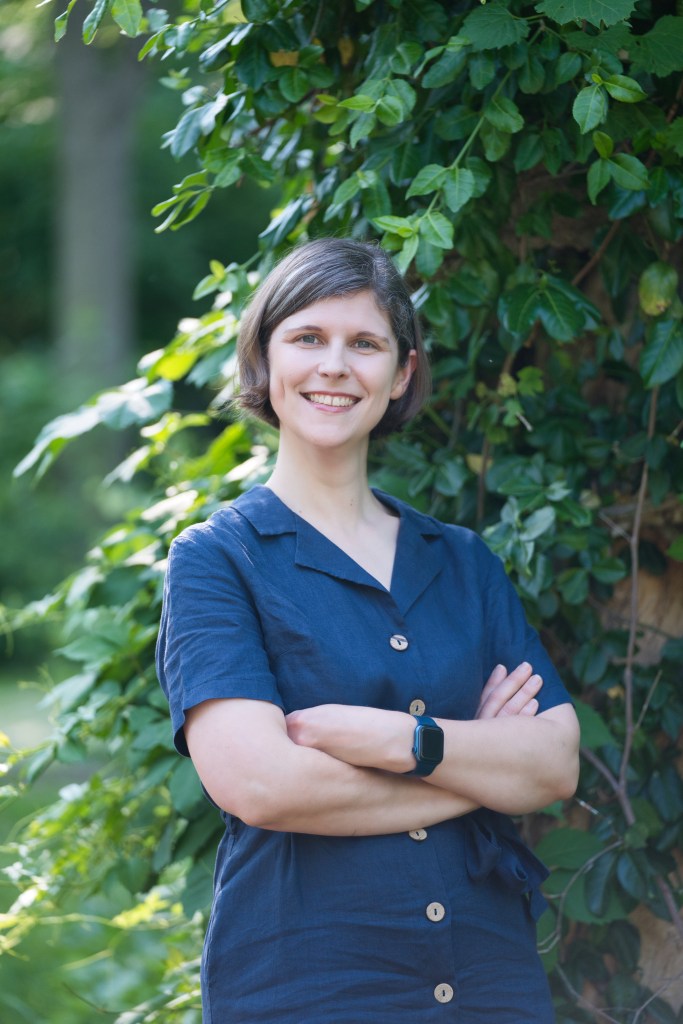
Betsy Bird is the Collection Development Manager of Evanston Public Library and the former Youth Materials Specialist of New York Public Library. She is co-author of WILD THINGS: ACTS OF MISCHIEF IN CHILDREN’S LITERATURE and has written numerous picture books and middle grade novels for kids. Her latest release is the picture book POP! GOES THE NURSERY RHYME, illustrated by Andrea Tsurumi. Betsy reviews for Kirkus and podcasts with her sister at Fuse 8 n’ Kate, where they discuss which picture books deserve to be called “classics”. You can find Betsy at her website www.betsy-bird.com.
Support World Kid Lit!

World Kid Lit is a nonprofit that aims to bring diverse, inclusive, global literature into the hands and onto the bookshelves of young people. We rely on grants and donations to support our work. If you can, please support us at Ko-fi. Thanks!
We earn a small commission every time you buy books via the affiliate links on our site, or via our booklists at UK Bookshop.org. This is a much appreciated donation towards our work. Thank you!
 World Kid Lit