By Anam Zafar
Being a professional linguist, whenever I hear the word “multilingual” I’m just itching to find out more. So, when I first heard about the Multilingual Library (during the fantastic Inclusive Libraries Conference in Leeds, UK last year, where I was representing World Kid Lit) I knew I needed to find out who was behind the project. Luckily for me, Amina Marix Evans was also at the Conference – she’s a Trustee of the Kittiwake Trust, which runs the library – and luckily for all of us, Amina was more than happy to be interviewed for the blog!
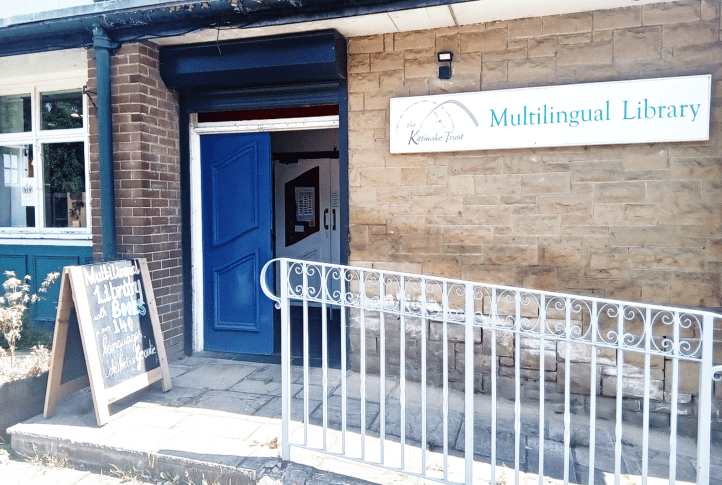
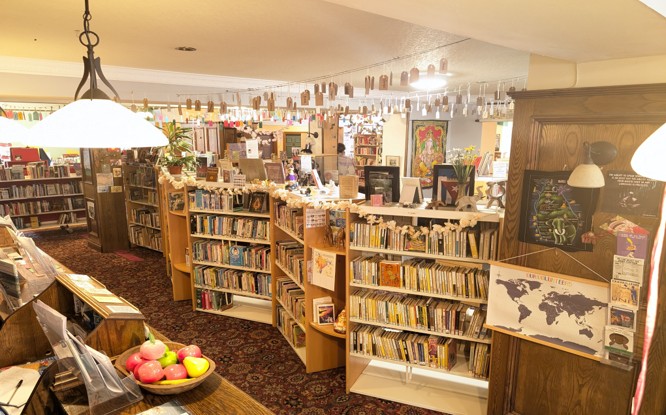
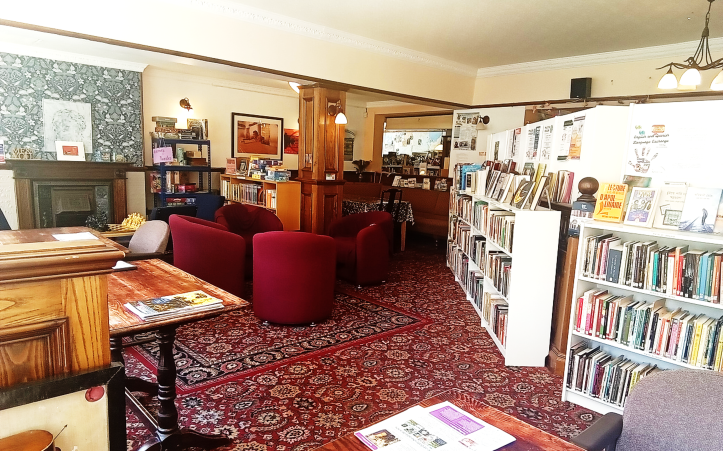
The Multilingual Library is one-of-a-kind. Located in Gateshead, UK, it is a welcoming and inclusive space dedicated to celebrating linguistic and cultural diversity. The library holds over 23,000 books in more than 140 languages and dialects and is the first Library of Sanctuary in the North East of England. And it’s not just for borrowing books; the library also welcomes newcomers and longtime locals to language classes, conversation groups, and cultural events.
***
Anam: Amina, thank you for taking the time to speak to us today! To begin, could you explain what the Multilingual Library is?
Amina: We sometimes say it’s an anti-racism project in disguise. For many people, it’s a little slice of home.
The original idea for a library started when two students who were sorting books at our other project, Borderline Books, mentioned that we had a wider variety of languages than the universities have now. We decided immediately that we would stop giving those books away and work towards creating a library.
We first gave books to the West End Refugee Service to start a library. That closed after about a year, and then the books were returned to us. We started in our own space in an empty shop in Newcastle upon Tyne in the summer of 2015.
Our audience includes students, people new to the area, whether refugees or not, and – partly thanks to our sign outside saying we have over 140 languages including Geordie! – local people who come in with a smile, happy to know that Geordie is recognised as a language separate from English.
On the Multilingual Library website, it says your philosophy is “There is no such thing as a foreign language, just languages you don’t understand.” Could you say more about that?
Basically, once again it’s about words. Calling a language ‘foreign’ applies only to people who speak English. Those languages are home languages for many people. It’s similar to how we like to speak of asylum applicants rather than asylum seekers: for one thing the tabloids never write anything negative about asylum applicants; the word ‘applicant’ suggests that people have as much right to apply for asylum as you or I do to apply for a driver’s license. Choosing the right words can spark a completely different picture in the mind, even if you are not immediately aware of it.
What are the most common languages on your library bookshelves?
I’d have to say English. We have a great collection of translations of novels by writers from all over the world. We have a collection on history and politics, books on First Nations, books on migration, a collection on the Black Panther Party for Self-Defence. In general, they will be books that are not available from public libraries.
Does this match up with the languages of the books that are borrowed most often?
Again, at the moment yes. Closely followed by French and Spanish. But it should also be noted that some languages where our stock is very limited cannot leave the library, so people have to come in to read them. If we lose them, they are very hard to replace and very expensive. I’d also like to see more African languages in the library, and more Kurdish, Farsi and Dari. To buy them new is usually beyond us, until we can get more funding.
What has been your favourite event held at the library?
The celebration of our re-opening, which we held on 23 March 2024, was a great event, with speeches from Professor David Crystal and John Vincent, who was instrumental in setting out the criteria for Libraries of Sanctuary. These speeches are on our YouTube channel and can be accessed from our website.
Also, in 2024 we had an event for Roma Resistance Day which was well-attended and very informative. This year, unfortunately, we will not be able to hold a similar event, but we will have the banners on display again for The Late Shows, so that more people learn about what happened to Roma, Sinti and Traveller people in the concentration camps.
Your library is run by a team of around 20 volunteers from 15 countries, speaking 21 languages. That’s amazing! What drew them to volunteer?
Many come via the university because they are studying languages. Some are just interested in languages or have retired and value having something useful to do. Some are refugees and enjoy working with books in their own language, and finding one little haven where their home language is an asset and not a hindrance. There are as many reasons as there are volunteers.
Let’s get practical for a second. If someone reading this feels inspired to open a multilingual library in their area, how might they be able to source books and find funding?
Get in touch with us and we will share whatever we have learned and can also share a large quantity of extra books. Funding is a constant challenge.
Any plans or dreams for the future of your library?
Some grandiose dreams, but to be practical, we have our current building on a short lease from Gateshead Council, and at the moment we don’t know where we will go after 2-3 years when the building is scheduled for demolition.
In any case, we need a larger place as we are being given new books by publishers every week and have almost as many books in the cellar as we do on the shelves. Also, we would like a library that is more accessible than our current location. The tea/coffee area is up a couple of steps, the classroom is upstairs, and there is no dedicated toilet/changing place.
Amina, thank you so much for telling us all about the Multilingual Library. As a final question, I’d like to ask: how do you think can we protect and value our libraries?
Don’t let the councils keep closing public libraries, keep using them. Value the printed book – not everything in the world is digital.
We’re not council-run, so our own biggest challenge is accessing funding and that can be very difficult. This is in spite of the fact that our Patron, Professor David Crystal OBE says: “I know of no comparable publicly accessible library anywhere in the world. It is an initiative that needs to be imitated in as many places as possible.”
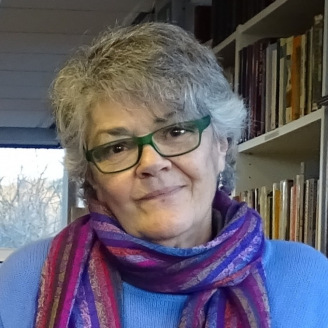
Amina Marix Evans has spent her whole life with books; working in the library of the Institute of Race Relations, bookshops in Sydney and London, publishing companies in the UK and the Netherlands and spending 35 years as a freelance foreign rights agent, editor and translator. When she realized how many people did not have access to books, while some publishers were pulping books by the skip load, an idea was born. With the help of Sjaak van Rijn she set up Borderline Books and The Kittiwake Trust in Leiden in 2004. In 2007, she brought the project to the UK where it went from strength to strength and continues to grow, giving thousands of free books to people in deprived areas and in prisons. In 2015, she started the Multilingual Library in Newcastle where it flourished for five-and-a-half years. After becoming the first Library of Sanctuary in the North-East, the library lost its home and was in storage for 2 years. It finally reopened in a former pub in Gateshead on 1 August 2023.
Amina was offered (and declined) an MBE in 2016.
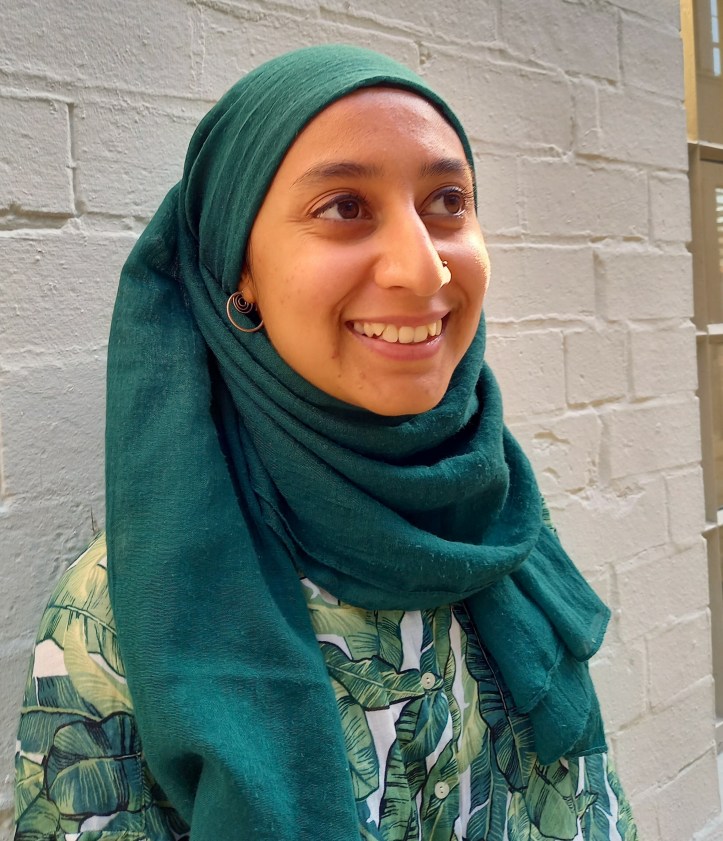
Anam Zafar is a multi-award-winning translator and editor from Arabic and French to English, based in Birmingham, UK. She appears on the 100 Inspiring Muslims: Next Generation Edition list. She also designs and delivers creative translation and art workshops for schools and festivals. Anam is an Editorial Board member for The Linguist magazine and a founding member of Translators for Access, an independent group working towards the increased sustainability and accessibility of literary translation. www.anamzafar.com.
 World Kid Lit