
By Olivia Littlejohn
Thinking about Brazil, what first comes to mind might be samba, carnival, and all the bright, lively things that give Brazilians such fierce pride in their culture. There is certainly an overarching feeling of the jeitinho brasileiro (“Brazilian way”), which models openness, joy, and community. But with such a vibrant cultural landscape, the nuance is often overlooked.
When you consider all the histories shaping this enormous country, it becomes clear how many more shades exist in-between the bright colors. If anything, what stands out most as a national characteristic is how much difference it contains. Through the writing of Daniel Munduruku, Socorro Acioli, and Ana Maria Machado, spanning the Amazon, the Northeast, and urban Rio, we can encounter some of the wonderful diversity that makes up modern Brazil. These authors offer three windows (though by no means a complete portrait!) into a nation where regional beliefs, traditions, and the legacies of history all contribute to Brazil’s kaleidoscopic national identity.
Me in the Middle
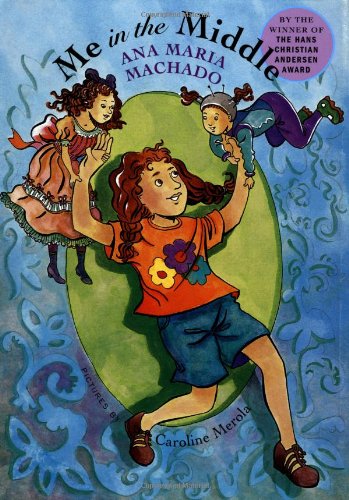
Written by Ana Maria Machado
Illustrated by Caroline Merola
Translated from Portuguese by David Unger
Published by Groundwood Books, 2002
Buy from House of Anansi
Machado, from Rio de Janeiro, is one of Brazil’s foremost children’s authors. Her work offers an entry point for young readers to explore the country’s history and social issues. Me in the Middle follows Isabel, who gets the unique opportunity to chat with her great-grandmother, Bisa Bea, as a child. Through her, she learns what life was like for girls in the past. A mysterious third voice, revealed as Bel’s future great-granddaughter, becomes the final piece in their dialogue.
While the girls disagree at times, their receptiveness to one another is their strength, teaching compassion and curiosity rather than exclusion — a message that endures today. They probe gender roles, unearthing how expectations for young women have changed over time. And when a male classmate openly cries, Bel – in a shrewd rejection of traditional masculinity – realizes he “was the bravest boy [she] had ever met.”
Machado also introduces lovely symbolism. The imagery of an invisible tattoo “passing through” Bel’s skin as a metaphor for Bisa Bea leaves a lingering impression of ancestry as something unseen but deeply felt. It’s no surprise this is one of Machado’s most popular books. Its open-mindedness and mix of learning and play make it a fantastic early read.
From Another World
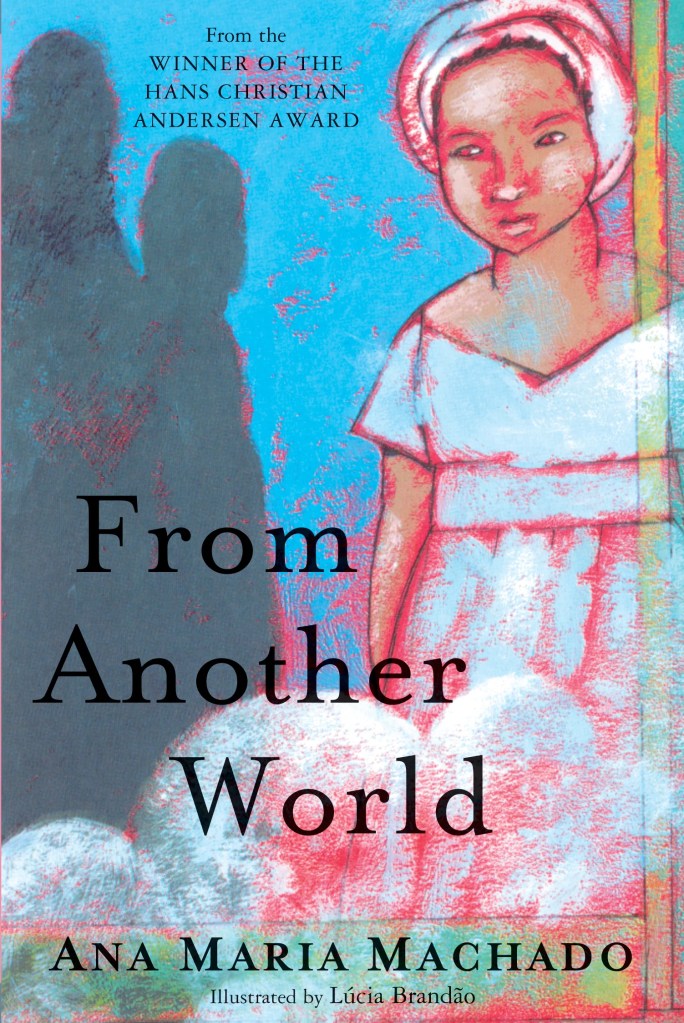
Written by Ana Maria Machado
Illustrated by Lúcia Brandão
Translated from Portuguese by Luisa Baeta
Published by Groundwood Books, 2005
Buy from House of Anansi
Mariano narrates this novel conversationally, reluctantly even (he is not a writer, as he adamantly reminds us). His tone, light and curious, makes for an absorbing read, although the subject matter is heavy. The story of Rosario, the ghost of a slave from the 1800s, pulls into focus the atrocities of slavery in Brazil. But Mariano’s account is refreshing, with his struggle to find the words for parts of Rosario’s story indicating the complexity of the subject matter.
While the narrative is accessible — reading like a ghost story or an Enid Blyton adventure — Rosario’s life ends tragically, making it perhaps less suited to younger readers. At the same time, there is a frankness to this book that feels important to the discussion of slavery. Nothing is glossed over, and the ignorance and naivety of the young characters provide an honest lens through which to view this part of Brazil’s difficult history.
The Head of the Saint
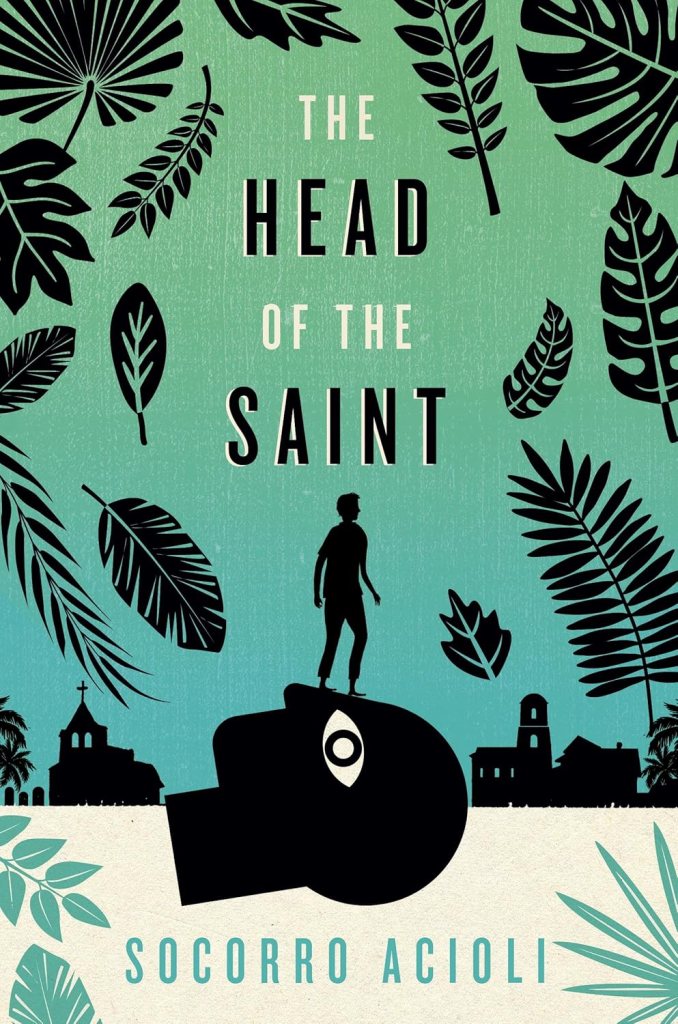
Written by Socorro Acioli
Illustrated by Alexis Snell
Translated from Portuguese by Daniel Hahn
Published by Hot Key Books, 2014; Random House Children’s Books, 2016
Buy from Bookshop.org US / Bookshop.org UK
Acioli, from Fortaleza in the Northeast, brings a regional lens to her storytelling, shaped by the rhythms and textures of the sertão. Her work folds the extraordinary into the ordinary, portraying a Brazil touched by magical realism.
In this YA novel, Samuel journeys to Candeia to find a father he has never met. Instead, he finds the head of a statue of St. Anthony, inside which sounds the prayers of the townsfolk. Somewhere amidst the clamor a beautiful voice sings, each day at the same time. As he helps answer the town’s prayers, Samuel longs to find the source of the singing.
Unlike the sweeping, sometimes mythic qualities of a García Márquez novel, Acioli’s magical realism is intimate, rooted in everyday spirituality and community. There is nothing particularly grand-scale about her production. Its strength lies, instead, in its warming portrait of relationships, family, acts of kindness, and the ways these ripple outward to transform a whole town.
Tales of the Amazon
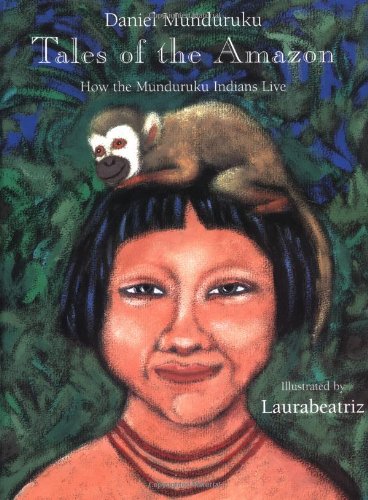
Written by Daniel Munduruku
Illustrated by Laurabeatriz
Translated from Portuguese by Jane Springer
Published by Douglas & McIntyre, 2000
Buy from AbeBooks
Daniel Munduruku, a writer and teacher from the Indigenous Munduruku people, tells the story of Kaxi, raised to lead as their pajé. The reader is plunged into the heart of the Amazon, learning alongside Kaxi as he endeavors to listen to the ancestors through dreams. Followed by a factual segment and autobiographical stories from Munduruku’s own life, this is a thorough introduction to the community. And with Laurabeatriz’s illustrations, earthy and lustrous, Kaxi’s world feels very much alive.
Translated in 2000, some of the language can seem dated (like the term “Indian,” although Munduruku does explain its origins in the colonizers’ mistaken belief they’d reached India). Still, the book offers invaluable insights, and its wisdom prevails. Rendering the connection between human, nature, and spirit, the book urges respect for all living things — a message that feels especially important right now.
Conclusion
Together, these authors offer a small glimpse into the diversity of Brazil. A mosaic of cultural traditions, histories, and environmental realities interweave to form the country’s energetic, ever-shifting identity.
And yet such a breadth of children’s literature remains untranslated. For a country home to the largest Black population outside of Africa, the lack of Afro-Brazilian representation is especially striking. Likewise, many beautiful Japanese-Brazilian kids books have yet to find their way into the English language. If so much can be learned from just three authors, it makes you wonder how much richer our understanding could become with a wider, more representative range of Brazilian voices in English.
About Olivia Littlejohn
Olivia is a half-Brazilian, half-English bookseller from North London with a deep passion for children’s literature. She owes a great deal of her personality to characters from her favorite childhood books, from Anne Shirley and Jo March to Percy Jackson and Harry Potter. Olivia is captivated by translation and specifically translated fiction, with a personal investment in the bridging of cultural barriers. She travels as much as she can, spending a lot of time in Brazil and in other (warmer!) European countries.

Support World Kid Lit!

World Kid Lit is a nonprofit that aims to bring diverse, inclusive, global literature into the hands and onto the bookshelves of young people. We rely on grants and donations to support our work. If you can, please support us at Ko-fi. Thanks!

We earn a small commission every time you buy books via the affiliate links on our site, or via our booklists at UK Bookshop.org. This is a much appreciated donation towards our work. Thank you!
 World Kid Lit