By Shara Kronmal
The River by Claude Ponti, translated from the French by Alyson Waters and Margot Kerlidou, is a new picture book from Elsewhere Editions, the children’s imprint of Archipelago Books. Due to appear on March 24, 2026, the book is the delightfully illustrated story of two young people, Lu Cha and Ali Roo who live on the river Longo, become friends, and ultimately save both their villages from a terrible monster.
Alyson Waters and Margot Kerlidou are a mother and daughter who together have translated from French several pictures books by Claude Ponti. In our conversation, we discuss the joys and challenges of translating a book full of wordplay and delightful puns and illustrations.
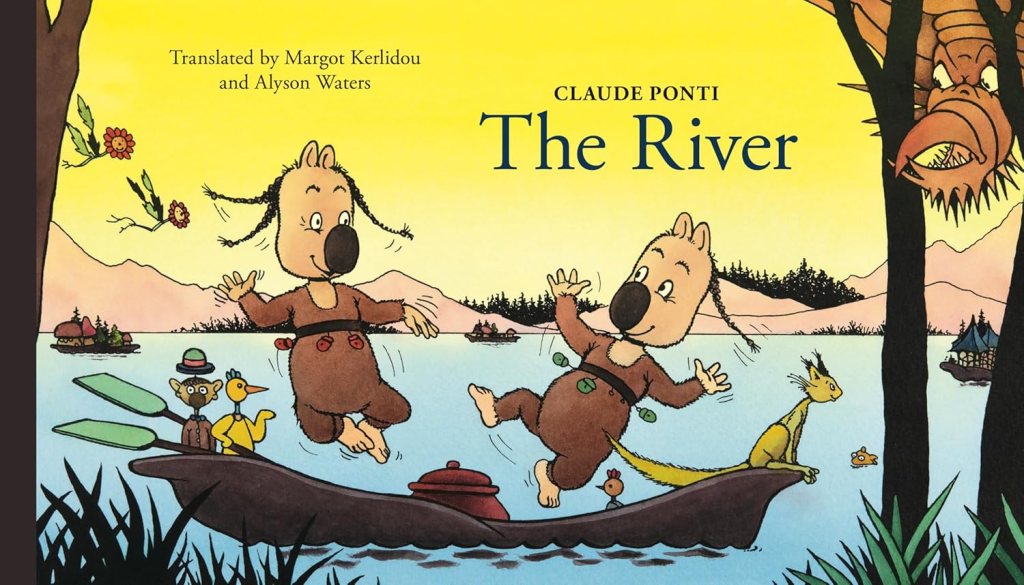
By Claude Ponti
Translated from French by Alyson Waters and Margot Kerlidou
Elsewhere Editions, 2026
Buy from Bookshop.org US / Bookshop.org UK
Shara Kronmal: The River is one of several pictures books by Claude Ponti you’ve translated from the French. It’s the story of two young people, Lu Cha and Ali Roo, who live on the river Longo and meet and become friends. I’m curious, how did you get a start at translating children’s books and why Ponti?
Alyson Waters: My first children’s book translation was Ponti’s My Valley, which appeared in 2017 but which I must have started translating in 2015 or 2016. I think it was one of Elsewhere Editions first books, if not the first. Then I did another Ponti for Elsewhere (Hīznobyūti) by myself, and after that I asked Margot to work on the next three with me: Blaze and the Castle Cake for Bertha Daye, Meeselphe, and now, The River. I’ll let Margot explain why Ponti!
Margot Kerlidou: I read Ponti’s book Pétronille et ses 120 petits when I was a kid and it was one of my absolute favorites. It was at my grandfather’s house (in Brittany) and whenever I would visit I looked forward to reading it again. My affection for it never faded through the years. Ponti’s drawings and language can tickle no matter your age—his books are generation-unifying.
SK: Ponti’s writing is so playful and full of wordplay. Tell us more about translating puns. What about Ponti’s character names? They’re so funny—Grandmatcha, Oolong, Noble Laurie, Elle Viss, Sam Bucus, Whiz Dom. I assume the names related to tea were in the original—after all oolong is the same in both French and English.
AW: The names we translated by tea names weren’t all related to tea, but that seemed to work in English for a lot of the names. Emma Raditz, Elsewhere’s director, also came up with some of the tea names. We think parents will appreciate names like Elle Viss (Elvis) and Noble Laurie (Noble Laureate) more than kids, but it’s always a balancing act to keep parents as interested as children with books that are great for reading aloud. Puns are one of my favorite things to translate, whether in adult literature or children’s literature. Whiz Dom (Wisdom), for example, took a while to get to.
MK: This is always the trickiest part with Ponti, but also the most fun. Some of the cultural references and puns don’t have adequate English language counterparts, and on (rare) occasion we can’t even figure out what Ponti is trying to get at—some inside joke, perhaps? We do our best to make creative choices that match tone and context—and we do sneak in an occasional inside joke ourselves!
SK: I picked these two sentences as an example of the linguistic play in this story—“Ali Roo dives into the water to gather plantlets under the riverweed. And Lu Cha with his kariall in hand, hops from the leaves of the aquatic elastica to the buds of the rubber trifolia.” Were any of these names or words problematic to translate?
AW: Everything took a lot of thought, and a lot of back and forth between Margot and me. We both had to compromise on choices, but most of the time if we argued about something long enough, Margot won!
MK: Not a “problem”, but definitely a puzzle. I especially loved doing this book because of all the funky potion names and magical plants. I’m a nutritionist and I also went to herbalism school, so this story was really right up my alley. We played around quite a bit with funkifying Latin names of medicinal plants. For example, the character Sam Bucus: Sambucus is the Latin name of the Elderberry plant. If you are an herb-person you might notice these little winks throughout the book. And you caught on about the tea! There is a very minor tea theme in the original, and we played it up just a little bit with the species names and the characters (Oolong, Kukicha, Grandmatcha, Sench Ali…)
SK: Tell me more about how you collaborate on a translation. I can imagine some great conversations about word choice
AW: With this book, we each did a full version separately, and then read our versions bit by bit aloud to each other. This was somewhat time-consuming, as you can imagine, but also so much fun. It’s important to read any translation aloud, sound being just as important as sense, but with a short text it’s great to be able to read the entire thing aloud to someone who also has access to the original. This is the joy and privilege of working with Margot.
MK: We work really well together! We have different strengths, so we are a well-rounded duo. My mom has years of translating under her belt so she notices things I might not notice and things I wouldn’t know to look for (“Why did you switch tenses here?” “The layout of our page has to look similar to the layout of the original,”etc.) And I work with kids (as part of a children’s cooking program) so I’m more in touch with what will actually resonate with them. Also, it’s fun to look over something and say “Oh, interesting you went about it that way, I never would have….”
SK: Have you ever met/spoken to Claude Ponti.
AW: Sadly, we have not yet met M. Ponti but would love to. We’ve heard through the grapevine, though, that he is very happy with our translations.
SK: Some of characters in The River are gender fluid. This seems like an excellent story to teach openness and tolerance of diverse identities to children. Have you read this book to any children and if so, how did the children respond to the idea of selecting one’s gender?
AW: At the time of this interview, the book has not yet been published. So I haven’t read it to any child yet. I imagine that the children of parents who don’t have a problem with gender fluidity/choice will not have a problem with this book, and I doubt parents who do have a problem with it would be tempted to buy it or borrow it from a library. In any case, the book is about, as you say, openness and tolerance, not just toward gender questions, but toward your neighbors, too. Look how the two river peoples help each other, even though they are very different: the Oolongs and the Kukichas share their skill sets and fight evil together for the good of all.
MK: I don’t think this book is about gender-fluidity and I don’t think Ponti’s stories are meant to “teach.” They are showing that it’s ok to be the way that you are, no matter what that way is. (These characters are not totally human, either.) It’s refreshing to have this idea seamlessly blend into a story rather than be hit over the head with a lesson. Like many other Ponti books the story is about unique kids who face trials and come out on top (or at the very least, just fine). They are generally classic hero’s journeys, with atypical heroes/heroines.
SK: How do the illustrations inform your translation choices? I can imagine that translating an illustrated book works differently than translating one without illustrations. Has that been your experience?
AW: Ponti’s illustrations are so remarkable that it’s not easy to have words compete with them. And it does at times seem like a competition between words and pictures. Ponti manages that competition brilliantly, so we had to do our best to make our words as clever and engaging as his, and as the images.
SK: Do you have any other children’s books in mind to translate? How do you find them?
MK: I would love to do Pétronille, in which the hero(ine) is a mother mouse who has 120 babies! This is the Ponti book I loved as a kid.
AW: I’ll let her tackle that one on her own! But there will definitely be more Ponti surprises down the line for our English-language readers so stay tuned.
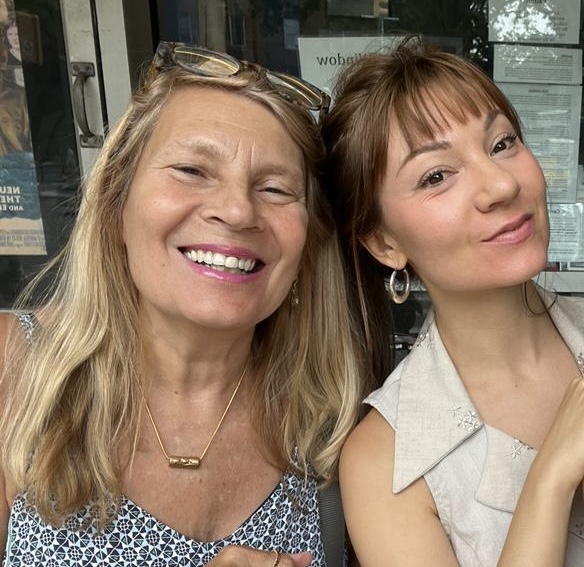
Alyson Waters (l) is a translator from French to English of over twenty-five books, including works by Albert Cossery, Louis Aragon, Emmanuel Bove, Daniel Pennac, and Jean-Patrick Manchette. She is a two-time recipient of the Florence Gould/French-American Foundation translation prize, in 2013 for Eric Chevillard’s Prehistoric Times (Archipelago Books) and in 2020 for Jean Giono’s A King Alone (New York Review Books). Her most recent translation is Antoine Volodine’s The Monroe Girls (Archipelago Books, 2026). The River is her fifth translation of a book by Claude Ponti, three of which (including The River) she has translated with Margot Kerlidou.
Margot Kerlidou (r) is a nutritionist and food educator in NYC. Once upon a time a French teacher, she now also translates children’s books from French to English with her mother, translator Alyson Waters.
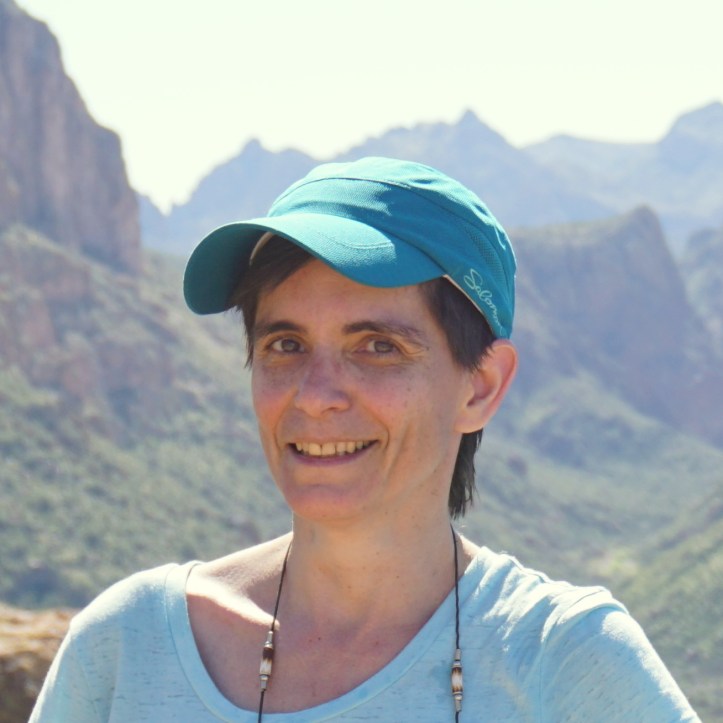
Shara Kronmal is a translator from French to English. Her literary translations can be found in Hunger Mountain Review and MAYDAY. She has reviewed books in translation for Necessary Fiction, World Kid Lit, and elsewhere. Shara is the associate editor for longform creative nonfiction atCRAFT and a translation reader for The Adroit Journal.

World Kid Lit is a nonprofit that aims to bring diverse, inclusive, global literature into the hands and onto the bookshelves of young people. We rely on grants and donations to support our work. If you can, please support us at Ko-fi. Thanks!

We earn a small commission every time you buy books via the affiliate links on our site, or via our booklists at UK Bookshop.org. This is a much appreciated donation towards our work. Thank you!
 World Kid Lit