
Borders Literature founder Olatoun Gabi-Williams talks to Wale Okediran about the Canex Prize, an exciting new award for publishers in Africa.
By Olatoun Gabi-Williams
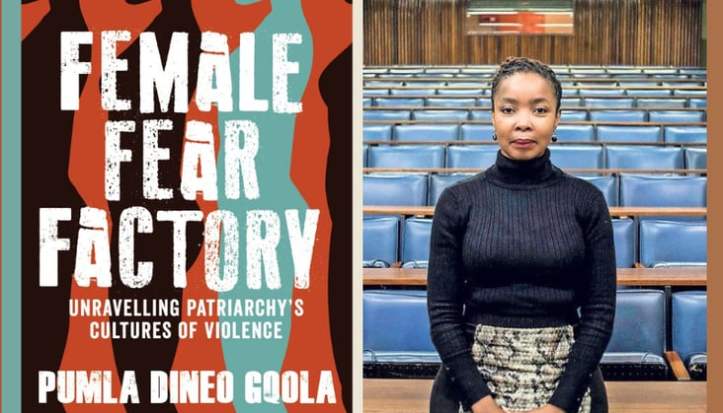
Across Africa, book industry stakeholders are excited about the recently launched Canex Prize for African Publishing established by Afreximbank, Narrative Landscape Press and the James and Grace Adichie Foundation. The prize aims to be an effective, indigenous successor to the NOMA Award for Publishing in Africa which ceased in 2009. To judge the inaugural Canex prize, three book industry luminaries were chosen: Wale Okediran (Nigeria), Renée Edwige Dro (Côte D’Ivoire) and Ashraf Aboul-Yazid (Egypt). The inaugural winner of the Canex Prize for Publishing in Africa was Cassava Republic Press, recognized for publishing Female Fear Factory: Unravelling Patriarchy’s Culture of Violence by Pumla Dineo Gqola. The prize includes a $20,000 award and recognizes excellence in African publishing. To learn more about the vision for the prestigious prize, I recently sat down with Wale Okediran, Chairman of the jury.
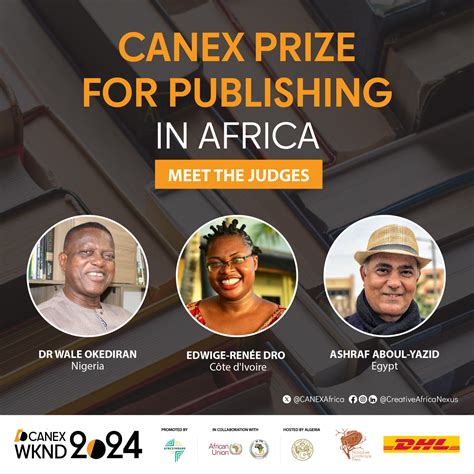
Olatoun Gabi-Williams: The CANEX Prize for African Publishing is a glamorous prize with a cash value of USD 20, 000. Tell us a little about the organizers of the prize and their goals for the prize.
Wale Okediran: The CANEX Prize for Publishing in Africa, launched in Cairo in November 2023 on the sidelines of the Intra African Trade Fair (IATF2023), aims to promote a vibrant literary culture across Global Africa and to foster a sustainable business ecosystem in the literary sector. Initiated by Afreximbank in 2020, CANEX serves as a key driver for development and job creation in Africa, recognising the opportunities within the creative and cultural industries. The award evaluates entries based on the quality of writing, editing, and production, with a particular emphasis on books printed and produced in Africa, as well as those published in indigenous African languages.
OGW: You were the chair of the prize jury. What criteria were used to evaluate the submissions, and how did you ensure the judging process remained fair and transparent?
WO: As judges, we were expected to, ‘assess a publisher’s work on a book, focusing on the physical quality of the publication and the editorial courage displayed in publishing significant subjects’. While submissions for the prize were open for one month, the judging process was a three-month period during which, the longlist of thirteen titles, the shortlist of five books, and the eventual winning book, were decided. In addition, an efficient and transparent digital scoring platform was used to score and judge the final winners.
OGW: What about the quality of submissions and categories for submissions? Which categories received the greatest number of submissions and why do you think that happened?
WO: This year, 85 entries were received from 49 publishers across Africa, representing a diverse range of languages, including English, French, Portuguese, and Swahili. The quality of submissions was very high with non-fiction texts having the greatest number of entries.
From these submissions, the prize administrators selected five finalists for their exceptional work. These included:
Cassava Republic Press (Nigeria) is the prize winner for Female Fear Factory: Unravelling Patriarchy’s Culture of Violence by Pumla Dineo Gqola.
Jacana Media (South Africa) was honoured for Paperless by Buntu Siwisa.
Kachifo Limited (Nigeria), was recognised for Half Hour Hara by Ugo Anidi. (WKL review here)
La Case des Lucioles (Côte d’Ivoire), was shortlisted for Reine Or by Fatou Sy.
Masobe Books (Nigeria) was shortlisted for When We Were Fireflies by Abubakar Adam Ibrahim.
OGW: The prize welcomes children’s literature. What themes did you find recurring in the children’s literature entries? What new approaches or fresh themes did you identify?
WO: There was a variety of children’s literature, including fiction, non-fiction, poetry and picture books. Adventure stories were prominent while the SDG themes could be said to be an emerging theme in the collection.
OGW: Cassava Republic Press emerged as the prize winner for Female Fear Factory, written by South African scholar Pumla Gqola Dineo. Can you share insights on the impact that recognition by the CANEX Prize for African Publishing is intended to have on recipients, particularly the winner, in terms of visibility and opportunities?
WO: The CANEX Prize for Publishing in Africa, aims to promote a vibrant literary culture across Global Africa and foster a sustainable business ecosystem in the literary sector. Initiated by Afreximbank in 2020, CANEX serves as a key driver for development and job creation in Africa, recognising the opportunities within the creative and cultural industries. The winner of the Prize will enjoy greater and global visibility and exposure to the business sector in its varied activities.
OGW: What were some of the highlights of the prize-giving ceremony in Algiers in October, and how did the event contribute to the overall celebration of African literature?
WO: The award ceremony for the inaugural CANEX Prize for Publishing in Africa took place at the Sheraton Algiers. The event included an exclusive dinner featuring an African Union-themed menu curated by chefs from Algeria, Trinidad, and Nigeria. The dinner was hosted by the Honourable Minister of Culture and Arts of Algeria, Mrs Soraya Mouloudji. In addition to the prize money, there was also a prize trophy, described by Dr Eghosa Imasuen as a bronze sculpture crafted by the famed bronze casters of Benin City, Nigeria, and engraved with the Adinkra symbol nkyinkyim, symbolising resilience and adaptability.
Also at the event were Mr Omar Ben Yedder of IC Publications and Ms Lavaille Lavette of One Street Books, who each gave short speeches on the importance of telling African stories. They also underscored how vital it is to invest in the continent’s rich literary heritage.
As Chair of the Judges, before the representatives from the winning publishing house, as well as those on the shortlist, collected their medals, I read out the citations for each shortlisted book. The medals were presented to the finalists by dignitaries that included Mrs Soraya Mouloudji (Algerian Minister of Culture and Arts), Mrs Kanayo Awani (Executive Vice President, Intra-African Trade Bank at Afreximbank), and H.E. Ambassador Minata Samate Cessouma (Commissioner for Health, Humanitarian Affairs and Social Development at the African Union Commission). Also in attendance were the Nigerian Minister of Culture, Tourism and Creative Economy, Ms Hannatu Musa Musawa as well as that of Sports, Senator John Owan Enoh. The global publicity about the event as well as the quality of dignitaries at the event was a great celebration for literature.
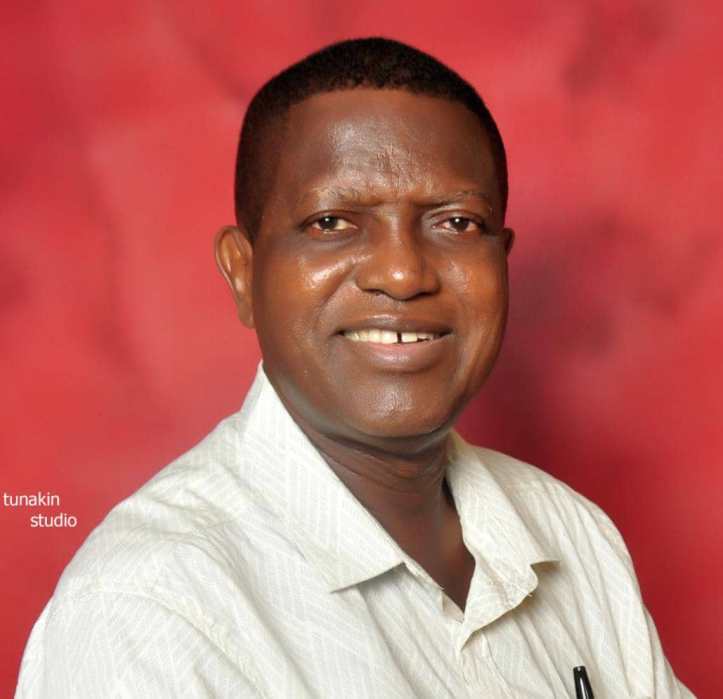
Dr Wale Okediran is an award winning author of 14 novels, 6 biographies, 3 travel stories collections, 2 short stories collections as well as numerous articles and lectures.The Film adaptation of his novel Tenants Of The House recently completed a two-year run on Netflix and a film adaptation of another novel, The Weaving Looms, is currently underway. In 2010, Okediran established the Ebedi International Writers Residency in Iseyin, Nigeria. The free facility for writers in need of a conducive atmosphere to complete their ongoing works has hosted 300 writers from 10 African countries. Dr Okediran is an adjunct lecturer of creative writing in two Nigerian Universities and Honorary Fellow of the Nigerian Academy of Letters. He is the current Secretary General of the Pan African Writers Association based in Accra, Ghana.

Olatoun Gabi-Williams is a Nigeria-based journalist, publicist, child welfare advocate, elder care and dementia advocate, public speaker, administrator, and non-profit founder. In 2015, she founded Borders Literature for all Nations which in 2021 joined United Nations Namibia and 5 pan-African Book industry institutions to establish the UN SDG Book Club African Chapter.

