By Johanna McCalmont
This week we meet Mexican author and illustrator Jaque Jours who tells us more about how she created her latest picture book The Muéganos out now (Transit Children’s Editions). And in case you missed it, check out my review here.
Johanna McCalmont: Would you like to tell us a bit about The Muéganos? They really are a very special family!
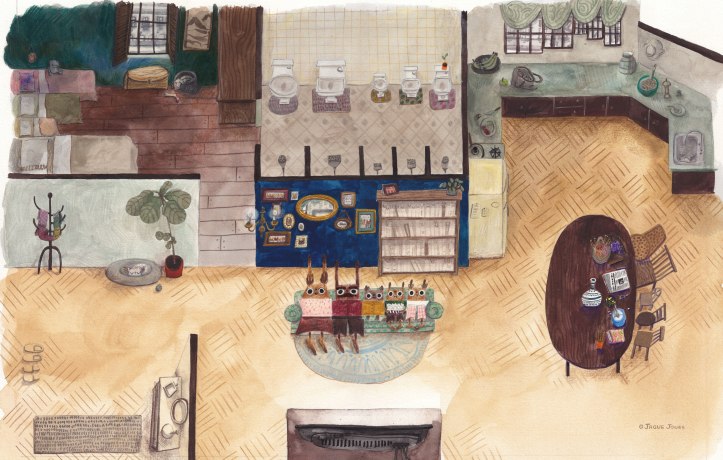
Jaque Jours: Like most Mexicans, I grew up in a very close family and that closeness is very much part of Mexican culture. The word muégano comes from a traditional candy, but it works as a metaphor to describe a wide range of social relationships: you can be muégano with your partner, friends, coworkers, family, or even in politics and soccer teams. When people are always together, we called them Muéganos. So the closeness in this family took this idea to the absurd. The characters are literally glued together at the shoulders. I thought it was a very particular and personal story, but it ended up being more common than I thought. Apparently, everyone feels somehow glued to someone else.
JM: This is your first picture book to be published in English? What was the process like and how did you first meet Transit Books?
JJ: Yes! This is my debut picture book in both English and Spanish. It all started with winning a FONCA Jóvenes Creadores (Young Creators) fellowship from the Mexican government, which allowed me to work on the project for a year. Conveniently, my partner won a fellowship in New York City at the same time, so we had to move there (poor me, right? Ha).
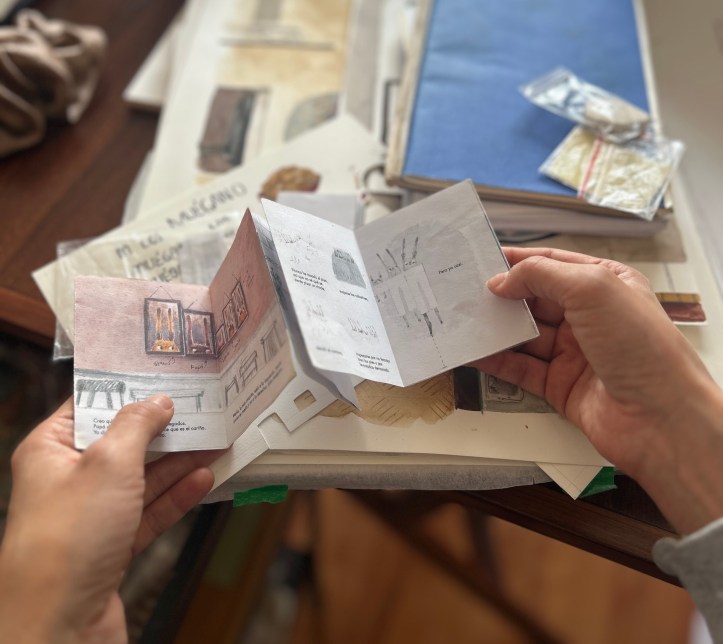
Once the project was more developed, but still at a very early stage, I approached Transit’s booth at the Brooklyn Book Festival the old-fashioned way, with a tiny accordion-format dummy book in hand and some stickers of my work.
They emailed me the next day saying they were interested, which was very exciting! From there, I started working on the English edition, and I rewrote it so many times that it eventually became the “original version” for me. I even struggled a little bit to translate it back from English into Spanish, which felt very strange. Reading the book as if it is a translation is a weird experience.
JM: Which came first, the English text or the illustrations?
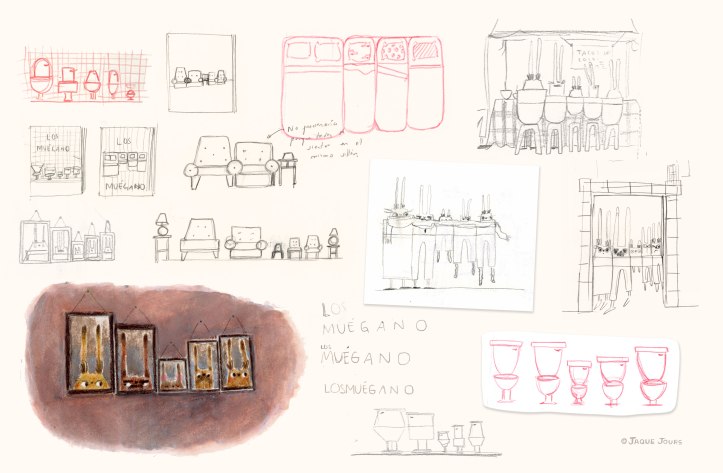
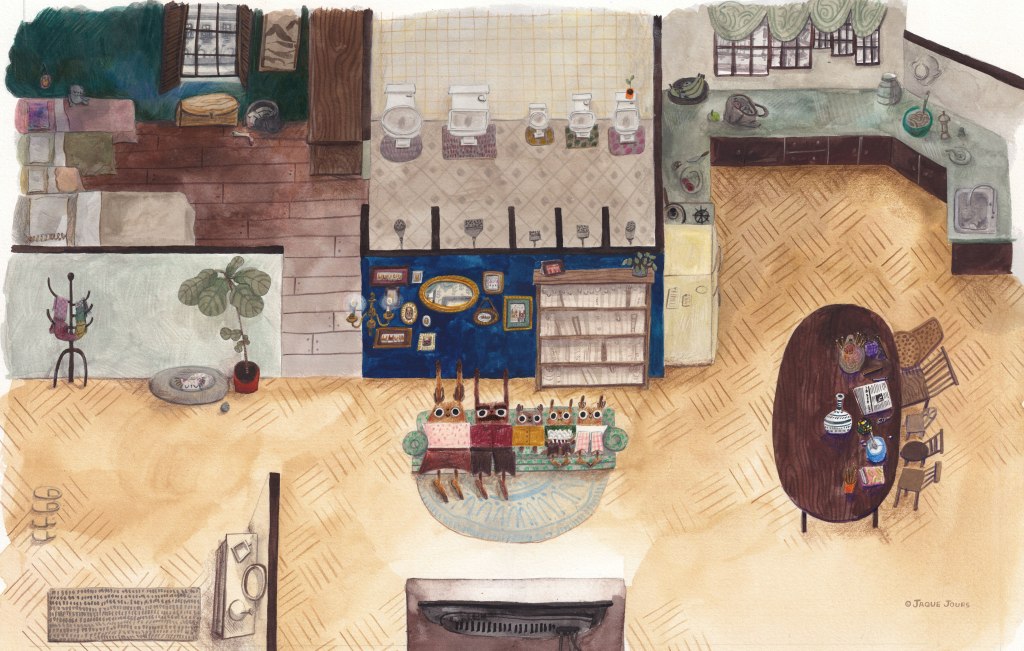
The visuals came first. It’s a very visual story, because you have to imagine how a family stuck together actually lives and then make that accessible for readers who aren’t used to that kind of closeness. I first sketched the toilets and the beds, the most intimate places we use every day when we are alone. Then things like clothes, they would probably share just one really long scarf. It was so fun to imagine them navigating daily life and the problems they would face, like getting stuck in a door.
JM: How did you come to be an illustrator?
JJ: It all started when my brother invited me to design the backgrounds for an animated music video. I painted them digitally and I completely fell in love with creating. During the pandemic, I began drawing characters, and came across a picture book contest, so I thought I’d just make one. I didn’t win, but that book made me realize I wanted to make picture books.
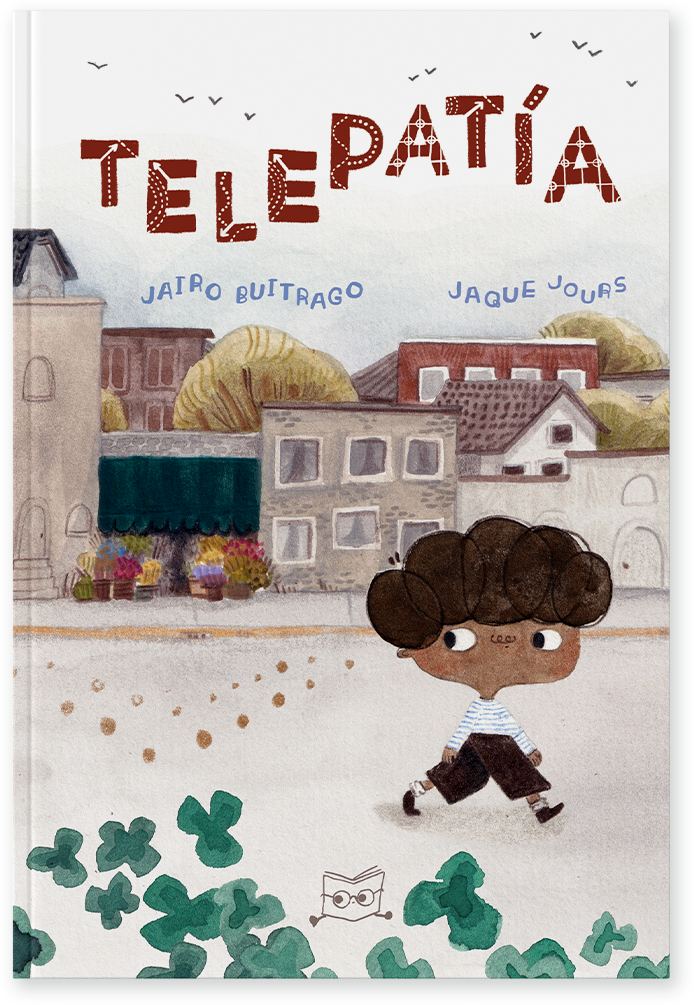
Many, many drawings later, in 2024, I went to the Bologna Children’s Book Fair and landed a book deal with Lecturita Ediciones to illustrate Telepatía, written by Jairo Buitrago, a story about a little boy who thinks he has telepathy with a girl at school. It’s a very funny story!
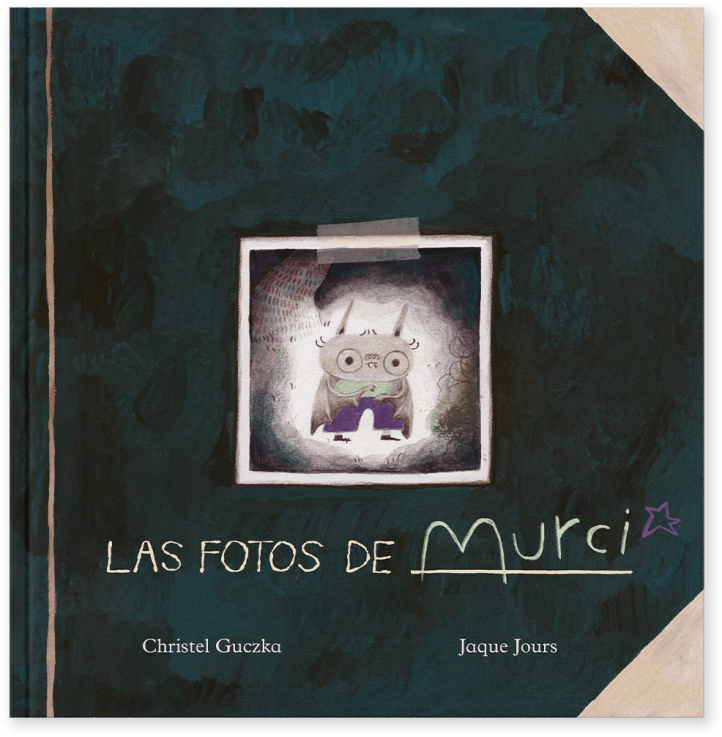
Around the same time, I got an offer from Mexican publisher Editorial Cayuco to illustrate Las fotos de Murci, written by Christel Guczka. This one’s a little bit more serious. It’s a book meant to accompany children, or anyone, who has experienced abuse. I think it’s a very important book.
JM: Are you drawn to any themes in particular? Has your style changed over time? Where does your inspiration come from?
JJ: I love cultural representation, everyday things, and to portray diversity. I like to draw the people we see every day and take for granted, like the guy at the convenience store on the corner, or the woman at the market.
My style has changed a lot across the years. You can even see it in this book’s process. As I moved forward, the illustrations I had painted earlier no longer matched what I was making later, so I had to repaint a lot of them. It’s always changing. I don’t really believe in having one fixed style; it’s all about experimenting with what you like and see. Even our tastes change over time, so we are always evolving.
My inspiration comes from my daily life, the things I see and recognize. You can see these details through the book, like in Julia’s pants. I tend to work with things I know how they feel, almost instinctively. I think that’s why my first picture book ended up being about Mexican families.
JM: What do you get most excited about when working on an illustration or book? Do you feel that illustrating for children is different than other types of illustration work?
JJ: I usually enjoy designing the characters and painting the final versions most. I struggle a lot with making decisions in the storyboard: final compositions, which points of view work best, the color palette. I feel the weight of too many options and it stresses me out, because deciding always means letting go of everything you don’t choose. Am I the most muégano person in the room?
I don’t think there’s much difference between illustrating for children and for adults. I strive to create pictures than work for both registers, that have something to show for every reader. I deeply appreciate the work of fellow illustrators making picture books and I’m constantly amazed by it. So I think I enjoy it as much as a kid would and take it as seriously as a kid would. This book in particular made me think a lot about the parents who read to their children. It’s a story that can resonate at every age.
JM: Can you tell us a bit about your process in general and how you created the illustrations for this book in particular? What materials do you like using most?
JJ: I usually look at many things before I start a painting. I search for references in books, out the window, or whatever catches my eye. Then I let the composition build in my head while taking a shower, eating, walking, sleeping. I sit down to sketch when I feel the first idea of the composition is ready.
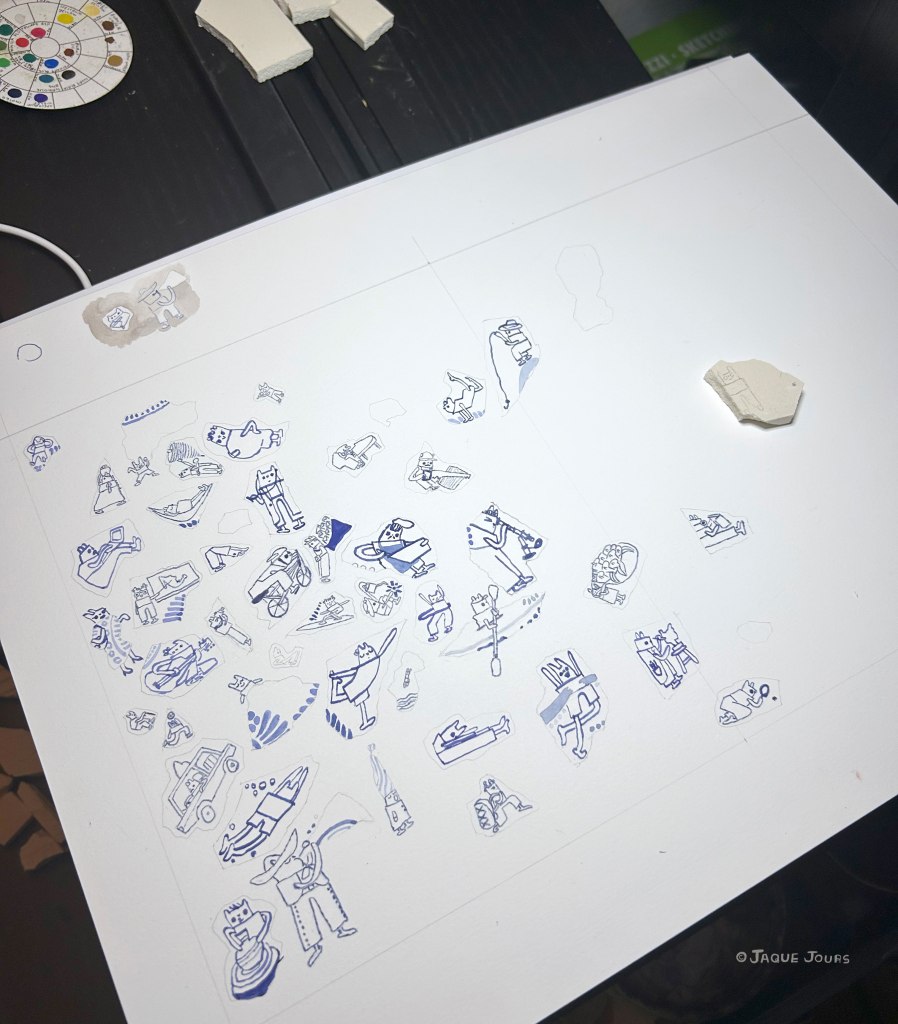
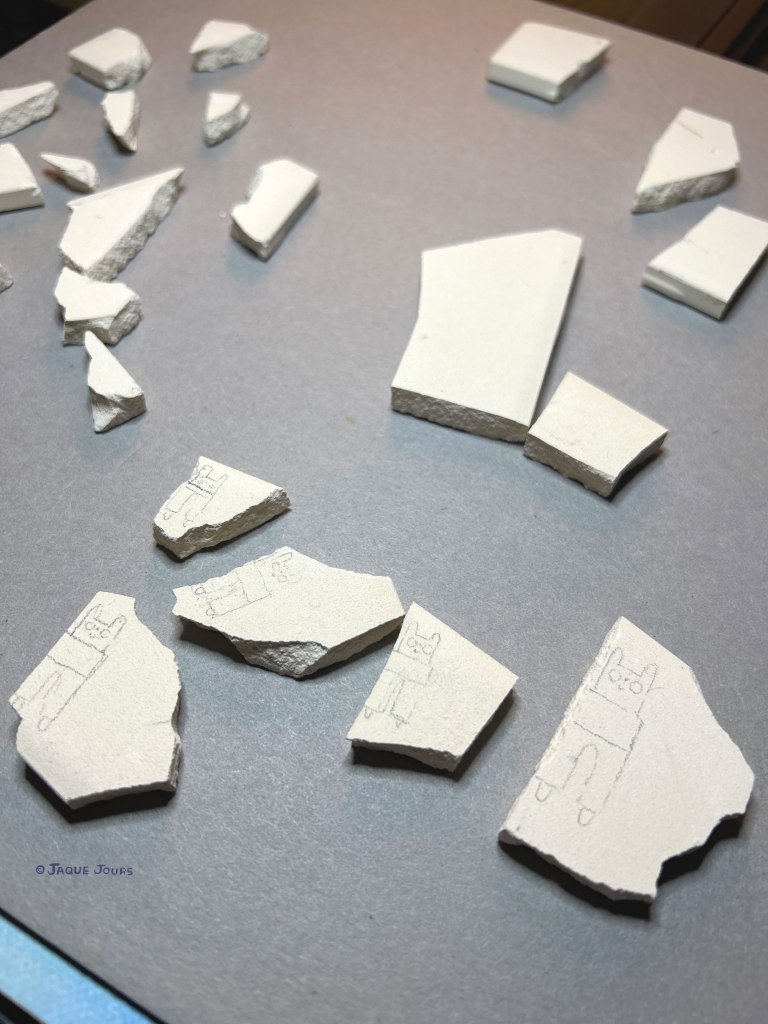
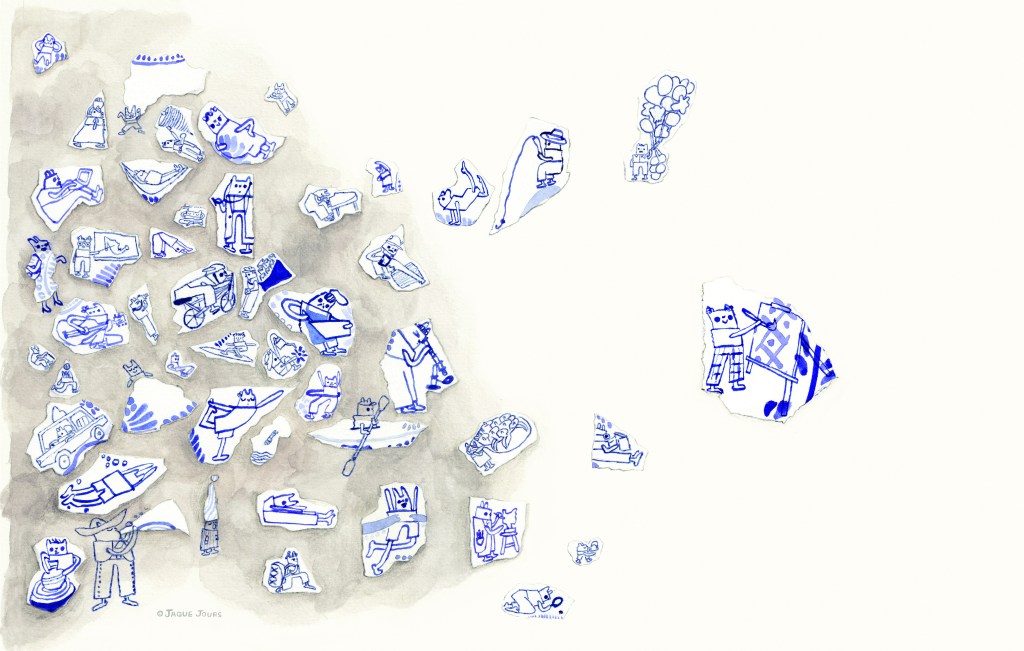
I mostly use gouache and watercolor. For this book I also worked with colored pencils, pastels, and even a tile to create the broken pieces spread (spoiler alert!). I wanted everything to feel more real. Experimentation is a big part of my process, which also means I stress myself out constantly thinking about changing everything and starting over with a whole new approach. But somehow, I always manage.
JM: Do you have a favourite spread in The Muéganos? Did anything unexpected emerge as you worked on this project?
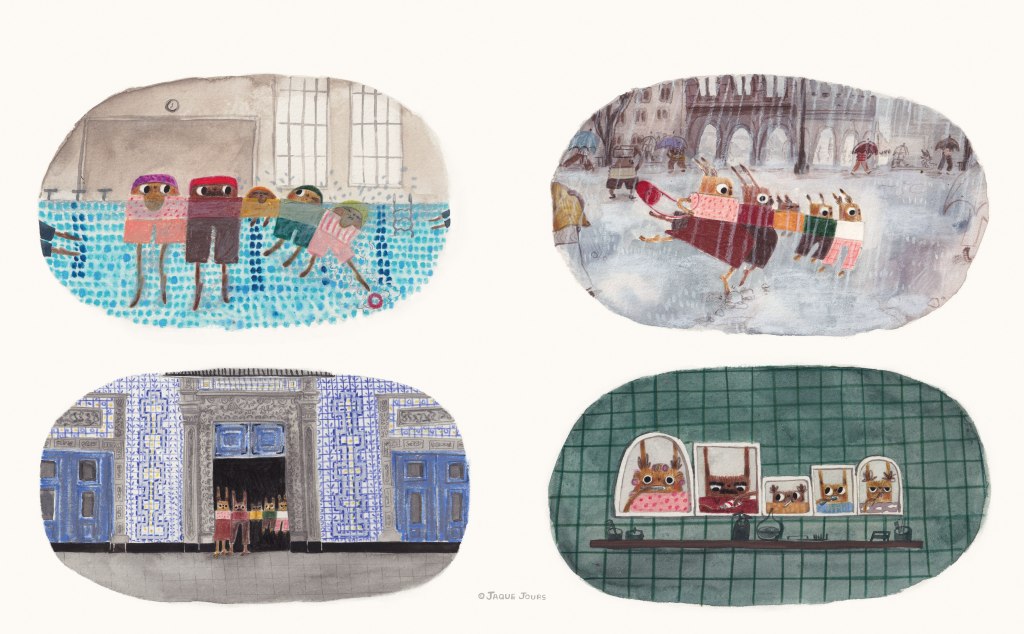
JJ: The house spread and the first vignettes spread are my favorites. I love them so much. You can understand the whole muégano concept just by looking at them.
The most unexpected thing was discovering how much the story resonated with its early readers. I guess once you look deeply into yourself and your own life, you find out that many people struggled or went through similar experiences—and that’s what literature is all about. I also wanted to portray the whole muégano concept in the book, but I had to take just one tiny piece of it and focus there. That was hard because I had so much to say about mueganismo.
The book changed a lot from when I first imagined it. Every time I look at it now, I think of all the stories I left out. I cut the text down a lot because I wanted the visuals to do the work, what you see is what to feel. I even considered making it a silent (wordless) book.
JM: Which illustrators do you admire? Do you have favourite books you read as a child yourself that have stayed with you? Any recommendations for our readers?
JJ: It’s hard to choose names to mention here because I admire so many illustrators, but I love Ben Shahn, Victoria Semykina, Laura Carlin, M. Sasek, Štěpán Zavřel, so many. There are a lot of great illustrators.
I remember loving Lilus Kikus, written by Elena Poniatowska and illustrated by Leonora Carrington, El rey que se equivocó de cuento, written by Antonio Granados and illustrated by Alain Espinosa, and El agujero negro, written by Alicia Molina and illustrated by Enrique Martínez.
It’s hard to narrow down recommendations, but if I had to suggest a classic it would probably be La peor señora del mundo, written by Francisco Hinojosa and illustrated by Rafael Barajas. And for more contemporary authors, I’d point readers toward the work of Azul López, Cecilia Ruiz, Christel Guczka, and Jorge Luján.
I think most picture books by Mexican authors have a particular sense of humor in the way they tell stories, and that’s what sets them apart.
JM: And finally, are you working on anything right now that you can tell us about?
JJ: I’m working on a new picture book! It’s still in early stages, so I can’t say too much. It’s built around the Spanish word ahorita (the diminutive of ahora) which in Mexico can mean right this second, in a little while, five days later, or never, depending on the sayer’s intention.
About Jaque Jours
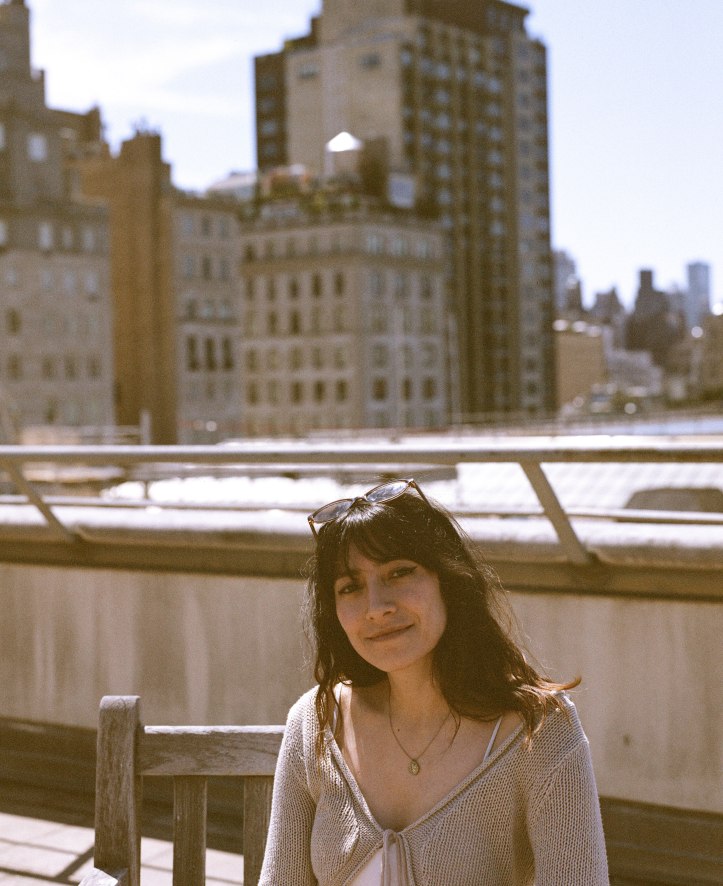
Jaque Jours’s path began with architecture, drawing floor plans and then painting them with watercolor and gouache. Wanting to tell stories, she went on to study a master’s degree in literature, where creating worlds with images and text finally merged. She struggles to stick to one point of view in every project: if she could, she would paint three versions of each story. The things she finds hardest to draw—and almost never does—are animals. And yet, the main characters of her debut picture book are rabbits. She still wonders why she did that.

Johanna McCalmont is a Northern Irish translator & conference interpreter based in Brussels, Belgium. She works from French, German, Dutch, and Italian. She translates fiction and non-fiction for adults and all sorts of stories for younger readers, from picture books to YA. She also loves to connect writers with audiences when interpreting at literary festivals. Her latest translations include The Best Daddy of All (NorthSouth Books, April 2025) and Kaleidoscope Club Book 3 (Blue Dot Kids Press, April 2025). Read more about Johanna here.
Support World Kid Lit!

World Kid Lit is a nonprofit that aims to bring diverse, inclusive, global literature into the hands and onto the bookshelves of young people. We rely on grants and donations to support our work. If you can, please support us at Ko-fi. Thanks!

We earn a small commission every time you buy books via the affiliate links on our site, or via our booklists at UK Bookshop.org. This is a much appreciated donation towards our work. Thank you!

