By Lori
Our world is a more beautiful, colorful, place because of our differences.
For the past 20 years I have been lucky enough to spend my work days learning alongside children who are considered neurodivergent. I don’t know who has learned more in those years, the children or me. They have taught me how to persevere when challenged, how to break tasks into their most basic parts, how to solve problems in different ways, how to multitask, how to find joy in the small things, and how to love.
I recently set out to see how neurodiversity is portrayed in picture books from various parts of the world. I found four picture books from three different continents and I found commonalities among them all. Water, in some form, is present in all the books whether it be rain, an undersea adventure, a fishbowl, or a pond. The importance of community is also highlighted in all, with parents or caregivers either bringing others into their world, or being supported by them. While the children in all face obstacles, they are accepted for who they are without question or much to-do They are loved and supported unconditionally by the adults in their lives.
All of these books are not only affirming for children who are neurodivergent themselves, they will also encourage any child to ask questions and accept all the people in their world.
Marcel with a Splash
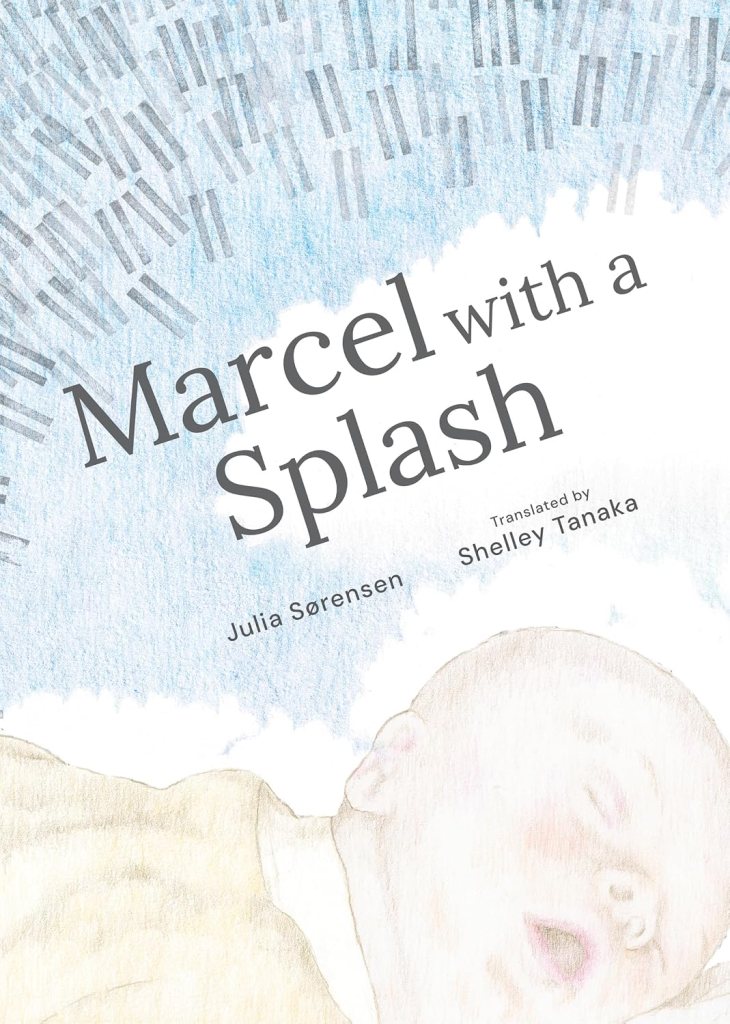
When Marcel was born, the midwife immediately recognized he had webbed toes (he’s a Pisces afterall), but it took his family and doctors a little longer to realize he had Down syndrome. Unconcerned, Marcel’s parents buried the words and let him grow at his own pace taking obstacles in stride. When they meet an adult with Down syndrome living and working independently, Marcel’s family is able to dig up the words they had buried and make meaning of them.
The Swiss writer Julia Sørensen, herself the mother of a child with Down syndrome, shows readers that Marcel, like every child, is multifaceted, and his diagnosis is just one part of who he is. He is shown in the book engaging in common childhood experiences, eating, sleeping, playing with friends, going to school (with or without support), and waiting for summer vacation, showing readers there are some things all children do.
The illustrations include many pairs of chromosomes throughout, always in the background. The muted ink and color pencil illustrations are gentle, just like this story about a beautiful boy.
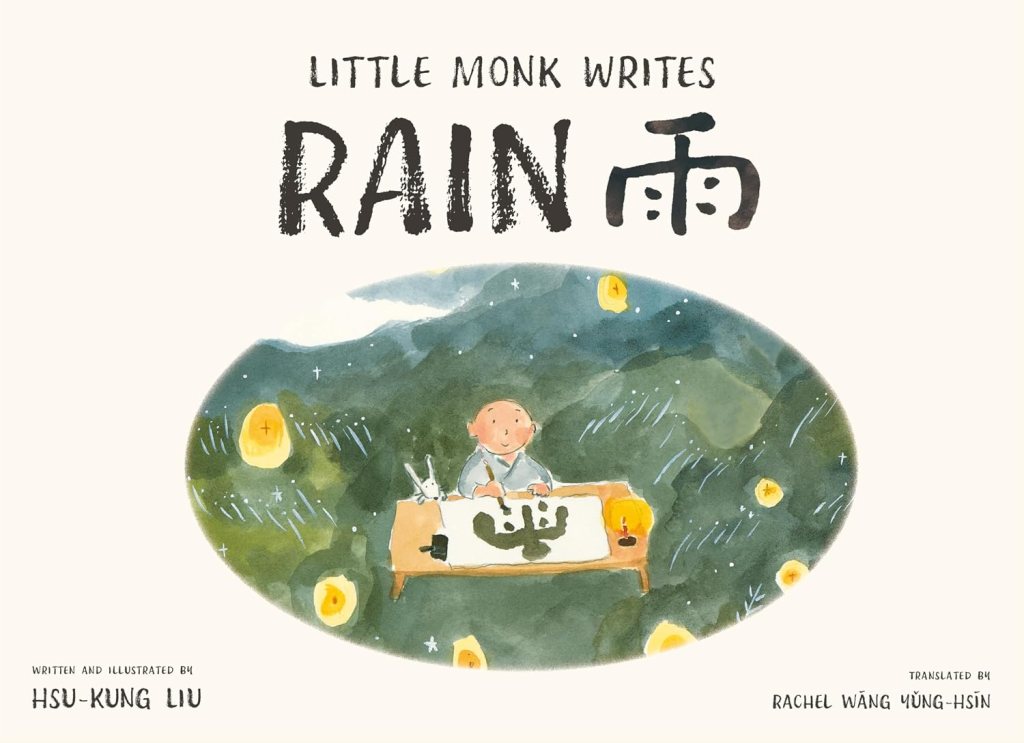
Little Monk Writes Rain
Written by Hsu-Kung Liu
Illustrated by Hsu-Kung Liu
Translated from Chinese by Rachel Wáng Yúng-Hsín
Published by Eerdmans Books for Young Readers, 2026
Buy from Bookshop.org US
Since he was born, Little Monk lived in a temple learning from the older monks. He raked leaves, kept the fire going, cooked, but had a very hard time learning to read and write. The only Chinese character he could master was the one for “rain.” When his countrymen faced a drought, it was Little Monk, with the stack of rain symbols he has written through the years, imbibed with feeling, that was able to bring back the rain.
Despite Little Monk’s struggles learning to read and write, most likely from a learning disability, he remains a valuable member of his community. He is ultimately the one that brings the much-needed rain back. There is an instance where he is teased by younger children because he cannot read, but he is shown taking it in stride. His writing the rain becomes a kind of meditation in times of grief, joy, and hardship, all offered up when his people need help.
The book’s unique horizontal binding, more reminiscent of a hanging scroll than a book, allows readers unfettered access to the muted, naturally colored illustrations. Little Monk Writes Rain, a Taiwanese import, also provides readers with a translation activity in learning to write the Chinese symbol for rain, just like Little Monk does in the story.
Dive

Written by Volnei Canônica
Illustrated by Mariana Massarani
Translated from Portuguese by Bruna Dantas Lobato
Published by Tapioca Stories, 2026
Buy from Bookshop.org US
Dive takes readers on an underwater adventure to better understand a young boy’s needs. A mother and child arrive at a doctor’s office questioning why the child continues to wet the bed. The doctor examines the child noting his heart sounds like submarine radar, and his lungs like aquatic mammals. The doctor decides to dive in, his path lit by fluorescent jellyfish, and what he discovers is a rich marine world inside the child. It’s determined the child misses the sea, that’s all.
The long vertical format of the book, originally published in Brazil, immerses readers in the underwater world, while the bold colors and line drawings in mostly blues and greens stimulate imagination and convey the boundarylessness and whimsy of the child’s inner world.
The child is shown with a smile while in his underwater world, a place the doctor goes to great lengths to see and understand. The doctor does not dismiss the problem or the child. While not specifically stated, the author’s note suggests the child is on the autism spectrum and has a rich inner world.
A Surprise in the Wood
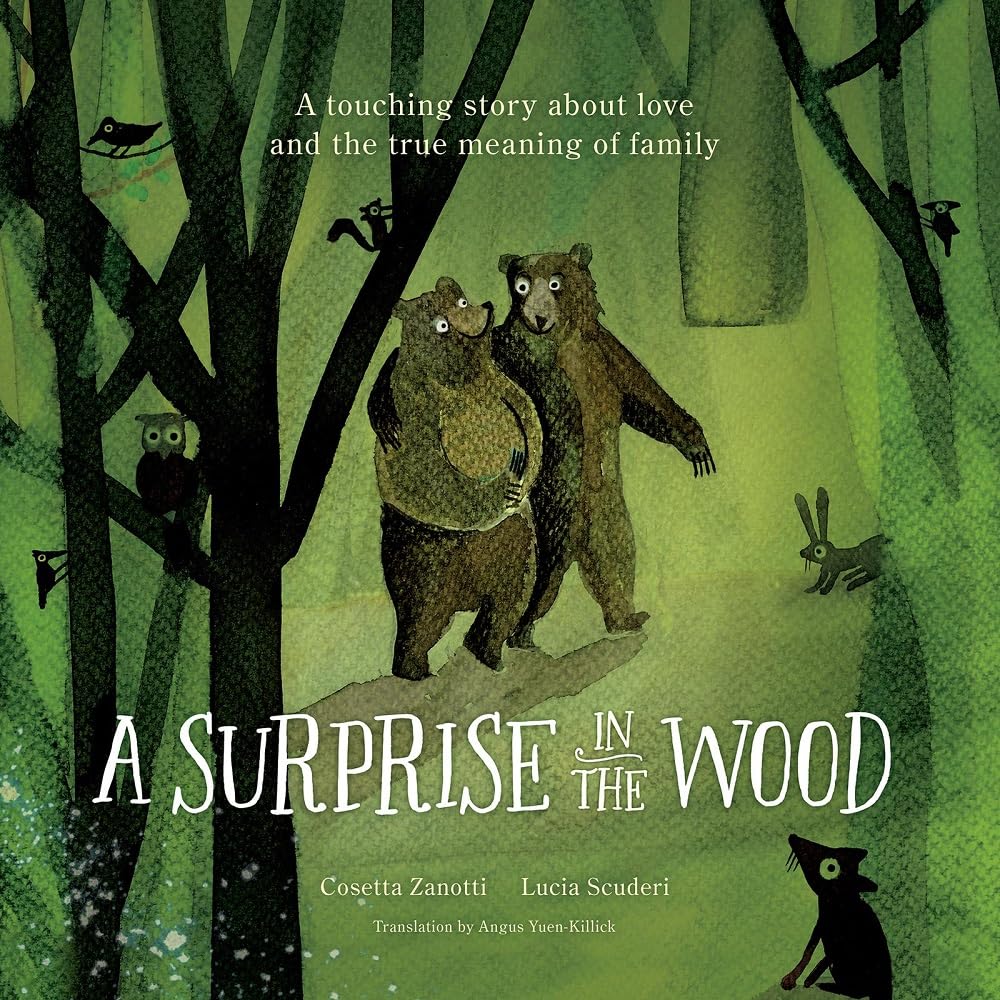
A bear couple has been anxiously awaiting their new baby, and they are delighted when he arrives, even though he’s not quite what they expected. After the other animals in the neighborhood meet him and politely, but undoubtedly question why a fish has been brought to the bears, the bear couple knows just what they need to do. They take their son to a lake and they all jump in. The community eventually follows their lead.
Based on the author’s experience adopting a child with Allan-Herndon-Dudley Syndrome, A Surprise in the Woods beautifully depicts a child with clear differences being unconditionally loved and embraced by his parents. The bears don’t hesitate to jump into their son’s natural habitat, and encourage those around them to do the same.
The use of animals as characters in this story allows the difference between the fish and the bears to really stand out. There are few similarities between the two species, but the parents are able to find a way to support their son despite the differences.
Discover more books about neurodiversity
- A Head Full of Birds from Eerdmans Books for Young Readers. See this World Kid Lit post
- BookTrust: Books with neurodivergent characters

Lori is a mom, wife, public school special education teacher, and avid reader of picture books and adult fiction and nonfiction. She will read pretty much anything. She has successfully kept two children and a sourdough starter alive for the past few years. Lori recently added a golden doodle puppy to the chaos. You can find her at MyKidsReadTheWorld.wordpress.com or on Instagram @KidsReadTheWorld where she reviews and recommends picture books that represent the diversity of our world. She and her children have read books from or set in more than 120 countries.
Support World Kid Lit!

World Kid Lit is a nonprofit that aims to bring diverse, inclusive, global literature into the hands and onto the bookshelves of young people. We rely on grants and donations to support our work. If you can, please support us at Ko-fi. Thanks!

We earn a small commission every time you buy books via the affiliate links on our site, or via our booklists at UK Bookshop.org. This is a much appreciated donation towards our work. Thank you!

