By Ruth Donnelly
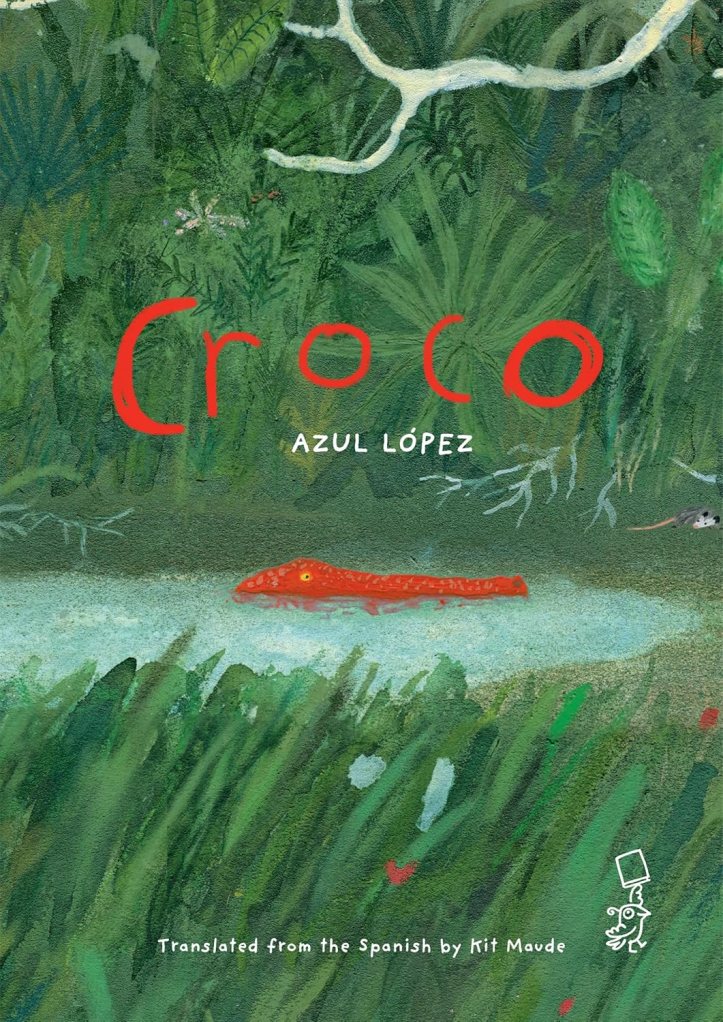
This week we meet another Mexican author and illustrator, Azul López – creator of Croco, translated by Kit Maude, this year’s Batchelder Award winner, and also the first Latin American children’s book in translation ever to win the Batchelder! Azul tells us all about where her inspiration comes from, how it feels to win such a prestigious award, and about some exciting new projects coming soon.
Ruth Donnelly: I have to start by asking about Croco, which won the Bachelder Award this year. Where did the inspiration for the book come from, and how did it feel to win the Bachelder?
Azul López: I found the story of Croco during the period when we couldn’t leave our homes during the pandemic. I felt scared, lonely and sad. When it was hardest to cope, taking a hot shower would make things a little bit better. One night, while I was in the shower, the water ran out, and I started crying. It was the only thing that helped and it was not possible to get it! After a while, I managed to get out of the shower (after crying a lot) and began to write.
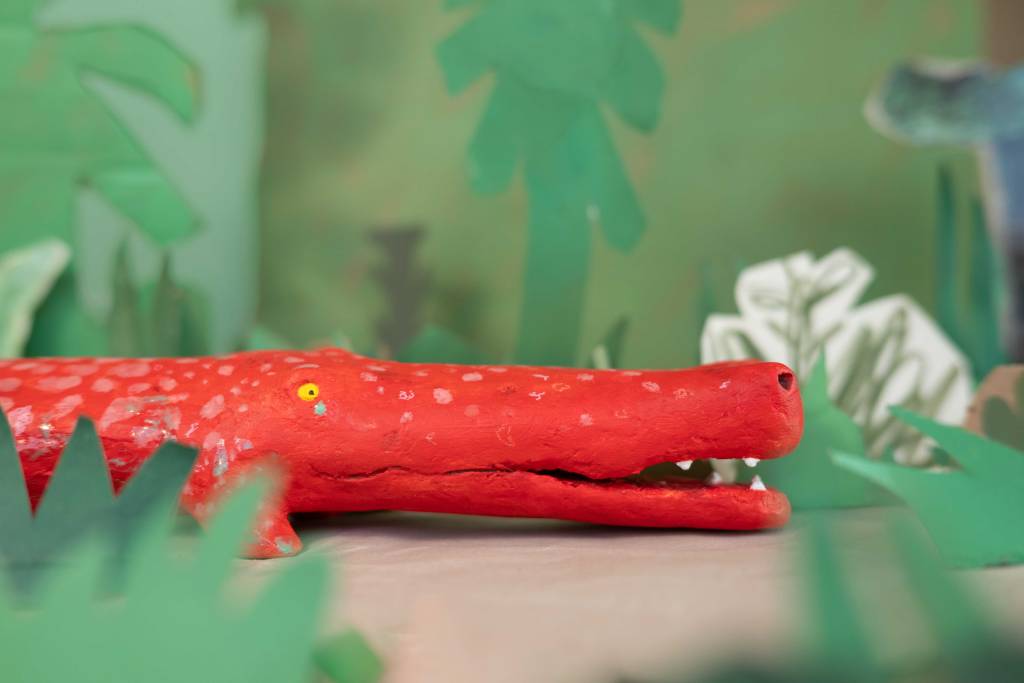
Receiving this award for a story about a situation that many people – and small crocodiles in particular – have experienced makes me imagine that the book might reach more hands and that perhaps people will read it and smile; that they will, at least, have a good time inside the jungle I created. Hope is important.
RD: Can you tell me more about your journey to becoming both an author and illustrator? Which came first? And what drew you to children’s books in particular?
AL: I went through several paths before realizing I could dedicate myself to creating books. I have a memory of the house where I lived when I was six years old, sitting in the front yard with a notebook, painting with watercolors the drawing I had made for a story I wrote that day at school. I don’t remember the story itself, but I remember that moment: the images accompanying the words, and what I was creating accompanying me.
I think that in my creative process, stories usually appear first, and then, I begin to imagine the images. Its not something conscious; it feels natural. Beyond books made for children, I like to think about books that are read by them. It is their gaze that allows fiction to become real within the pages, and that makes the process of creating much more fun. Without borders, without logic, paying more attention to the intention of having a good time and sharing our world with others.
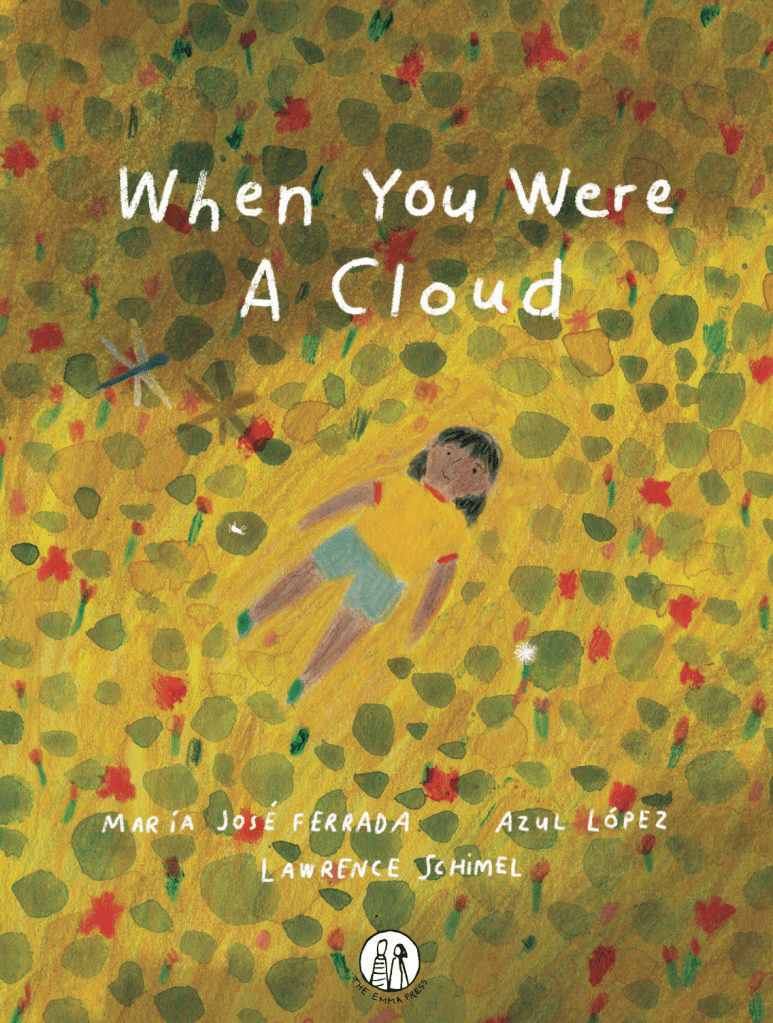
RD: As well as writing your own award-winning books, you have also provided illustrations for some big name authors, including María José Ferrada. In fact, one of María José’s poetry collections, When You Were a Cloud is coming out in Lawrence Schimel’s English translation in September (The Emma Press). Can you talk to me about your process when illustrating that, and more generally when you illustrate other people’s work?
AL: Usually, when I work with texts written by someone else, I look for a connection between what I feel and the perspective of the world that they are inviting me to be a part of. When I received the opportunity to illustrate Maria José’s text, I immediately felt a connection between our sensitivity and view, through the text. It triggered something in me. Right from the first reading I began to imagine things and that’s how I recognize that the text has something – a place – for my work where the images and words are going to make company for each other. I think I rely a lot on intuition. Working with María José’s texts has felt, ever since our first book, like playing together in the park with a friend. Books have allowed me to find a lot of things in and out, and our friendship is one of the most precious ones.
RD: How does that differ from writing and illustrating your own books? What comes first, the words or the pictures?
AL: I am going to mention intuition again but this time in combination with instinct. Sometimes when I go out for a walk, ride my bike or simply spend time at home reading or watching something or talking to my husband about things that are not related to work I find myself in front of an unavoidable amazing feeling. My creative process is quite messy and is different with every story. However, that feeling is constant.
I can compare it with the small surprise when you find a coin in your pocket. I think that with every experience we collect things that later we rediscover unintentionally. During those walks or bike rides it is as if I put my hand inside my brain and the idea is there.
Then I begin to write it. From the beginning to the end – or at least a first ending – following just what I imagine. Then I edit and correct and go through the process of refining the idea, but without the intuitive-instinctive process of finding and writing I wouldn’t be able to create.
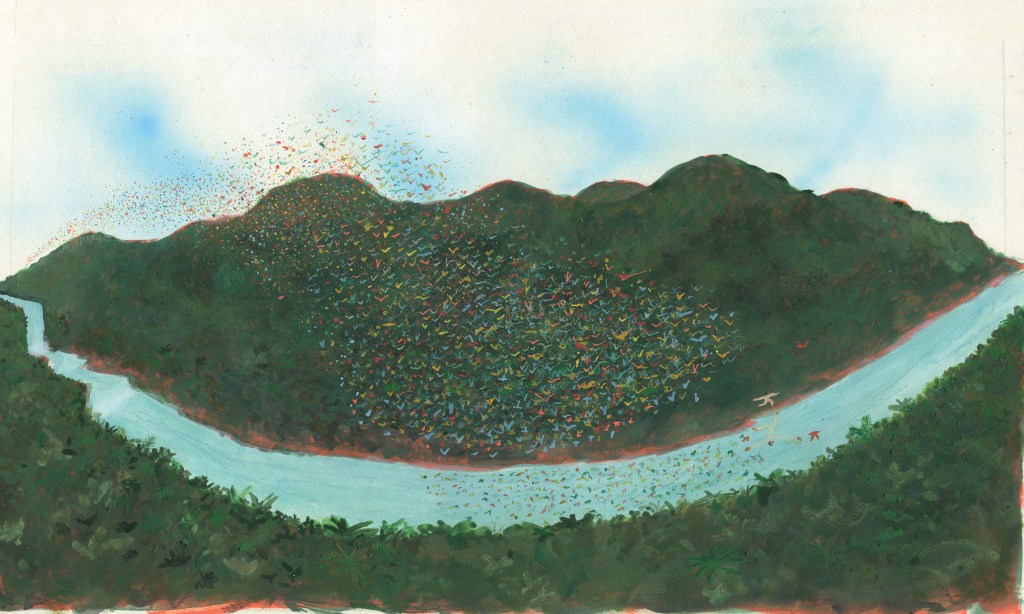
RD: You grew up in Mexico and now live in Croatia – how much do you think your art is influenced by your experiences and surroundings? If not that, then what does inspire you?
AL: I left Mexico City in 2022, right after the lockdown. From that moment on, I had the opportunity to live in different cities. In most of them, neither Spanish nor English was the main spoken language. I had to adapt to be surrounded by things I didn’t know how to read and naturally began to rely on another way of reading that I had enjoyed all my life: reading people’s faces, gestures, movements, the volume of their voices, the intentionality, their habits. Different ways of communicating.
I think that being lost without the ability to speak allowed me to find new forms of communication. When it comes to books, for example, I found myself in a position similar to a kid who hasn’t yet learned to how to read words. I love reading images, so it was a perfect scenario for it.
Being here has helped me feel like an astronaut. No matter how much time I spend with my loved ones here, there is always the spark of seeing the world with different eyes, of discovering something new in front. It has been a very useful tool and a reminder to approach my creative process in a similar way.
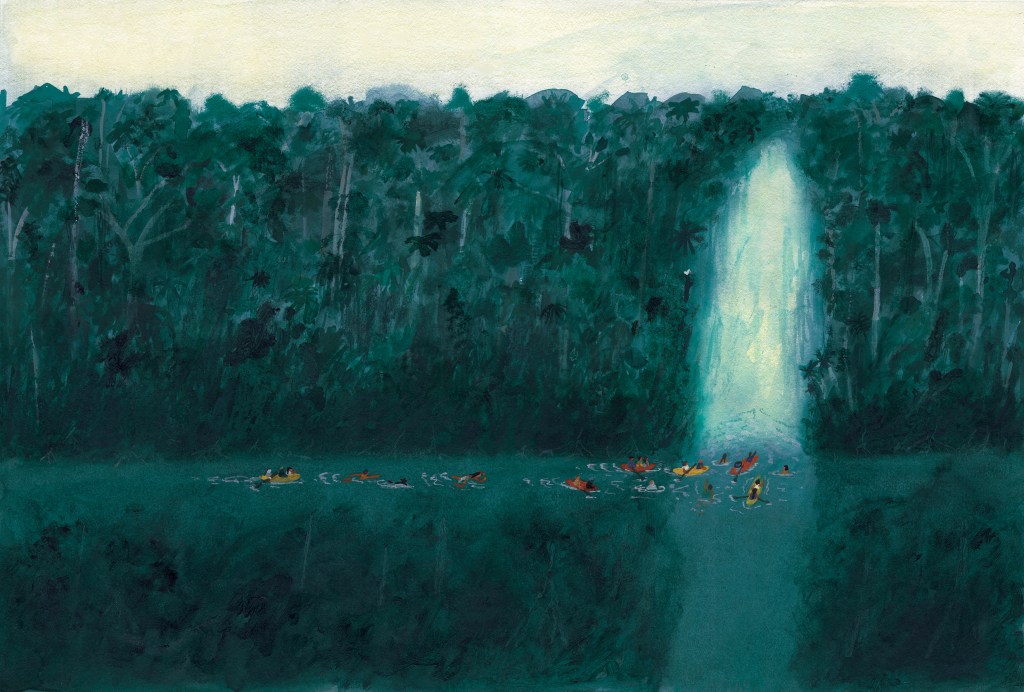
RD: Thinking about illustration, what are your favourite materials to work with?
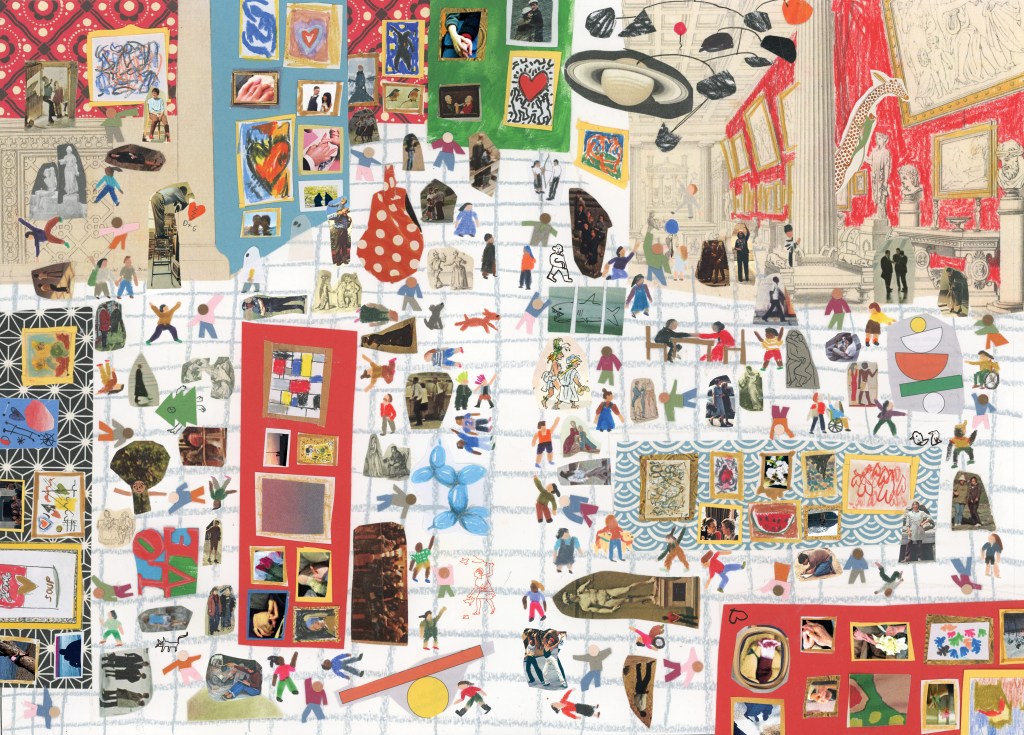
AL: The more unusual, the better. I get distracted very easily and I like to experiment a lot. My favorite part of the job is finding moments where I can have fun. Art supplies are a great playground for that. I especially like scissors and unusual papers, magazines, watercolors and color pencils, markers, and toothbrushes.
RD: Do you have a favourite of your own illustrations? Which one is it and why?
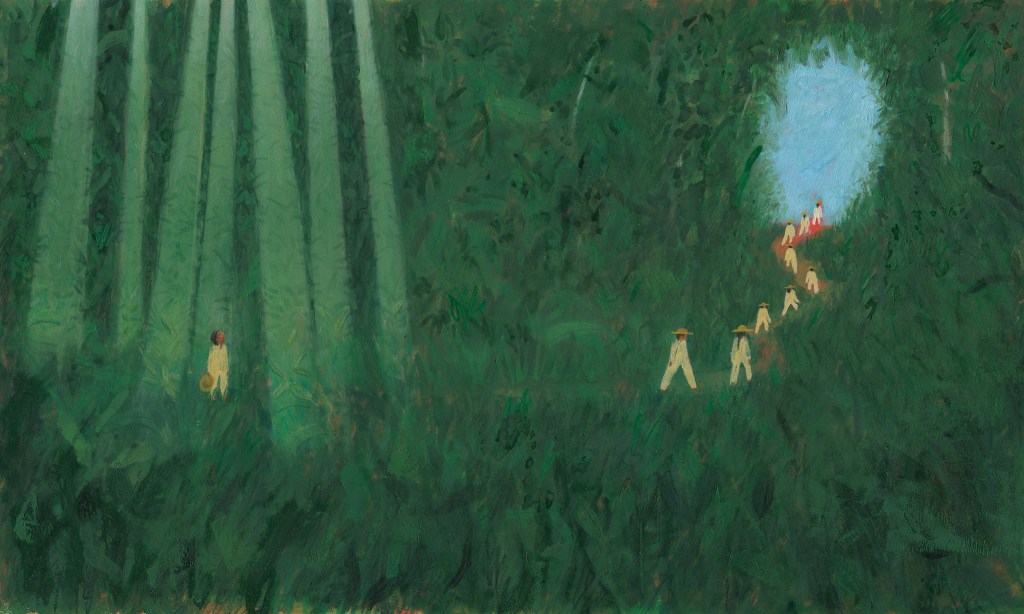
AL: This one is difficult to answer. There is an image in one of my books, Volver a mirar (Look Up is the title in Shook’s English translation, published Transit Children’s Editions). I remember the moment of its creation: The sound of the wind through my window, the light in my studio. I remember the feeling. I can visualize my fingers stained green. It felt like freedom. I think about that image and I can still feel it.
RD: Which other illustrators’ work do you admire? How about writers?
AL: Quentin Blake and Tove Jansson are two of my favorite storytellers. The stories of Roald Dahl have a very deep connection to my own story but that’s a topic for a whole other conversation. I think I also often to go back to the books of Gloria Fuertes, Jon Klassen, Rosario Castellanos, Isol, José Emilio Pacheco and Ted Hughes.
RD: Finally, is there a project you are working on at the moment that you could tell us more about?
AL: I’ve been working on my next book for two years already. It has been a deeply nourishing process. The book has evolved, expanded, shrunk, changed and taught me so so much. I think it has been one of the most eye-opening projects I’ve worked on. It tells the story of a spider.
RD: We can’t wait to see it! Thanks so much Azul, this has been such a lovely conversation, and we look forward to seeing your artwork in When You Were a Cloud in September.
AL: Thank you!
About Azul López
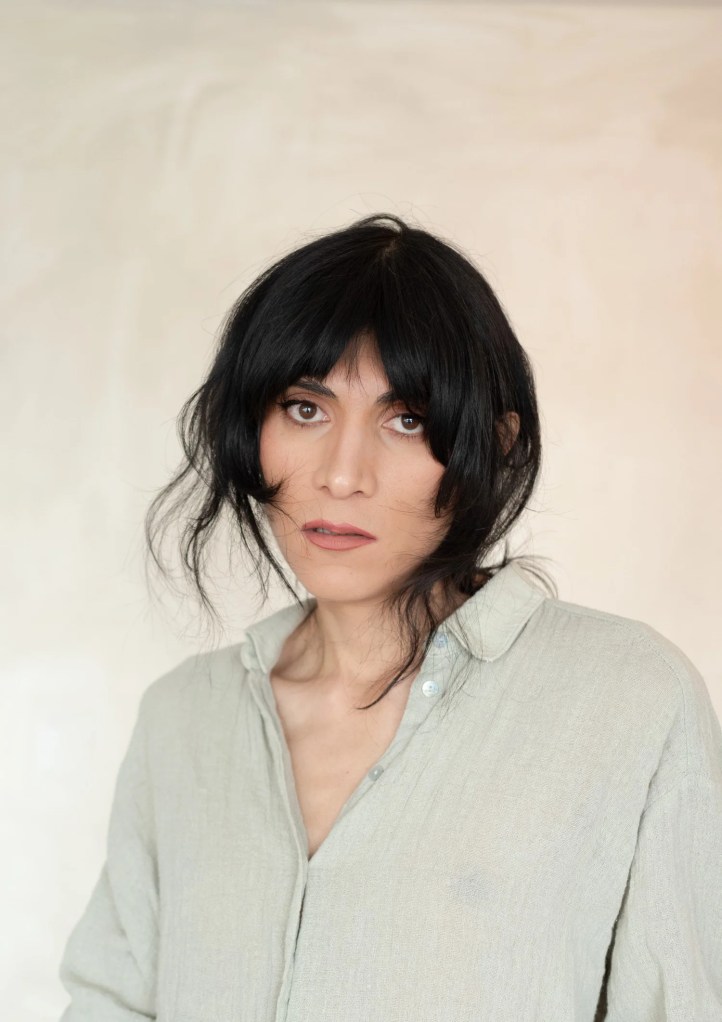
Azul López is a Mexican author and illustrator of picture books. Her books have been published in Mexico, Argentina, Chile, Colombia, Brazil, Italy, France, Spain, South Korea, the Netherlands, USA, Germany, Greece and Sweden. Her stories and drawings have received multiple international awards. Most recently, she was the winner of the 2026 Mildred L. Batchelder Award (with Kit Maude’s translation of Croco), the International Award for Illustration from the Bologna Children’s Book Fair, and the Green Island award from the Nami Island International Picture Book Illustration Concours in South Korea.

Ruth Donnelly is a Spanish-to-English literary translator, and mother/caregiver to three kids, two cats and a tortoise. Her main interest is in Latin American fiction, particularly children’s literature. A short story she translated will appear in Latin American Literature Today at the end of this year, and she spends most of her time, workwise, sourcing and translating new and exciting writing for children from Latin America. Samples of her work can be found on her website: www.ruthdonnellytranslates.co.uk
Support World Kid Lit!

World Kid Lit is a nonprofit that aims to bring diverse, inclusive, global literature into the hands and onto the bookshelves of young people. We rely on grants and donations to support our work. If you can, please support us at Ko-fi. Thanks!
We earn a small commission every time you buy books via the affiliate links on our site, or via our booklists at UK Bookshop.org. This is a much appreciated donation towards our work. Thank you!

