By Johanna McCalmont
This week two of our regular contributors, Brigita Orel and Ruth Donnelly, tell us all about their recent study trip to Antwerp for a kid lit summer school for professionals.
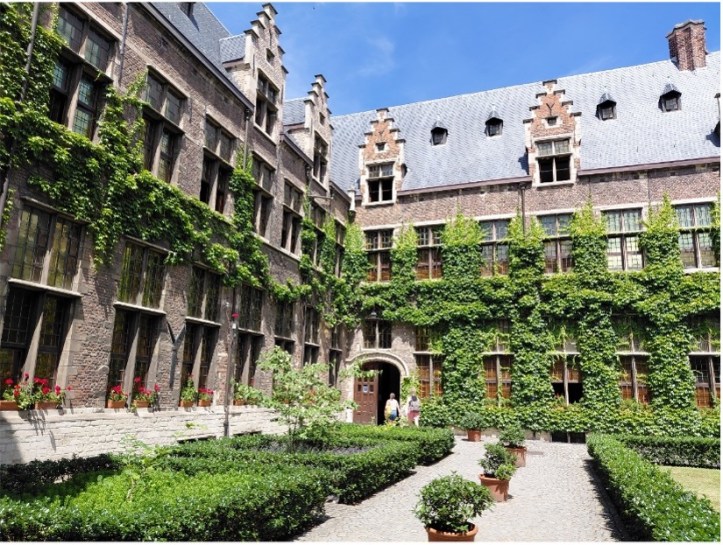
This July, scholars, translators, writers, and other professionals gathered at the University of Antwerp’s Children’s Literature Summer School to explore the transnationality and translatability of children’s books.
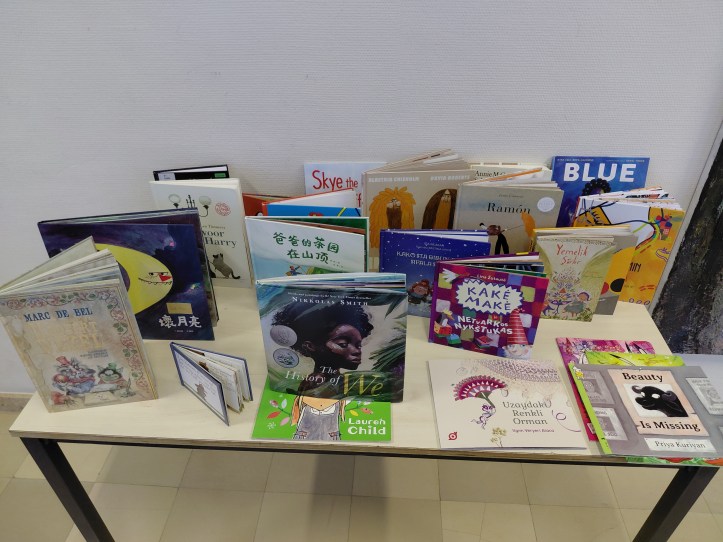
The key note speakers and workshops focused on transnational books (books travelling from one country to another) and children’s literature in translation–not only on their importance for fostering a better understanding of different cultures, but also on how to develop strategies and tools for better translations.
Historically, children’s literature studies have been heavily influenced by Western or Eurocentric ideals of childhood. The Antwerp summer school this year actively challenged this by placing transnational and translational contexts at the centre of the dialogue.
WKL: How did you find out about the summer school? Why did you want to go?
Brigita Orel: I found out about the course from the World Kit Lit Community WhatsApp group where someone posted about it. The topic of this year’s course aligned perfectly with my work as a translator of (mostly) children’s literature and that was why I wanted to go. I thought it would give me a new insight into the field.
Ruth Donnelly: I also heard about it through the World Kid Lit WhatsApp group. I’m currently engaged in a PhD project which involves translating a young adult novel from Chile, and was keen to have a chance to present my research to the children’s literature community, as well as to hear about all the exciting work other people are doing in the field.
WKL: What did a typical day look like?
Brigita Orel: The days at the summer school started with a keynote speaker and then continued with practical workshops. These investigated the translation process through the use of such picture books as Jessica Love’s Julián is a Mermaid or Aleksandra and Daniel Mizielinski’s Maps. We addressed topics, such as the translation of multimodal books, cultural context and power dynamics. In the afternoon, there were either more workshops or tours of libraries, bookshops or other institutions around Antwerp.
WKL: Was there a specific conversation with another participant or a lecture that stood out?
Brigita Orel: Every conversation and discussion stood out in the sense that with every one of them I gained a new insight into a different country’s literature, trends, publishing business etc. because the participants came from so many different parts of the world. This cultural diversity created a very inspiring environment.
Ruth Donnelly: I spoke to so many interesting people it would be hard to pick just one! I really loved meeting Brigita and getting to know more about her and her work, and I really enjoyed chatting with other PhD students and finding out where our research interests overlapped. I think the lecture that really stood out for me was Eva van der Wiele talking about the ways that Disney comics have travelled around the world, and how they changed during particular periods of history, such as in Franco’s Spain, or Italy under Mussolini. I find it so fascinating that, even though in many ways it has taken a long time for people to start to take children’s literature seriously (and I’m not sure everybody does even now!), it has clearly always been seen as a threat to certain political ideologies.
WKL: Did you take part in any specific breakout sessions?
Brigita Orel: I attended the translation strand of the summer school where we had different workshops which focused on the translation of informational picture books, on the translation of humour (particularly nonsense and strangeness), the recontextualization of texts from different cultures and periods etc.
Ruth Donnelly: I went on a visit to writer and illustrator Mattias De Leeuw’s studio, which was a really amazing experience – we got to leaf through the sketchbooks he uses to plan out his stories, and he showed us how the whole process of making a picture book works.
WKL: Did anything happen during the week that you hadn’t expected?
Brigita Orel: I wasn’t expecting the event to be so friendly and relaxed. I think this was one of the reasons it was so enjoyable and because of this also fulfilling. The warm atmosphere helped me relax and learn more efficiently. What is particularly great about the Antwerp Summer University is its diversity. It brought together Master’s students, PhD researchers, educators, writers, and professionals from all over the world, creating a living laboratory for transcultural exchange.
The participants came from different cultures and different professions and brought vastly different reading experiences, cultural taboos, and aesthetic expectations to the table. This reminded us that children’s books are not isolated cultural artifacts. By analysing how they cross borders through translation, we learned not just how children read, but how our world connects.
Ruth Donnelly: I was surprised how far people had travelled to attend. I had somehow expected the cohort to be pretty Euro-centric, but in fact attendees had come from as far afield as Argentina, China, India, the United States, and even Australia, which gave a really fascinating insight into different traditions in children’s books around the world.
WKL: You mention different cultural taboos and aesthetics. Do you have a specific example that you learned about for the first time? (Something that’s not a taboo where you’re from but would be elsewhere?)
Brigita Orel: It took me by surprise that Alex Scheffler’s illustration in Julia Donaldson’s A Squash and a Squeeze had to be changed for the American book market. He had to re-draw one of the scenes where the goat’s udder was initially visible. This is just one example that stuck in my mind.
Ruth Donnelly: Conversely, I was amazed by the final image in the Danish picture book Den fantastiske bus, which showed two animals relaxing in a utopian landscape, sharing a joint!! That’s something you would never see in a children’s book in the UK.
WKL: Is there something you learned that you will apply in your practice back home?
Brigita Orel: I found particularly inspiring the workshop on informational picture books. I don’t usually translate non-fiction, but this workshop made me want to try and perhaps I will, now that I feel I know at least the basics of how it is done. And the workshop on recontextualization of texts also gave me a new insight into the balancing act of making a translated text domestic while at the same time maintaining the essence of its origins. This is very important particularly when translating children’s literature.
Ruth Donnelly: I really enjoyed the ‘You can’t translate that!’ workshop, where we looked at cultural differences in childhood experiences and how you might render them in translation. Things like the song you might sing on the bus on a school trip, or how you might seal a promise with a friend… I suppose these are all things that I’d have had to give careful consideration to when translating anyway, but talking to the other translators and seeing how visceral those childhood memories were for them made me realise these are the things that make world literature for kids so interesting, so it’s important to get them right!
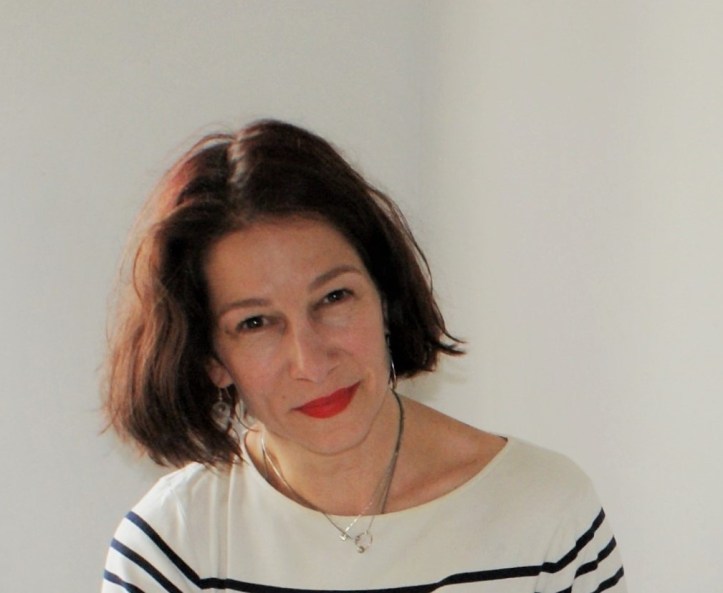
Brigita Orel lives in Slovenia where she works as a translator from English into Slovenian. In her spare time, she either reads books, writes them or researches them. She can be found on the web at https://brigitaorel.com/

Ruth Donnelly is a Spanish-to-English literary translator, and mother/caregiver to three kids, two cats and a tortoise. Her main interest is in Latin American fiction, particularly children’s literature. A short story she translated will appear in Latin American Literature Today at the end of this year, and she spends most of her time, workwise, sourcing and translating new and exciting writing for children from Latin America. Samples of her work can be found on her website: www.ruthdonnellytranslates.co.uk

