In this interview, we get to know Slovenian illustrator and author Manica K. Musil, whose picture books No, I Won’t and Stan the Elephant were published by Rosen Publishing in the USA, in English translation by Jason Blake.
by Brigita Orel
Brigita Orel: Tell us a little bit about your picture books No, I Won’t and Stan the Elephant.
Manica K. Musil: My picture books often grow from fragments of real life. I am inspired by events that I have experienced myself and those experienced by my children or people around me. Now that my children are grown up I mostly find ideas in everyday life. Elizabeth Gilbert wrote about this in a very interesting way. She says that ideas find you if you are in the right mood and know how to listen to them. But if you aren’t paying attention, they can just pass you by.
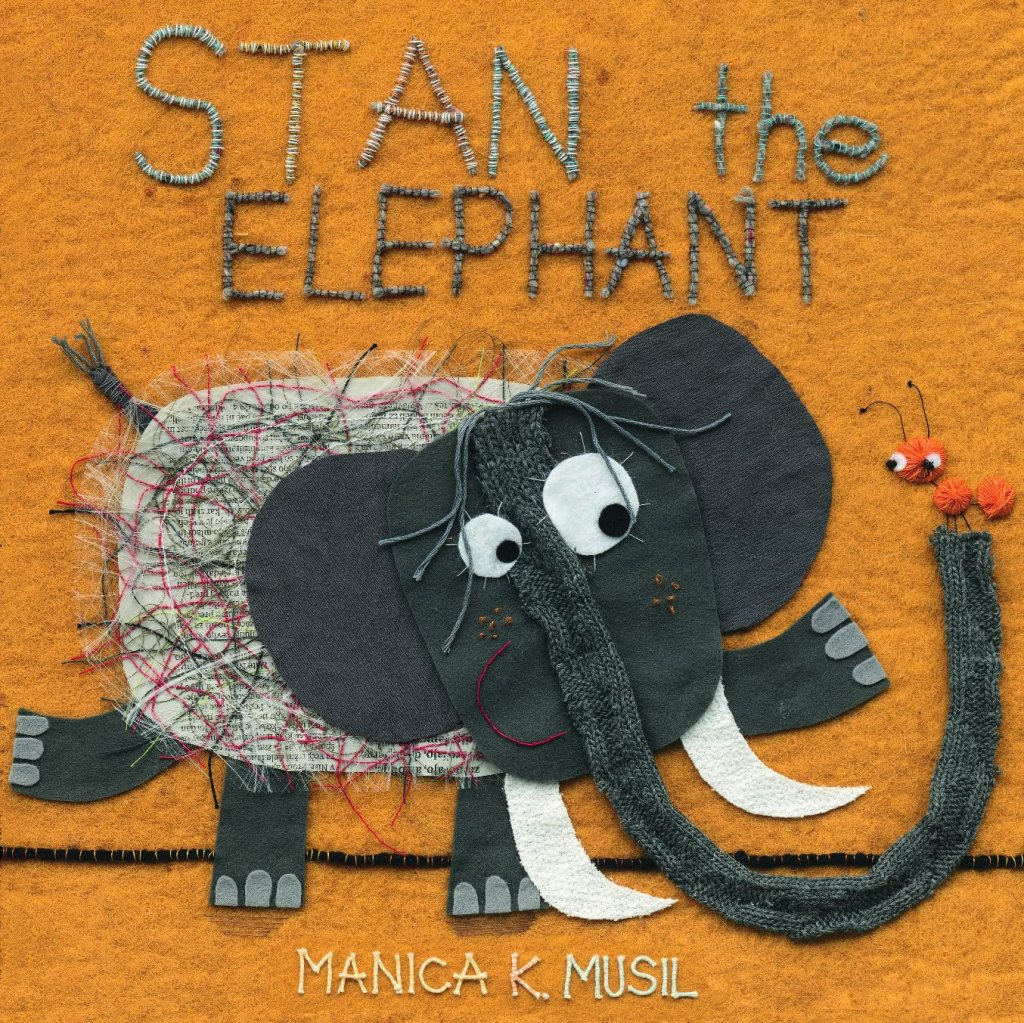
Stan the Elephant is about an elephant who loves telling stories more than anything. He wants to share them with everyone, but nobody wants to listen – not the zebra, not the lion, not the parrots, not the snake, not the crocodile, and not even the elephants from his own herd. However, there is a tiny ant on him who would gladly listen to his stories, but she is so small that Stan doesn’t notice her at all. You can discover how the story unfolds in the picture book itself.
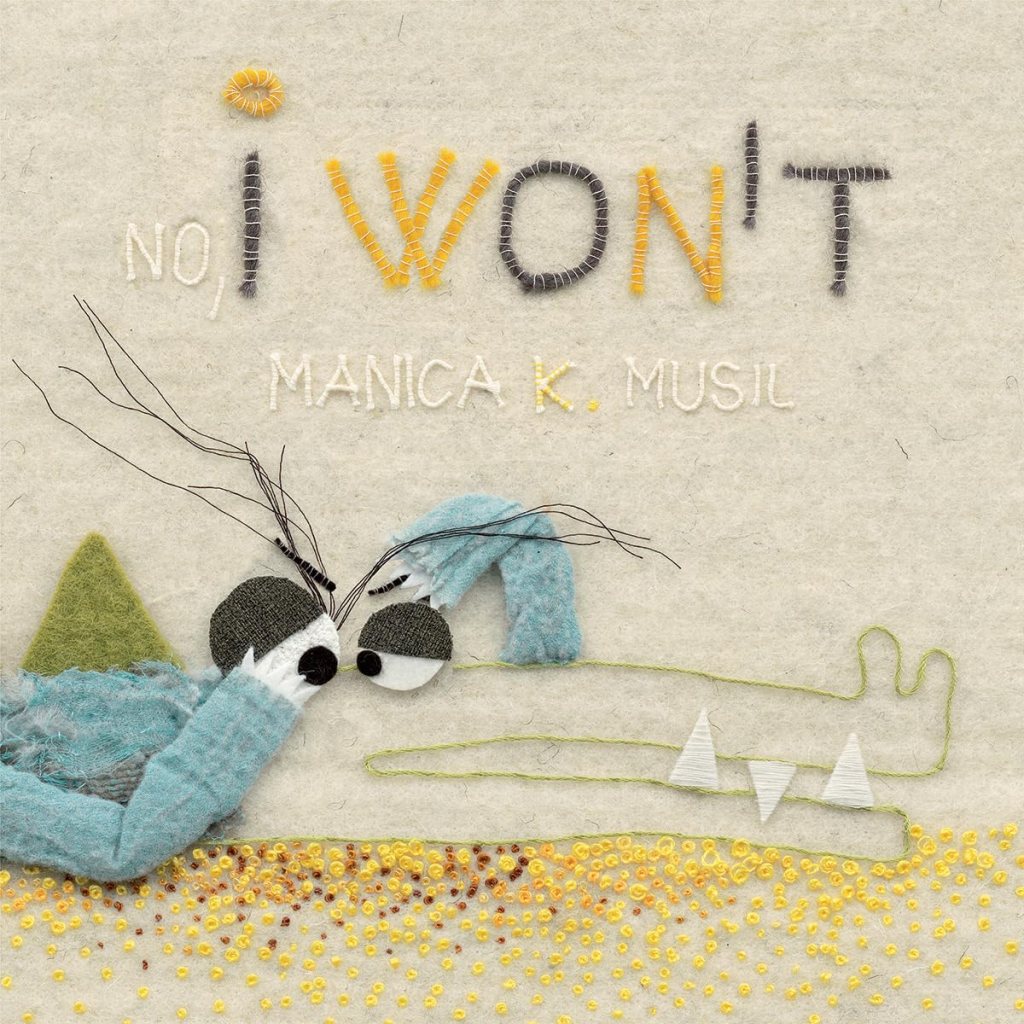
No, I Won’t! will probably remind many parents of scenes from everyday family life. “No, I won’t!” is one of those phrases that children utter with great conviction, regardless of whether they are three or thirteen years old. With children, it is often not just about defiance, but about a desire for independence, a need to be heard, or expressing emotions they don’t yet know how to put into words. That is why we, as adults, sometimes need to listen to what remains unsaid. I believe that both children and their parents will see themselves in this story.
Can you tell us about the translation process? What was it like working with an American publisher?
All of my picture books were translated into English by Jason Blake. I have been working with him for many years and deeply appreciate his sensitivity to language. He is Canadian, so he also has an excellent understanding of the cultural and linguistic nuances of the English-speaking world.
The collaboration with the American publisher was quite straightforward. However, how it actually began is a bit more interesting. The publisher discovered me at the Frankfurt Book Fair, where she noticed my picture books at the Slovenian Book Agency stand. She asked for my contact information, and that is how our collaboration started. First, the picture book Stan the Elephant was published in America, and then No, I Won’t!
Your illustrations are unique. You create them with fabrics that are mostly sewn and glued rather than drawn. Could you tell us more about your technique?
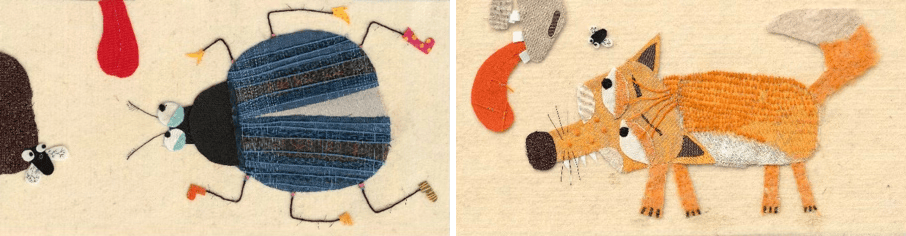
For many years, I have been creating with textile collage. The process of making the illustrations is otherwise similar to the classic illustration process. First, I prepare sketches and design the entire picture book, and then I start making the individual illustrations. I cut various shapes out of fabric, assemble them, glue them, and sew them. I also use textile paints in my work, and sometimes I complement the illustrations with acrylic or watercolour paints.
Making textile illustrations is a rather time-consuming process, as each illustration is actually a handmade, unique piece. Perhaps it is because of this uniqueness that my work is well-recognized abroad as well. On the other hand, this technique can also be a challenge. Some publishers are initially a bit intimidated by textile illustrations because they deviate from more conventional illustration approaches. But it is this uniqueness that often attracts readers and publishers who are looking for something special.
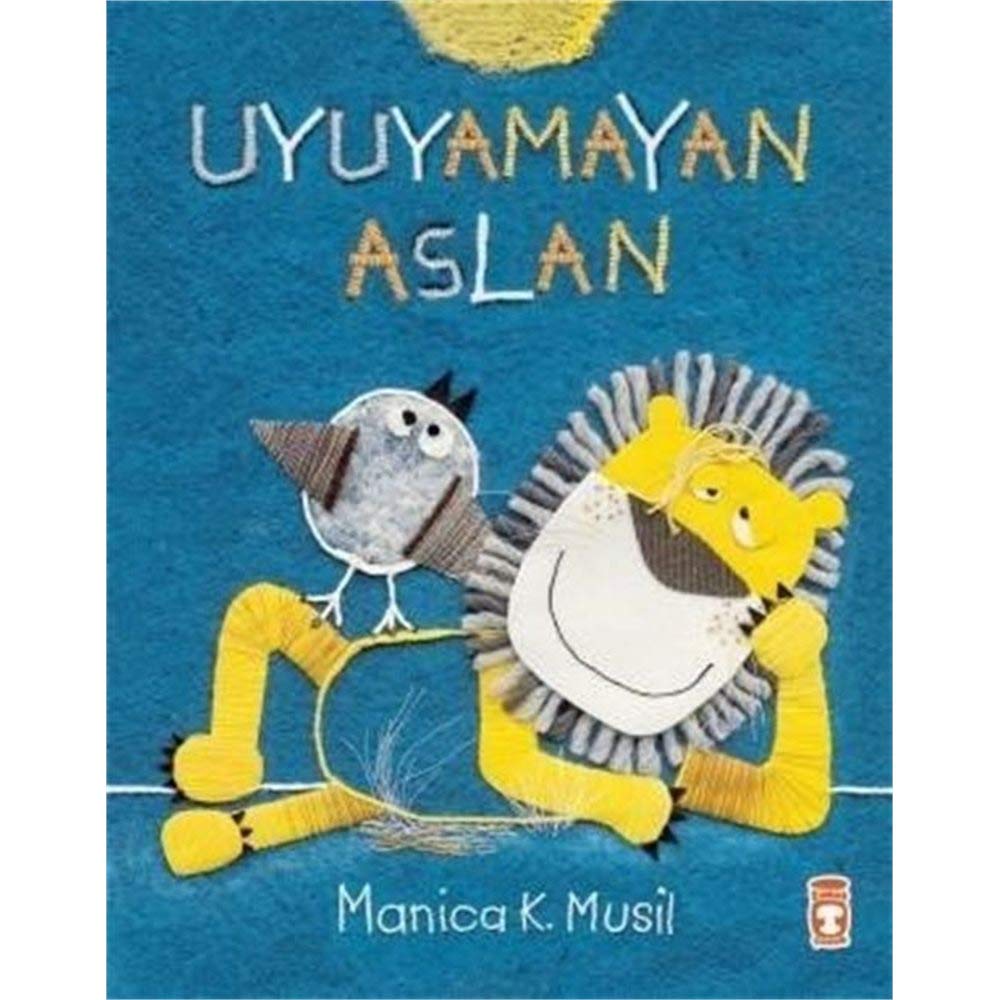
Your books were translated into a number of languages, including Croatian, Turkish, and Portuguese. Does this require extensive adaptations that also affect the illustrations or is the process straightforward?
So far, my picture books have been translated into approximately 16 languages, and around 50 of my books have already been published in translation worldwide. My books have generally not required major adaptations. Apparently, the themes they deal with are universal enough for children and adults to understand them regardless of their cultural background. Most of the changes were minor.
One such instance was in Turkey, where the editor noticed that the girl was naked under her crocheted dress, so we adjusted the illustration slightly. For the picture book Janez the Mosquito (Komar Janez), in which a male mosquito falls in love with a female mosquito, the Chinese publisher suggested that the characters should be just friends as they felt a love story was not appropriate for such young readers. In this case, it was a textual adaptation, not an illustrative one.
There were also a few adaptations in India, but only regarding the titles. The title Stan the Elephant didn’t work very well in Hindi, so they changed it. Unfortunately, I no longer remember what it was. A similar thing happened with the picture book Isidor the Lion (Lev Izidor became Robbie the Lion). By the way, this one will be included in a first-grade elementary school textbook in Slovenia this year.
In fact, many of my picture books feature an animal and its name in the title, such as Stan the Elephant or Franc the Anteater (Mravljinčar Franc). Since animals and personal names carry different phonetic and cultural associations in different languages, translators and editors sometimes decide that it makes sense to adapt the title to the local environment. I think this is completely understandable, and it is part of the journey a book takes when it comes to life in another culture.
To sum up, adaptations have been very rare and mostly minor. I am glad that the stories are universal enough to resonate with children in very different parts of the world.
You started out as an architect. How did you become an illustrator and how are the two connected?
Ever since I was little, I have loved drawing and painting, as I am a very visual person. Then, for a while, I was completely captivated by music. I completed secondary music school alongside grammar school, and for a long time, I thought I would continue my path by studying piano. In the end, however, I decided on architecture.
After my studies, I also received several awards in the fields of architecture and design. But after the birth of the first of my three children, my path led me into writing and illustrating children’s books. I feel that this field allows me more creative freedom, because architecture, despite its creativity, is ultimately a technical field with numerous limitations.
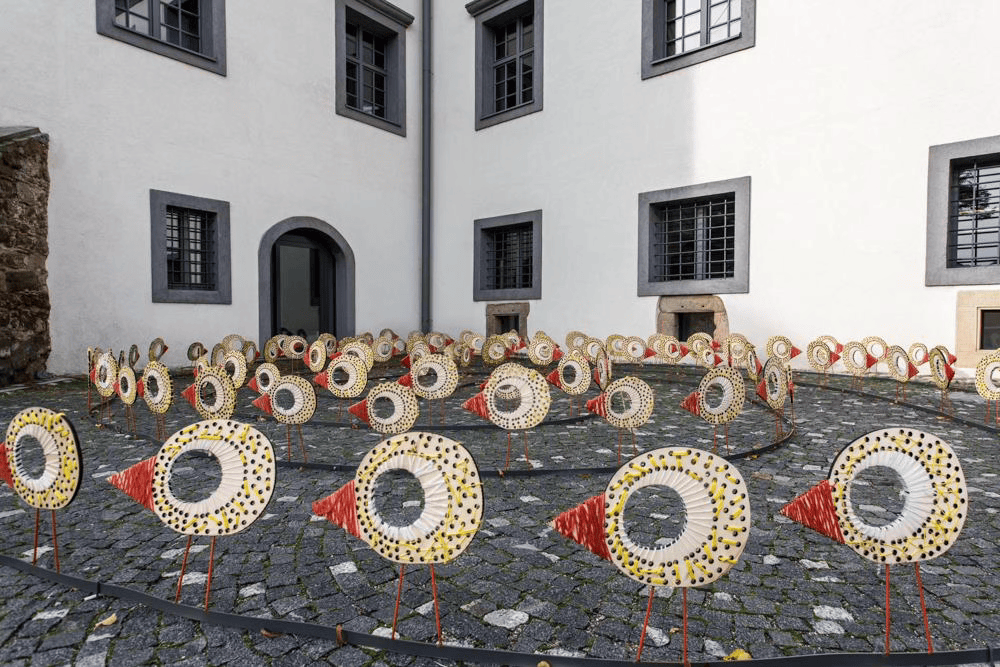
Yet, architecture and illustration remain closely connected in my work. Thanks to my background, I have designed several large-scale children’s projects where children created their own products based on my picture books. We then presented these in the form of contemporary spatial installations in open urban spaces. I believe it is important that children’s creativity is not hidden away only inside institutions, but instead becomes a part of the public space and speaks to the wider community.
I also find adaptations of my picture books into other media very interesting. For instance, this past April saw the premiere of a puppet show based on my picture book Two Little Architects (Arhitekta bova!), which was another beautiful example of linking architecture, storytelling, and art. The show is excellent and is already making its way to various festivals.
What is your creative process like? Does it start with an image, a sentence, a topic? And how do you go from there?
Usually, a theme or an idea finds me first. It’s hard to say that a story starts with an image or a single sentence – most often, it begins with a thought, a question, or a situation that just won’t leave me alone.
I really like to discuss ideas with my husband who has plenty of good ideas himself. He is often my sounding board and helps me assess if an idea is strong enough to grow into a story.
I then mull over the text for a long time, expanding and changing it until I am truly satisfied with it. Only when the story is completely finished does the illustration process begin. That is when I prepare sketches for the entire picture book and start creating the illustrations.
What are your favourite topics and themes? In a number of your picture books the main characters are animals. How come?
My favourite themes are definitely those that stem from everyday life. I often find inspiration in everyday events, conversations, or observations. Last year, I did many presentations in local kindergartens, and during one of them, a little girl told me something that still won’t leave me alone today. I am certain that a new story will soon grow out of it.
Animals, on the other hand, are the main characters of many of my picture books for several reasons. Children love to identify with them, and at the same time, animal characters allow us to talk about different topics in a more playful and universal way. To be honest, there is another reason – I really love illustrating animals. I feel they allow me more freedom in my creativity than human characters, which is why they keep finding their way into my stories again and again.
Are there any illustrators or authors whose work influences or inspires you?
For many years, I have been a great admirer of Beatrice Alemagna. I have many of her picture books at home, and she is definitely the illustrator whose work inspires me the most. What draws me most to her illustrations is the freedom of expression and the special aesthetic sense they evoke. Her works captivate me time and again, and I always enjoy browsing through them.
Of course, I follow many other illustrators as well, mostly through social media, where it is easy to get a quick insight into contemporary trends and different creative approaches. Nevertheless, I try to preserve my own voice and focus primarily on what interests and inspires me most as a creator.
Are you working on anything new? Can you tell us a bit about your future plans?
Right now, what I am thinking about most is finding a new illustration technique. I feel like I have been working in textile collage for a very long time, and I feel the need to explore new possibilities of expression. This is my biggest creative challenge at the moment, and one that I am also thoroughly enjoying.
I hope that my next picture book will be quite different visually from my previous ones. I am primarily interested in more freedom of artistic expression, more experimentation, and discovering new paths. After all these years of creating, I feel it is important to allow myself to step out of my comfort zone and venture into the unknown once again. Because that is often exactly where the most interesting things are born.
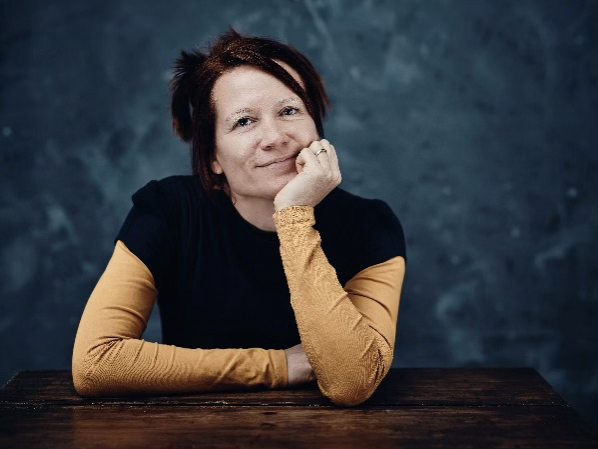
Manica K. Musil is a Slovenian picture book writer and illustrator. She studied architecture. Between 2002 and 2006 her work was featured on 11 Slovenian stamps. She published numerous children’s books for various Slovenian publishers, and they were translated into around 16 languages. The animals from her books have inspired her to re-create them as installations for galleries or other public spaces.
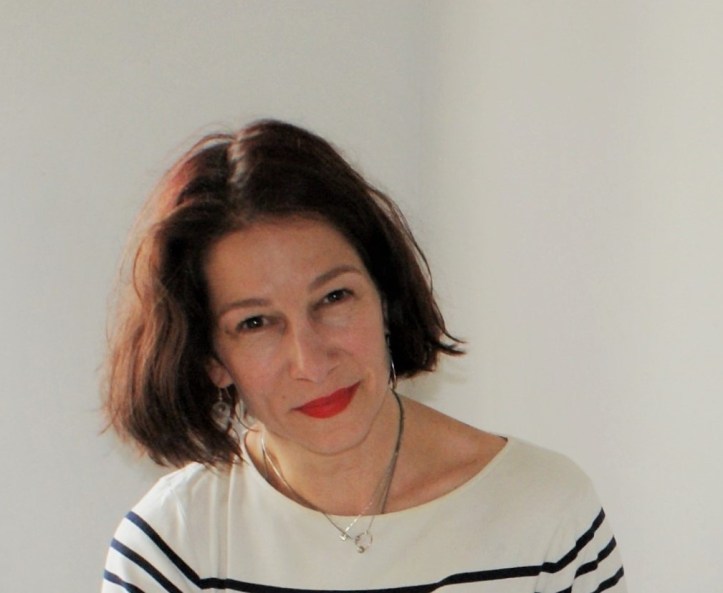
Brigita Orel lives in Slovenia where she works as a translator from English into Slovenian. In her spare time, she either reads books, writes them or researches them. Her picture book The Pirate Tree (Lantana) was Bank Street Best Children’s Book of the Year in 2020. Recently, she published her first middle-grade novel in Slovenian.
Support World Kid Lit!

World Kid Lit is a nonprofit that aims to bring diverse, inclusive, global literature into the hands and onto the bookshelves of young people. We rely on grants and donations to support our work. If you can, please support us at Ko-fi. Thanks!

We earn a small commission every time you buy books via the affiliate links on our site, or via our booklists at UK Bookshop.org. This is a much appreciated donation towards our work. Thank you!

