By Ruth Ahmedzai Kemp
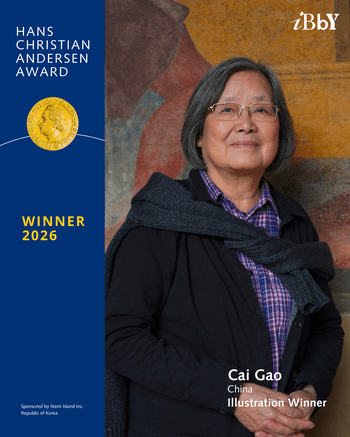
We were thrilled at the news recently that the 2026 Hans Christian Andersen Award was awarded to author Michael Rosen and illustrator Cai Gao, the first time the award has gone to a Chinese illustrator. Presented by the International Board on Books for Young People (IBBY) every two years, the Hans Christian Andersen Award is the highest international honor for children’s literature, recognizing lifetime achievement for authors and illustrators.
While British children’s author and poet Michael Rosen is better known to English readers, we’re delighted to introduce Cai Gao to new audiences and hope that this recognition of her lasting contribution to children’s literature will result in more translations and new editions of her beautiful picture books.
A self-taught artist and painter, Cai Gao has published over 40 picture books in Chinese, with translations into Korean, Italian, Japanese, Sinhalese, Nepali, Vietnamese, and English. We asked Chinese literary translators Li Wang, Fiona Sze-Lorrain and Helen Wang about the impact of Cai Gao’s work and the appeal of her inimitable illustration style, and tomorrow you can read Stephanie Gou’s review of Tan Hou and the Double Sixth Festival, one of the rare picture books to have been translated into English (by Helen Wang).
World Kid Lit: Which is your favourite Cai Gao book and why?
Li Wang: The Land of the Peach Blossom. I always loved this story as a folktale and Cai Gao’s art and Japanese writer Matsui Tadashi’s words make this picture book a true artwork. I remember the moment I saw it (the Chinese version) in a New York public library. It’s magical holding it in my hands and reading it far away from my homeland.
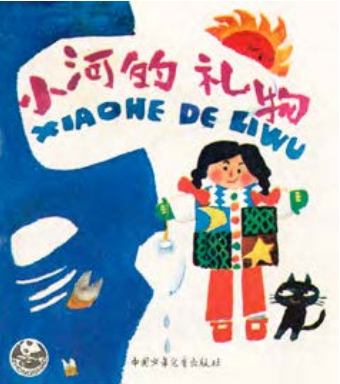
Fiona Sze-Lorrain: I have more than one, but let me start with my childhood nostalgia: My first encounter with Cai Gao’s work was in 1987. Someone gave me a set of picture books, which included The Beautiful Garden (1980) and The River’s Gift (1986). At that time, I had no idea that Cai Gao illustrated these two titles. I also enjoy Bao-er and Three Monks. Cai’s colors are timelessly vivid and intense. I can’t explain why or how they caught my attention when I was a child. Maybe that’s the magic.
World Kid Lit: Which of her books do you think would be particularly successful in English translation?
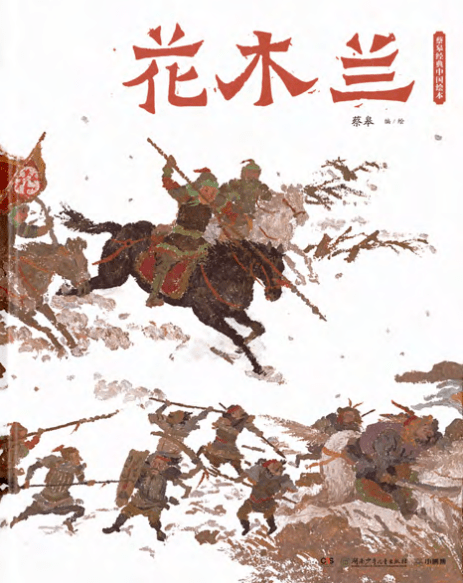
Fiona Sze-Lorrain: It depends on how you define ‘successful’, but I might start with her adaptations of Chinese folk stories, e.g. Hua Mulan and Pu Songling’s Strange Tales from a Chinese Studio. The books she’s created since her retirement in 2000 have each a unique yet universal appeal.
Li Wang: Hua Mulan and The Land of the Peach Blossom. I have recommended her books and my willingness to translate them to Elsewhere Editions (Archipelago) and they have not decided yet.
World Kid Lit: We hear that Cai Gao’s books are particularly influential in Japan. What role do her works play in Japanese children’s literature, and what is the appeal for Japanese readers?
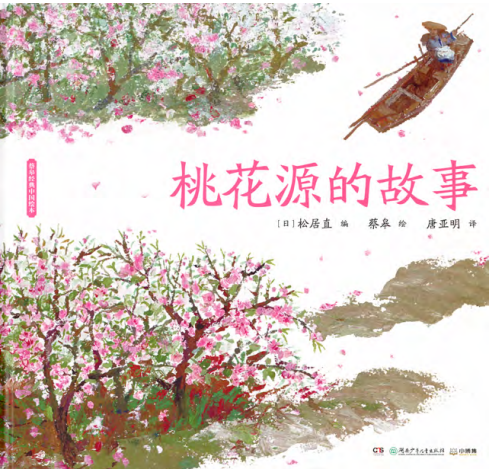
Li Wang: It’s worth reading the recent spotlight in Publishers Weekly which summarizes this collaboration well: “In the early 1990s, Cai started collaborating with overseas publishers such as Fukuinkan Shoten and Iwanami Shoten in Japan and Borim Press in South Korea. In 2001, she worked with Japanese writer Matsui Tadashi on The Land of the Peach Blossom, which was published by Fukuinkan Shoten. Based on Tao Yuanming’s classic poem, it conveys the Taoist vision of nature and the beautiful life. The first 5,000 copies of the Japanese edition sold out within a month, and the title was reprinted immediately. Two years later, the story and two of Cai’s illustrations were included in Japanese textbooks for sixth graders—a historic achievement for a Chinese illustrator.”
Fiona Sze-Lorrain: I’m not surprised that The Land of the Peach Blossom has found an audience in Japan. Cai Gao’s ink and wash techniques blend the traditional and modern. In this book, her style seems more ‘literati’. Cai Gao goes for the subtle even with simplicity or a ‘rustic’ touch. Without giving away the story, I’ll just highlight its Zen/Taoist take on life and impermanence and our human connection to nature.
World Kid Lit: Helen, you translated Tan Hou and the Double Sixth Festival back in 2017. How was it to translate, and would you have any advice for any publishers looking to publish her work in English translation?
Helen Wang: Tan Hou and the Double Sixth Festival was the first Chinese picture book I translated for publication. I remember really looking at the pictures, and at the composition of Cai Gao’s artwork. The images reminded me of Chinese ‘peasant painting’ but were more complex. She has produced many picture books – each one has a very different treatment and yet you can tell instantly that it’s by Cai Gao! I’d also love to see The Land of the Peach Blossom in English. It’s such a classic story (a journey down river to a beautiful world, a land that time forgot).
Find out more about Cai Gao
- Summary of Cai Gao’s work and lifetime achievements (IBBY)
- Hans Christian Andersen Award Nominee Dossier 2026 featuring articles by Martin Salisbury, an interview with Cai Gao, an overview of her most significant publications, recommended for translation, a full bibliography and long list of awards (Chinese Board on Books for Young People, CBBY)
- Hans Christian Andersen Award Nominee Dossier 2024, featuring summaries and images from many of her works (CBBY)
- Very few of Cai Gao’s books are available in English. Translations published so far include: How I Come to be Me, Beautiful Chinese Folk Tales (bilingual Nepali and English edition), Blazing City, Baa, Baa, Black Sheep, and Airing the Dragon Robe in the Sun on the Sixth Day of the Sixth Month (Sinhalese and English versions), and Tan Hou and the Double Sixth Festival (translated by Helen Wang, published by Balestier Press, 2017. See our review here at World Kid Lit)
***
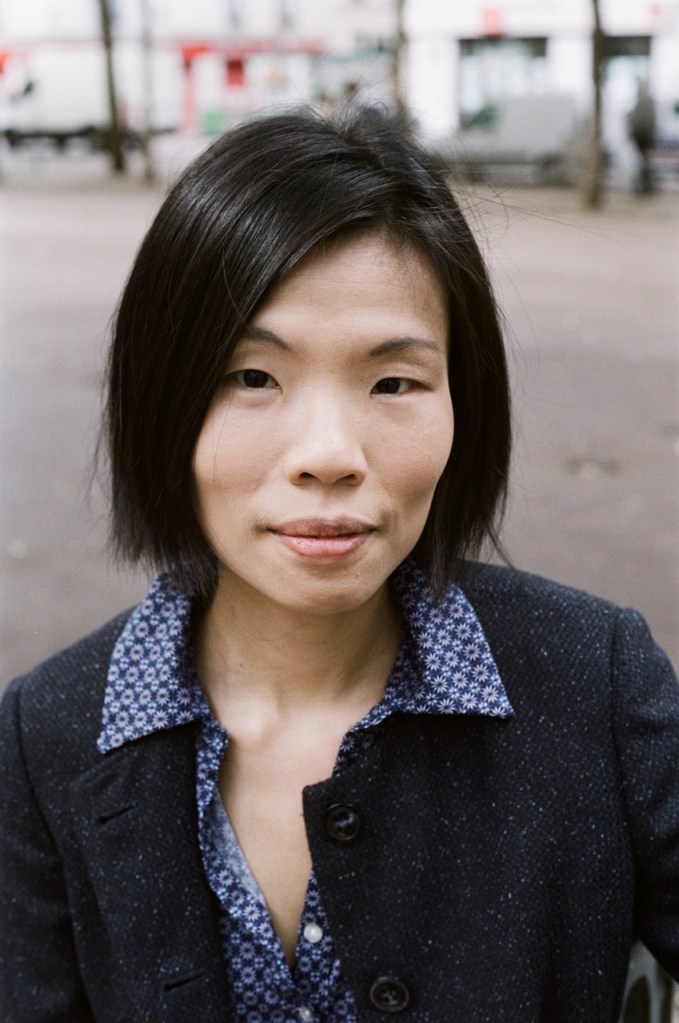
Fiona Sze-Lorrain is a writer, poet, translator, zheng harpist, and editor who writes and translates in English, French, and Chinese. Her work includes a novel in stories Dear Chrysanthemums (Scribner, 2023), five poetry collections—most recently Rain in Plural (Princeton, 2020) and The Ruined Elegance (Princeton, 2016)—twenty translations, and three anthologies. A judge for the 2025 Dublin Literary Award and the John Calder Translation Prize, she lives in Paris.
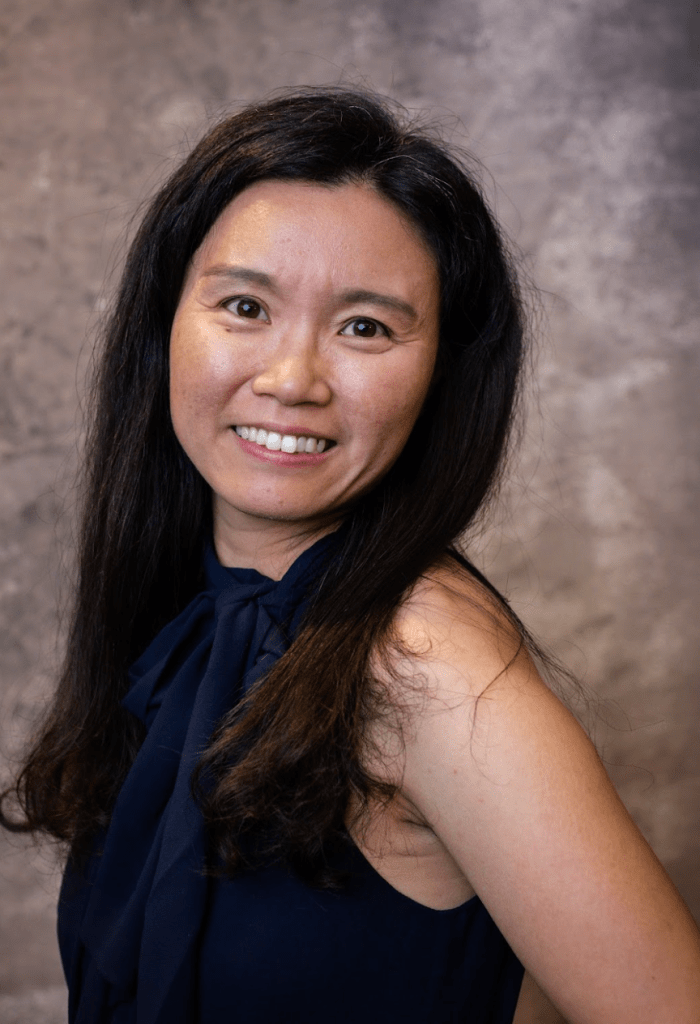
Wang Li is a children’s book writer and translator. She was a 2025 SCBWI Work In Progress Winner (Picture Book), 2025 Art Omi Translation Lab resident. She won the 2024 Pitch-Perfect Translation Grant, along with several other writing awards. Find her at her website, where you can take a peek at the stories she’s brewing up.
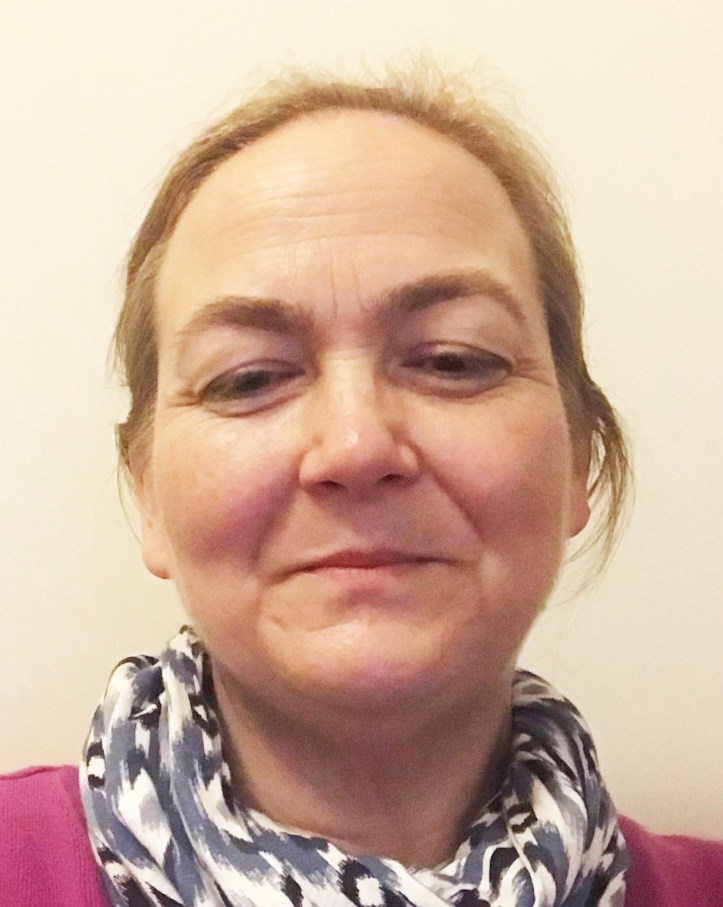
Helen Wang translates from Chinese to English. In 2017, she won a Chen Bochui Special Award for Children’s Literature in China and the Marsh Award for Children’s Literature in Translation in the U.K. for Bronze and Sunflower by 2016 Hans Christian Andersen Award for Writing winner Cao Wenxuan.
Support World Kid Lit!

World Kid Lit is a nonprofit that aims to bring diverse, inclusive, global literature into the hands and onto the bookshelves of young people. We rely on grants and donations to support our work. If you can, please support us at Ko-fi. Thanks!
We earn a small commission every time you buy books via the affiliate links on our site, or via our booklists at UK Bookshop.org. This is a much appreciated donation towards our work. Thank you!

