by Jackie Friedman Mighdoll
In anticipation of the release of The Dreamcrafter, I had a joyful conversation with Claudia Zoe Bedrick, the publisher of Enchanted Lion Books. The Dreamcrafter is the first book of a series of Mongolian picture books that Enchanted Lion will publish, some of the first ever Mongolian children’s books in English.
Jackie Friedman Mighdoll: I’m excited to talk to you about your new Mongolian series and how it came to be. I understand that Mark Koenig of the Asia Foundation wanted to create a better ecosystem for children’s books in Mongolia, and he invited you to lead a workshop there. Can you tell me more about what you were preparing to teach and about your expectations?
Claudia Zoe Bedrick: At the time I went, Enchanted Lion was 21 years old, so I had been doing this work for a while. There are different ideas in different places about the picture book. You have countries where they look at it and say: it should always be about instruction and learning and pedagogy, and this is their concept of what children need and should get.
And I understood that maybe that was a little bit of the situation in Mongolia, especially in school and instruction. But also, maybe not exactly that because it’s such a newly urbanized population and it’s such a multi-generational population that they are steeped in myths and stories and oral storytelling.
So, I didn’t really see myself as going over there to teach them all of what I know. But more that this was one more place where, like here and in so many other countries, it would be important to advocate for the imagination, to help people understand why you don’t just need an instruction manual, that a child might flourish through reading imaginative stories.
Since the foundation was funded from a literacy angle, they were doing other work to communicate with Mongolian parents and families about why these imaginative books are important for children. So, I was sharing ideas to build an understanding and confidence in parents, too.
Also, I thought I’d have opportunities to see what they were making. Just like when people send me manuscripts here, I’d be able to offer notes, talk about structure, ask questions and see what they were trying to do in their work, and what it seemed they wanted to impart, and perhaps we could see together whether it was coming through or not.
So, you went to talk about the art of the picture book, not so much the business side of things?
It was about the art of the picture book, and it was also about helping creatives there understand how they might find work internationally or gain international recognition. There’s no living off picture books if you’re just creating for a tiny Mongolian population. So, they also wanted to know about the international business aspect, about getting an agent, about the Bologna and Frankfurt book fairs. How could these creators share their work so that it might be published in different countries? Publishing in other countries would also allow a beautiful book to be published in Mongolia, because there would be a higher number of total books printed, allowing for economic possibility.
Tell me what it was like when you were there. Was it what you expected?
Ulaanbaatar, Mongolia’s capital, felt much more familiar than I had anticipated. From 1990 until 2001, I worked with a professor at the Graduate Faculty of The New School for Social Research in New York on a nonprofit program which was about getting books and journals to, and helping to open up conversations in, East and Central Europe and the Former Soviet Union countries after the fall of the Berlin Wall. I had been to many major Soviet cities from Central Asia to Russia to Estonia, and so it was very familiar in that sense. Even 20 years later, they’re still similar since much of the architecture lasts.
I remember talking to my husband on the phone and saying, in this weird sort of way, it reminded me of the Upper West Side in New York City, where I grew up in the 1960-70s, where you would see multi-generational families hanging out on the stoop. It’s very intergenerational on the street, with little stands and stalls and grandparents and young children. It also has some amazing cafes where you can get a latte, and that’s familiar, too.
And yet, of course, it was all new at the same time. What struck me immediately was this huge sky. I didn’t get out into the countryside, but you still see this huge sky and a special kind of light. It feels like you’re in a place you haven’t been, but there was a lot that seemed familiar at the same time.
So how did you understand the stories? Was it through the illustrations or translated texts or oral storytelling or…
Undraa Nergui from the Asia Foundation has fabulous English, and she’s a talented and fast translator. At first, I got a set of stories on paper that she had translated, and a couple of the participants were able to write in English because their English was good enough. What followed was the workshop, and then we had one-on-one conversations, most of which were through Undraa.
Every word in a book is interesting to me. There are definitely turns of phrase that create a texture that’s different from what you expect. The quality of the written texts I was given made me realize that Undraa was a trustworthy translator. I could also tell this when we were doing the simultaneous translation, by the clarifying questions she would ask me and the follow-up, that she was really understanding what I was saying, and she was finding the best way to say it to the person in Mongolian.
You didn’t go there to acquire, right? The fellows were still working on their projects at the time.
There was no aim to acquire. I was invited to bring my knowhow there, but they delivered a kind of gift to me that was unanticipated by them and unanticipated by me.
I acquired things that were in process. A part of publishing is always a leap of faith. Sometimes it doesn’t go as well as hoped, honestly. At times, I’ve felt that I’ve seen enough and then the book that has resulted has been a good effort on the part of the creators, and we, as a publisher, have tried our best with it, too, but it didn’t come into its own in the best possible way. Not every book a publisher makes is a perfect book. Most are flawed in one way or another.
I’m always looking for something which is doing something a little bit different–and that’s what I found in Mongolia. I loved being exposed to the different kinds of conversations, the different kinds of obsessions and interests that were happening there.
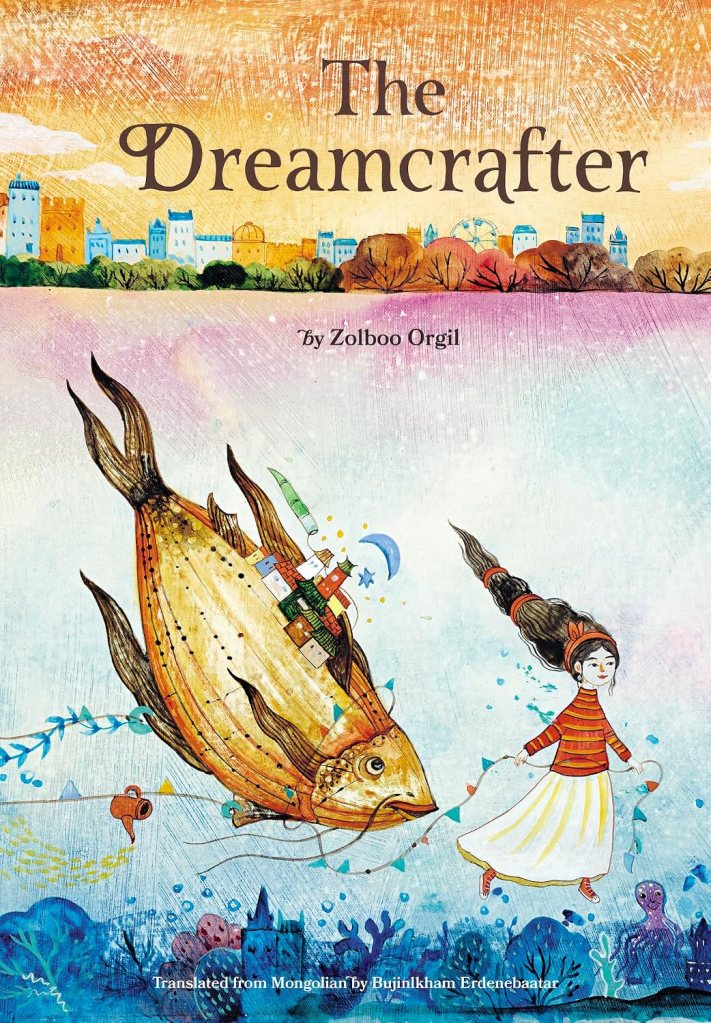
Tell me about the projects you acquired. The Dreamcrafter by Zolboo Orgil and translated from Mongolian by Bujinlkham Erdenebaatar is the first one to come to market this November. Did you see the art for that while you were there?
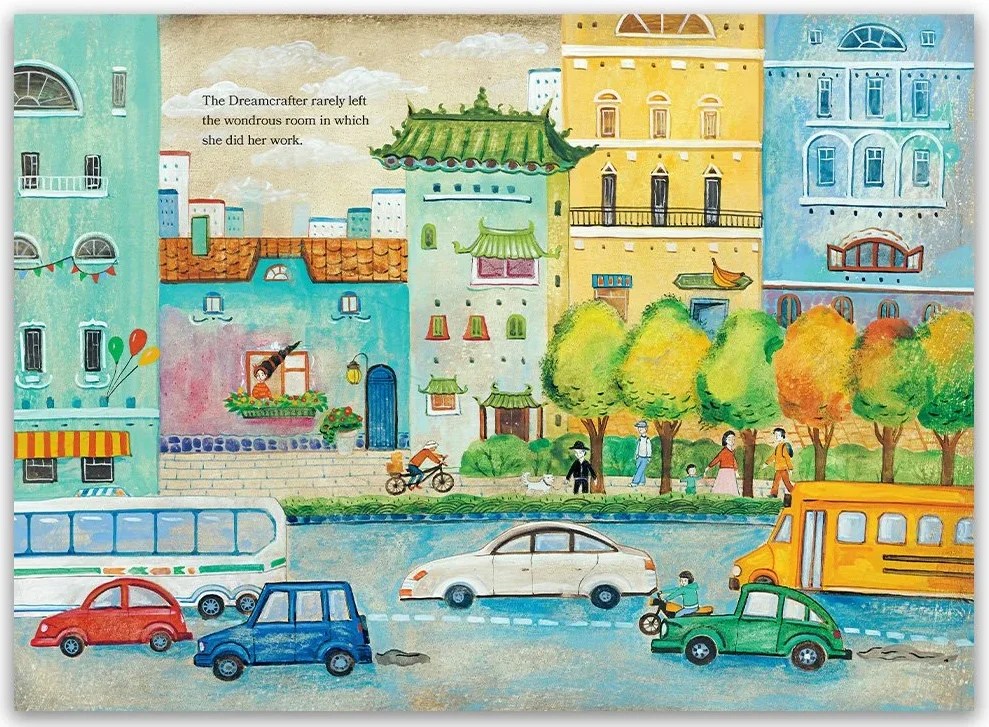
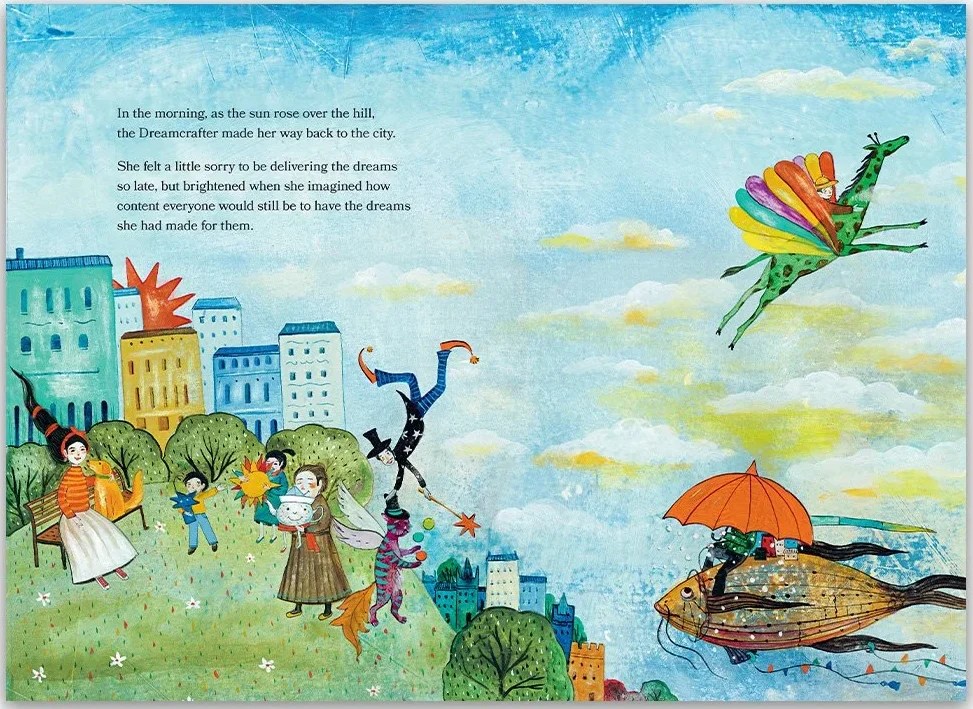
Yes, I saw some of the art and the manuscript for The Dreamcrafter. We worked through the story board over a stretch of time with Emma Vittoria, the co-art director on our Mongolia Voices Collection, and some extra art was made, but a nice chunk of art existed.
Is the second project also by an artist-illustrator?
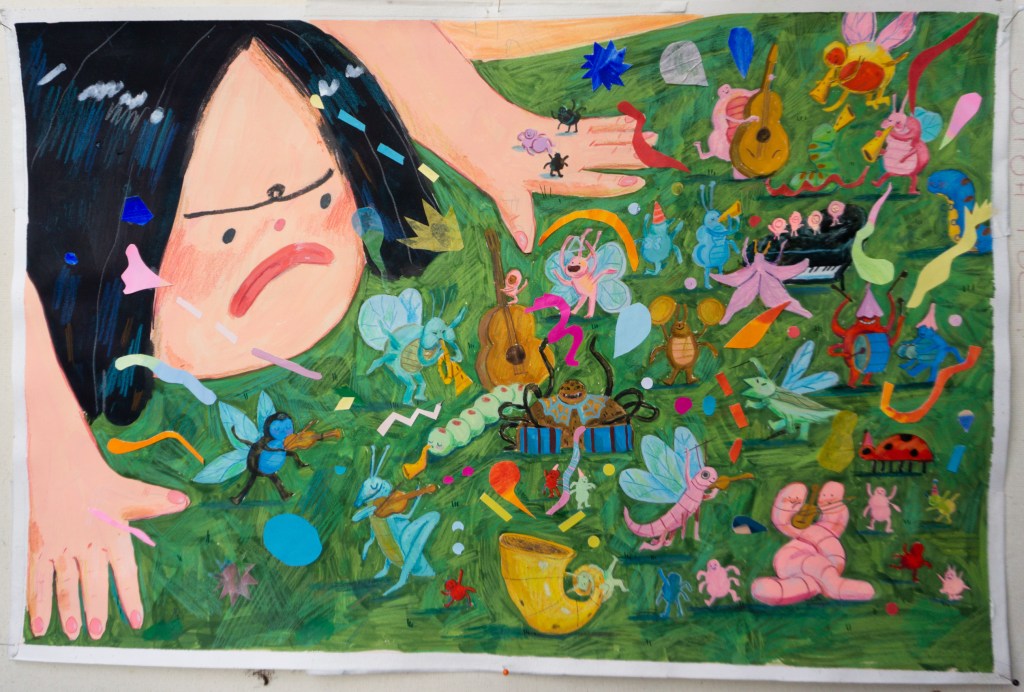
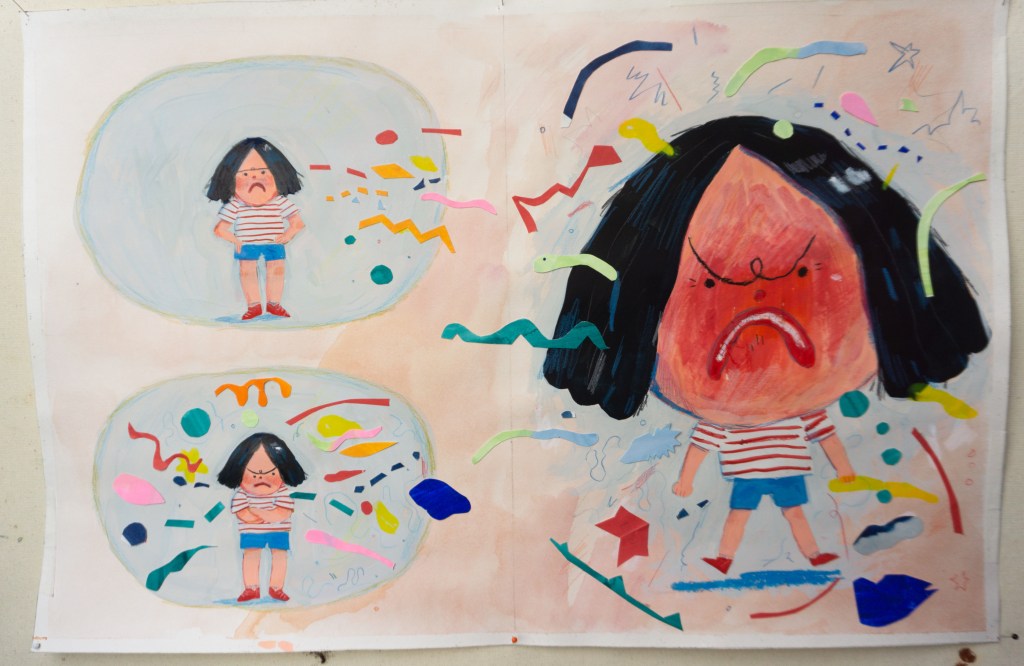
Yes, but I didn’t see any of the actual art to Stop Bugging Me when I was in Mongolia. When I was there, the creator of this book, Enkh-oyun Bold, was telling another story that I liked, but she needed to pause that one. Then sometime later, she shared the idea and some of the text for Stop Bugging Me, and we talked about the art style. Everybody I talk to now knows I’ve always been much more inclined to analog art than digital art. We have done some books with digital art, and they are also wonderful. But at this point in time, I think the handmade and the analog are important, and Enkh-oyun works in that way so, taking everything together, I knew I wanted to work with her somehow, but it was a question of what that would be and when that would emerge.
And then you acquired two other manuscripts?
The two other Mongolian creators are writers. Anudari Bayanbileg was the youngest fellow in the year I went. The other, Delgermaa Tsagaanchuluu, is a poet, someone who writes in many forms in Mongolian and runs a small publishing house.
Can you tell us more about the process of taking a manuscript from another culture and figuring out how to find the illustrator and create a team and a book?
Taking the vision of a Mongolian story and figuring out the illustrator, traversing cultures, and putting a book together doesn’t feel daunting to me. I was guided by the fact that it’s very important to the Mongolian creators, and it’s important to me, for the stories not to feel like international stories, but to feel like Mongolian stories. In being there, it became clear to me that the fellows possessed a sense of place, a sense of their own culture and its specificity, a feel for the Mongolian landscape, the sky, and their own mythology.
For the first authored book, which is by Anudari Bayanbileg, we’re working with Sally Soweol Han, who is an Australian-Korean illustrator. It turns out that there are some similar ideas about death and grandparents and the sky in both Korean and Mongolian mythologies. Sally was a collective decision, and she really connected with the manuscript. But of course, Korea is not Mongolia, so author and artist have been collaborating closely, and the author has been sharing very specific details and images and videos and information for the book to ultimately take on a Mongolian look. For example, one of the things Sally did in some of her sketches was to draw the grandmother in a kerchief. And the author wrote back and said, “You have the grandmother wearing a kerchief that’s tied in a Russian way, so she looks like a Russian babushka but we’re showing a Mongolian grandmother. That means that the kerchief has to be tied a different way.” The way it is tied over the ears, what’s covered, what’s shown, is different between Russia and Mongolia. I, as the art director, would never have known that. But that’s the importance of involving all the parties in the process and having it decided upfront that it will be a Mongolian story.
For the fourth book, authored by Delgermaa Tsagaanchuluu, we have an American illustrator on board, who is going to travel to Mongolia so he can see things for himself.
What inspires you most about these new books?
What I saw in the Mongolian stories was the child mind, which I think comes from the childhoods had in Mongolia and the intergenerational dimension of life. Other than The Dreamcrafter, all of the books have children, wonder, sky, sadness, death, puzzlement, loneliness, agency. These are stories being written for children, about children, with great respect for them.
Their stories brought me back to the wonderful world of children’s literature I grew up with, which included lots of folk tales and fairy tales from around the world, and they were complex and mysterious. I like stories that are kind of mysterious, where you might spend a lot of time thinking about it, and then it yields something different when you read it at a different age or time in your life.
I hope the stories we acquire at Enchanted Lion lead readers to wonder about things. Mostly, we share stories that don’t provide answers and aren’t led by the point they want to make. They are led by wonder and convey a feeling for the mystery that is embedded in all of human life.
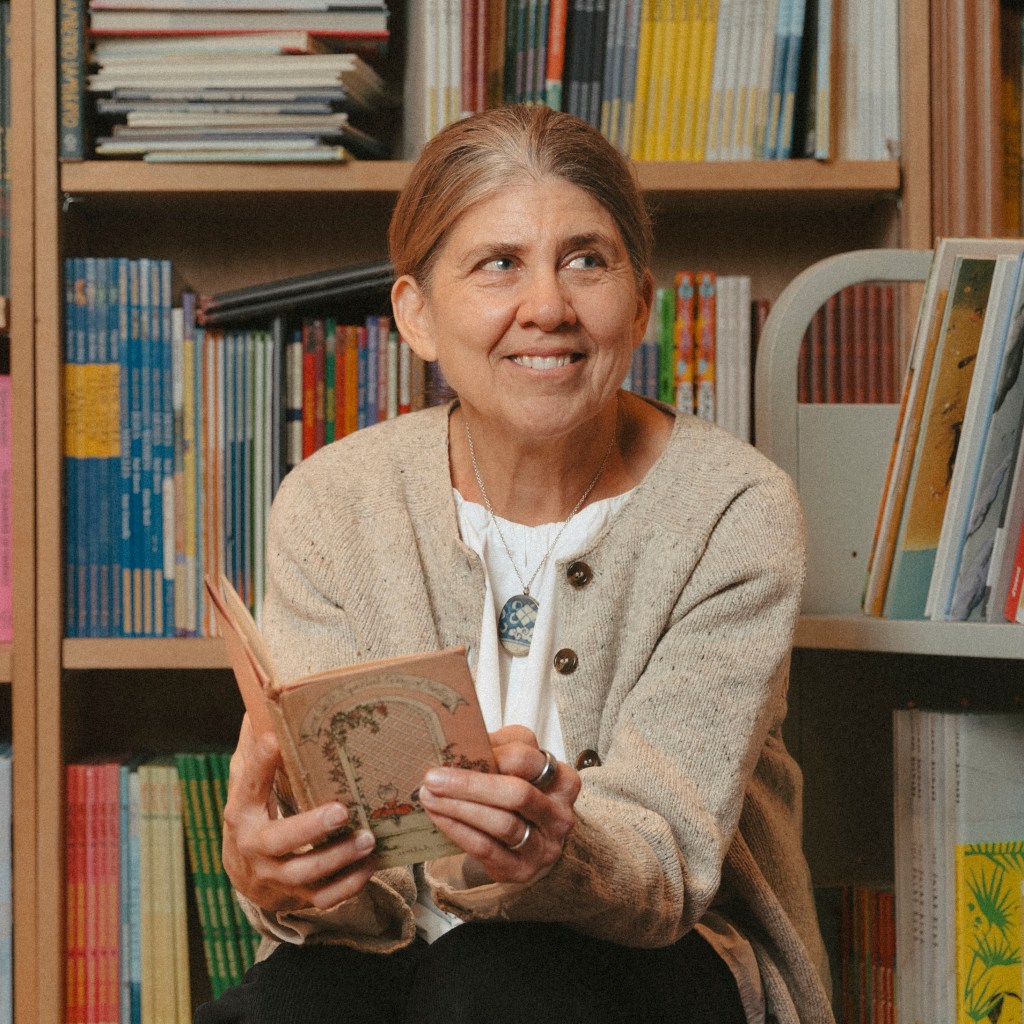
Claudia Bedrick is the publisher, editor, and art director of Enchanted Lion Books. She is a mother, wife, sister, and daughter and lives in Brooklyn, NY.
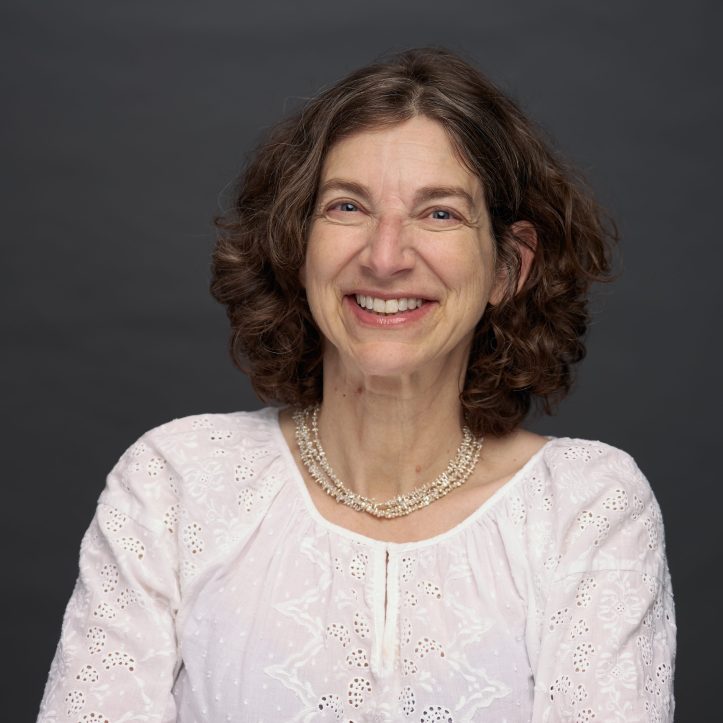
Jackie Friedman Mighdoll is co-editor of this blog. She writes books for kids and translates from Japanese to English. In a prior career, she founded a program teaching world languages to children, starting with newborns. She shares her thoughts about great books from around the world at On Beyond!

World Kid Lit is a nonprofit that aims to bring diverse, inclusive, global literature into the hands and onto the bookshelves of young people. We rely on grants and donations to support our work. If you can, please support us at Ko-fi. Thanks!

We earn a small commission every time you buy books via the affiliate links on our site, or via our booklists at UK Bookshop.org. This is a much appreciated donation towards our work. Thank you!

